HISTORY does not always announce itself. Sometimes it arrives in the form of an oil tanker departing the Lagos coastline, bound not for Houston or Rotterdam, but for Accra, Dar es Salaam, or Douala. When Aliko Dangote stood before cameras at his sprawling Ibeju-Lekki refinery and declared that he could supply “West Africa, Central Africa, and East Africa,” he was not merely making a business statement. He was articulating, perhaps without quite intending to, the most compelling pan-African argument of our era: that this continent, so long defined by what it exports raw and imports processed, is beginning – haltingly, imperfectly, but unmistakably – to feed itself.
The backdrop is grim enough to make the significance impossible to miss. The war between the United States, Israel, and Iran has sent shockwaves through global energy and fertiliser markets. Shipping routes are disrupted. Crude prices are spiking. Nations that depended on Middle Eastern supply chains – and that means most of the world – are scrambling. Africa, as ever, faces the sharper end of the disruption. Fuel queues, fertiliser shortfalls, food inflation: the familiar horsemen of a crisis not of the continent’s making.
Into this breach steps Dangote.
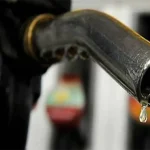
Nigeria’s Dangote refinery, Africa’s largest, has increased exports of gasoline and urea to African countries hit by supply disruptions caused by the Iran war, with owner Aliko Dangote confirming the facility is now operating at its maximum capacity of 650,000 barrels a day.
That figure deserves to sit on the page for a moment. Six hundred and fifty thousand barrels. Every. Single. Day. From a single refinery on the edge of Lagos. For context, that is more than the entire daily crude output of Libya at current production levels.
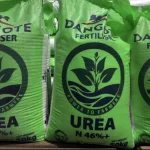
Dangote confirmed the facility had shipped some 17 cargoes of gasoline to other African nations, and that exports of urea fertiliser had also recently risen as buyers sought alternative sources of supply. In ordinary times, the refinery’s vast urea output – capacity to produce up to 3 million metric tons annually – was predominantly exported to the United States and South America. The Iran war has reordered those priorities with swift efficiency. “In the last couple of days, we’ve been looking to mostly African countries, which we were not doing before,” Dangote said, referring to the fertiliser shipments.
That sentence should be read carefully by every African finance minister, trade commissioner, and central bank governor. An African industrial asset, built by African capital and operating on African soil, is now redirecting its surplus to African neighbours in a moment of crisis. This is not charity. It is not foreign aid. It is not a multilateral programme with conditionalities. It is commerce – African commerce – functioning as a continental buffer at exactly the moment that the global order has proven, once again, its indifference to African food and energy security.
Even as Dangote runs at maximum output, fuel prices in Nigeria have reached record-high levels, because the surge in global crude prices is offsetting the gains from local refining. It is a paradox that exposes the structural vulnerability that no single refinery – however magnificent – can resolve alone: Africa’s crude is predominantly priced in dollars, purchased on global markets, and therefore exposed to the same price shocks as if the continent had no refining capacity at all.
Dangote himself has identified the solution: sourcing more crude cargoes priced in local currency, which would help curb domestic fuel costs and insulate Nigerian consumers from global volatility. It is a quiet but radical proposition – the de-dollarisation of African energy transactions – and it deserves far more political traction than it has yet received.
The Nigerian state oil company appears to be listening. Reports indicate that NNPC is allocating seven May crude cargoes to Dangote’s refinery, up from five in previous months – a meaningful signal that Abuja understands what is at stake, not just for Nigeria, but for the region it anchors.
Africa’s Oil Map: The Promise and the Gap
To understand why Dangote’s refinery matters so much, one must first understand the paradox at the heart of African energy. This is a continent that produces approximately nearly 10 million barrels of oil daily, accounting for about 10% of global crude output – and yet remains a net importer of petroleum products. Africa digs up the oil, ships it abroad, and then buys it back, refined, at prices set by markets in which it has no meaningful influence. It is the oldest colonial arrangement, wearing new clothes.
Africa’s crude oil production in 2025 is dominated by Nigeria at 1.61 million barrels per day, followed by Libya at 1.36 million, Algeria and Angola at 1.14 million and 1.03 million respectively, and Egypt at 0.51 million barrels per day. Further down the list, the Republic of the Congo and Gabon each produce around 240,000 barrels per day, while Ghana records 180,000 and Chad around 130,000.
Add to this the smaller but growing producers – Equatorial Guinea, South Sudan, Cameroon, Tunisia – and you have a continent sitting atop extraordinary hydrocarbon wealth, much of it flowing outward with minimal downstream value retained at home.
The Dangote refinery is the most visible attempt yet to break that cycle. But it cannot be the last.
Uganda Rises: The Next Refinery Frontier
If the Dangote story is about what Africa can do now, Uganda’s is about what Africa is building for tomorrow – and it is one of the continent’s most significant infrastructure stories.
Uganda’s government, through the Uganda National Oil Company, has signed an implementation agreement with UAE-based Alpha MBM Investments LLC – led by a member of the Dubai Royal Family – to develop a $4 billion oil refinery at the Kabalega Industrial Park in Hoima, with a 60,000-barrel-per-day capacity. Construction is expected to span three years.
The vision extends well beyond petrol at the pump. The refinery is designed to produce not just fuel but also kerosene, petrochemicals, fertilisers, and gas-processing derivatives, capturing the full value chain. The surrounding industrial park already has 15 committed investors and could draw between $3 and $4 billion in immediate investment, with the potential to attract a further $1 to $2 billion.
A macroeconomic study by Stanbic Bank, conducted in consultation with UNOC, projects that the refinery will add $3.3 billion annually to Uganda’s GDP and $8.2 billion to national capital formation, while improving the country’s balance of payments by $591 million and creating some 32,000 jobs.
Uganda is simultaneously pushing forward with what is arguably the continent’s most audacious pipeline project. The East African Crude Oil Pipeline – a $5 billion, 1,443-kilometre project stretching through Uganda and Tanzania, designed to transport up to 246,000 barrels per day at peak capacity – is now 75% complete, with over $3.3 billion already invested. Uganda’s long-stated ambition, articulated by President Museveni himself, is unambiguous: stop exporting raw materials and add value to everything the country produces.
That ambition faces real headwinds. Cost overruns have pushed the EACOP’s total outlay to around $5.6 billion, a 55% increase from original projections, and first oil has slipped from 2025 to late 2026 or 2027. The refinery’s construction has not yet broken ground. International lenders, guided by ESG constraints, have largely withdrawn from African fossil fuel infrastructure, forcing Uganda to pursue equity-only financing for the refinery. These are not trivial obstacles.
But the direction is set. And in the context of a world in which the Iran war has demonstrated — brutally and without ambiguity — the cost of African energy dependence on distant suppliers, Uganda’s determination to own its downstream value chain looks less like ambition and more like a survival strategy.
The Larger Vision: Self-Sufficiency as Liberation
What ties the Dangote story to Uganda’s refinery, and to the broader arc of African energy development, is a single animating idea: that Africa’s resources must, finally, serve Africans first.
It is an idea with deep roots in the liberation tradition – in Nkrumah’s insistence that African independence was meaningless without economic sovereignty, in the resource nationalism that animated the best moments of post-independence governance, in the continental frameworks from the Lagos Plan of Action to the African Union’s Agenda 2063. It has never been more urgent.
The Iran war has done what decades of advocacy could not: it has made the cost of African import-dependency viscerally, undeniably clear. When fertiliser shipments from the Gulf are disrupted, and African farmers face a planting season without inputs, the abstraction of “food sovereignty” becomes something very concrete: hunger.
The Dangote refinery, running at 650,000 barrels a day, shipping cargoes to African neighbours, pivoting its fertiliser exports toward African markets – this is one man’s industrial bet on African self-sufficiency. Uganda’s $4 billion refinery, Nigeria’s NNPC increasing crude allocations, Ghana’s expanding offshore production, Angola’s deepwater partnerships – these are the building blocks of something larger.
Africa produces the oil. Africa must refine the oil. Africa must distribute the oil. Africa must set, in African currencies, the price at which Africans access the oil.
That is not a radical vision. It is the minimum condition of sovereignty. And in April 2026, with tankers leaving Lagos for Accra and Kampala breaking ground on its own refinery, Africa is – slowly, fitfully, against considerable odds – beginning to make it real.