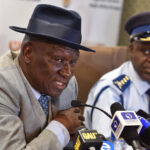
THE revelations that emerged on July 6, 2025, when KwaZulu-Natal Provincial Commissioner Lieutenant-General Nhlanhla Mkhwanazi exposed how criminals and drug cartels have allegedly infiltrated the highest levels of South Africa’s law enforcement, reaching as far as deputy national commissioner, sent shockwaves through the nation. For many citizens, already weary from years of corruption scandals, these allegations might feel like the final straw – proof that the rot runs too deep, that the system is broken beyond repair.
But there is another way to read this moment in our nation’s history. And it is a reading that should fill every South African with hope rather than despair.
Consider this fundamental truth: we know about these allegations precisely because the system is working. Commissioner Mkhwanazi did not whisper these concerns in private corridors or bury them in confidential reports that would never see the light of day. He brought them forward publicly, courageously, knowing the gravity of what he was exposing. That act alone demonstrates that our institutions, while bruised and battered, still have integrity at their core.
The Madlanga Commission of Inquiry is hearing testimony. Parliament’s Ad-Hoc Committee is conducting investigations. Police detectives like “Witness C” are coming forward, shrouded in anonymity for protection but armed with recorded evidence and an unwavering commitment to truth. The National Director of Public Prosecutions is being called to account. Suspended officials – including a deputy national commissioner and a police minister—are facing the consequences of alleged wrongdoing.
This is not a failed system. This is a system in the painful but necessary process of healing itself.
In Darkness, We Found Our Torchbearers
For every Vusimuzi “Cat” Matlala allegedly buying influence with monthly kickbacks, there is a Commissioner Mkhwanazi refusing to stay silent. For every official allegedly receiving R1 million per month in corrupt payments, there are countless officers conducting compliance inspections, following leads, building cases, and risking their careers – and sometimes their lives – to uphold the law.
The arrests are happening. Matlala himself sits in Kgosi Mampuru C-max prison, denied bail because the courts recognised he poses a danger to society and may interfere with witnesses. His lucrative SAPS tenders have been cancelled. The businessman who allegedly claimed to have bought access to the highest offices now finds himself abandoned by those he claimed to have enriched.
This is justice in motion. It may not move at the speed we wish, but it is moving.
Think about what it takes for a police detective to become “Witness C” – to know that speaking truth to power might cost you everything, yet choosing to speak anyway. Think about Commissioner Mkhwanazi standing before the nation to expose criminality within his own ranks, knowing the personal and professional risks involved. Think about the investigators who raided Matlala’s home on December 6, 2024, while searching for abducted businessman Jerry Boshoga, refusing to be deterred even when powerful forces allegedly tried to shield him.
These are not the actions of a defeated nation. These are the actions of patriots who refuse to surrender South Africa to criminals and corrupt officials who thought themselves above the law.
Here is a truth that often gets lost in headlines about corruption: for every corrupt official exposed, there are hundreds, thousands – of honest civil servants and police officers doing their jobs with integrity every single day. They are the detectives following leads without expecting bribes. They are the prosecutors building cases with meticulous care. They are the judges applying the law without fear or favour. They are the administrative officers processing documents, the social workers serving communities, the teachers educating our children – all working to build the South Africa of our dreams.
We must not allow the corruption of a few, however highly placed, to blind us to the dedication of the many. The system that exposed Lieutenant-General Shadrack Sibiya, Police Minister Senzo Mchunu, and others is the same system staffed by honest South Africans who show up every day to serve their country.
The Tortoise and the Eagle
There is an ancient wisdom about justice: it moves like a tortoise, not an eagle. The eagle strikes swiftly and dramatically, but the tortoise, slow and steady, always reaches its destination. South Africans, exhausted by scandal and yearning for a swift resolution, must remember this truth.
The Madlanga Commission hearings take time because they must be thorough. Evidence must be gathered methodically. Witnesses must be protected. Legal procedures must be followed. This is not bureaucratic delay – this is the painstaking work of building cases that will withstand legal challenges and result in successful prosecutions.
Yes, the process is sometimes agonizingly slow. Yes, it can feel like justice delayed is justice denied. But consider the alternative: rushed proceedings that collapse in court, allowing the guilty to escape on technicalities. Hasty judgments that violate due process and undermine the rule of law. Quick fixes that address symptoms while leaving the disease untreated.
We are not taking shortcuts. We are doing the hard, necessary work of systemic accountability. And that work, while slow, is bearing fruit.
Perhaps the most inspiring aspect of this moment is watching the mighty fall. These were individuals who allegedly believed they were untouchable – that their positions, their connections, their wealth would shield them from consequences. A deputy national commissioner is receiving monthly kickbacks. A minister is allegedly having his political ambitions funded by criminals. Businessmen who thought they could buy protection at the highest levels.
They were wrong.
Today, they stand suspended, investigated, arrested, denied bail. Their careers hang in the balance. Their reputations are destroyed. Their alleged crimes are being exposed to public scrutiny. The message is clear and powerful: in South Africa, no one is above the law.
This should inspire us. It should energise us. It should remind us that the arc of justice, while long, truly does bend toward accountability.
To our fellow South Africans feeling overwhelmed by these revelations, we offer this perspective: you are witnessing not the death of our democracy but its painful rebirth. You are seeing not a system in collapse but a system fighting for its soul – and winning.
The struggle against corruption is not a sprint; it is a marathon. There will be setbacks. There will be disappointments. There will be moments when it seems the criminals are winning. But look at where we are today compared to where we were when corruption operated in shadows, when whistleblowers were silenced, when investigations were buried.
Today, the truth is coming to light. Today, the mighty are being held accountable. Today, honest officers are standing up and being heard. Today, commissions are sitting and courts are functioning, and democracy is doing what it was designed to do: hold power to account.
Commissioner Mkhwanazi’s revelations on July 6, 2025, were not meant to depress us. They were meant to mobilise us. They were a call to action, a reminder that the fight for our country’s soul is far from over and that every South African has a role to play.
We forge ahead not despite these revelations but because of them. We persist not because the journey is easy but because the destination – a South Africa free from corruption, where law prevails, where criminals fear consequence and honest citizens feel safe – is worth every agonising step.
The system is working. The honest majority is fighting. Justice is moving forward. And South Africa, bruised but unbroken, is rising.
This is not the time for depression. This is the time for determined hope. This is not the moment to surrender. This is the moment to stand with every honest officer, every courageous whistleblower, every dedicated civil servant who refuses to let corruption win.
The Dawn Is Breaking
Yes, the night has been long. Yes, the revelations are painful. Yes, the corruption reached higher than we feared. But dawn is breaking, and with it comes the light of accountability, the warmth of justice, and the promise of a better South Africa.
The criminals who thought they controlled our country are learning a hard lesson: they underestimated the resilience of our democracy and the integrity of those who serve it. They mistook our patience for weakness. They confused our commitment to due process with the inability to act.
They were wrong on all counts.
So to every South African reading these words: take heart. Be patient but persistent. Trust the process while holding it accountable. Support the honest majority working within our institutions. And never forget that the very fact we are having these conversations, conducting these investigations, and watching these prosecutions unfold is proof that South Africa – our South Africa – still works.
The tortoise is slow, but the tortoise always reaches its destination. And ours is a destination of justice, integrity, and the rule of law.
Let us walk there together, with hope as our companion and truth as our guide.
The South Africa of our dreams is not a fantasy. It is a destination we are approaching, one honest officer, one brave whistleblower, one successful prosecution at a time.