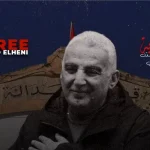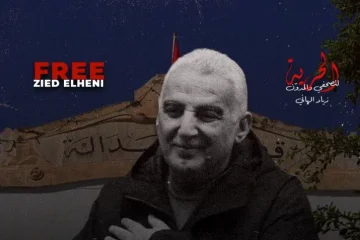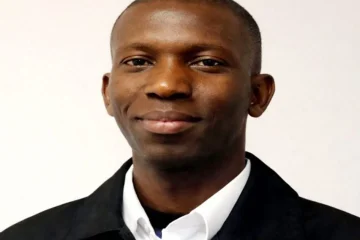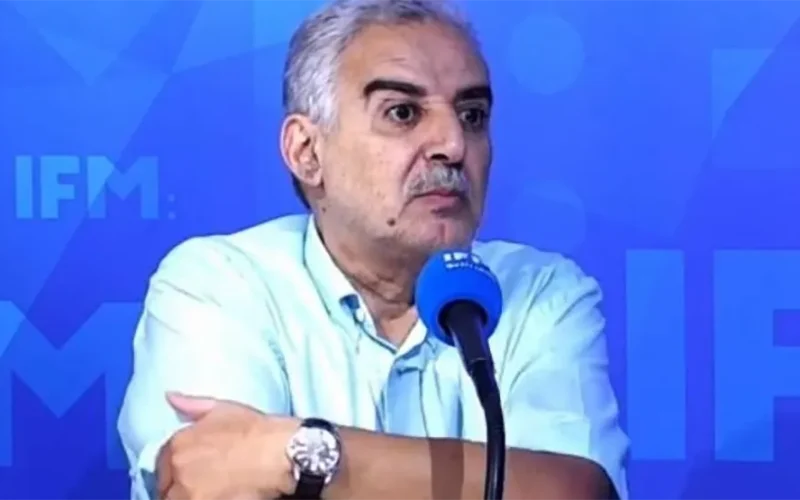
A summons. Then handcuffs. That was the arc of journalist Zied El Heni’s Friday morning in Tunis, after Tunisia’s Cybercrime Brigade — the Fifth Central Brigade for Combating Information and Communication Technology Crimes of the National Guard, headquartered in El Aouina — placed him in custody following a post he had published on his official Facebook account.
El Heni had disclosed the summons himself. On Thursday, he posted publicly that he had been ordered to appear at 9:00 a.m. on Friday, 25 April 2026, at the El Aouina brigade — as a suspect. He showed up. He did not leave free.
By midday, the Public Prosecutor’s Office at the Court of First Instance in Tunis had authorised officers to place him in custody. His lawyer, Nafaa Laribi, confirmed the detention to Reuters. The prosecutor’s office issued no statement. No formal charge was immediately announced.
| “This detention is arbitrary — another step aimed at intimidating journalists.”— Zied Dabbar, Head, Tunisian Journalists’ Union |
The arrest of El Heni — a prominent voice in Tunisian media — follows a pattern that has become grimly familiar under President Kais Saied. Rights groups and press freedom organisations have warned for years of a systematic effort to silence remaining independent voices, a campaign that has accelerated since Saied dissolved the elected parliament in 2021 and began ruling by decree.
In 2022, Saied went further, dissolving the Supreme Judicial Council and dismissing dozens of judges. Critics say the move subordinated the judiciary to presidential authority, turning courts into instruments of political suppression. Saied rejects the charge, insisting he dismantled a corrupt system and that Tunisia’s courts are now genuinely independent.
A REPUBLIC IN RETREAT
The Tunisia of 2026 bears scant resemblance to the country that inspired the Arab Spring. When the uprising toppled autocrat Zine El Abidine Ben Ali in 2011, free expression briefly flourished. Journalists reported without fear. Opposition parties organised openly. Civil society expanded.
That era is over. The leaders of Tunisia’s main opposition parties have been jailed in the last three years, alongside dozens of politicians, journalists, activists and businessmen — charged with conspiring against state security, money laundering and corruption. The arrests carry the imprimatur of the law. Critics say they carry the fingerprints of the presidency.
Saied insists he will not be a dictator and that freedoms are guaranteed. He says no one is above the law, regardless of name or position. But the law, his critics argue, is no longer above him.
| “When a Facebook post becomes the basis for arrest, the message to every journalist is simple: your silence is the price of your freedom.”— The African Mirror |
The detention of El Heni is the latest data point in an accelerating trend. Each arrest sends a message beyond the individual: post with caution, report with fear, speak with consequences in mind. It is a form of jurisprudence designed not to punish the accused alone, but to silence those watching.
The Tunisian Journalists’ Union has condemned the arrest as arbitrary. Its head, Zied Dabbar, described the detention as “another step aimed at intimidating journalists” — a formulation that captures both the pattern and the intent.
CONTEXT: THE CYBERCRIME INSTRUMENT
The brigade that detained El Heni operates under the broad mandate of Tunisia’s cybercrime legislation, which critics say has been weaponised against journalists, bloggers and dissidents. Posts on Facebook, Twitter and other platforms have become prosecutable acts. The threshold for what constitutes a criminal communication is, in practice, whatever embarrasses those in power.
El Heni’s Facebook post — the specific content of which had not been officially disclosed at time of publication — was the trigger for a criminal summons and, ultimately, custody. His lawyer said the underlying issue was a piece criticising the judiciary. In the new Tunisia, that is enough.
Editor’s Note: The African Mirror will continue to monitor the case of Zied El Heni and report on all developments. We stand in solidarity with journalists across North Africa and the continent facing persecution for practising their profession.