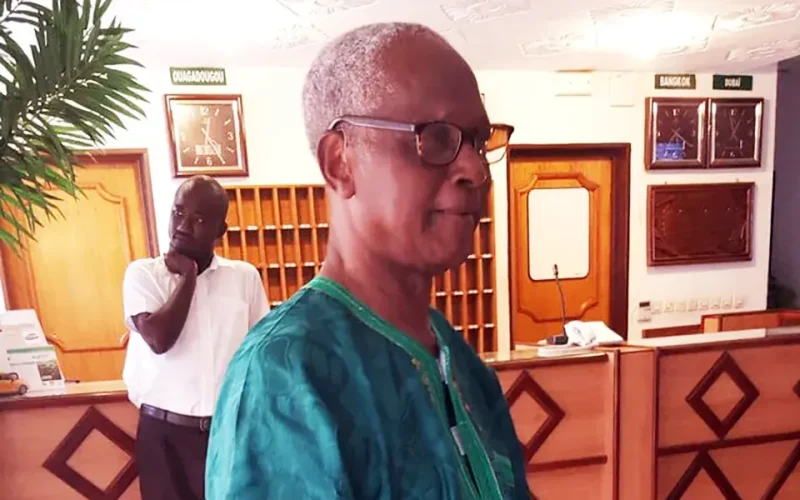
IT was around 2 am in the morning, and I was still awake for reasons that are not immediately important. A WhatsApp message popped into The African Editors Forum group from Cheriff Sy in Ouagadougou, Burkina Faso. It was in French, and I somehow couldn’t open and copy to use Google to translate.
I could see it was about Souleymane Diallo, our common friend from Guinea Conakry and I could discern that it said something about Canada. So I thought Diallo would have been honoured in Canada, but I asked Cheriff what it was all about.
Cheriff immediately responded, telling me Diallo had died in Canada. I felt devastated. In the middle of my still very fresh loss of my wife, a dear friend, comrade in arms and steady hand in the African journalism fraternity was now gone. Only about two months ago, we lost another icon of our fraternity, Hameye Cisse from Bamako, Mali.
Alone in the darkness of my bedroom, my mind raced back to the first time I met Diallo, at the All-Africa Editors Conference in Johannesburg in April 2003. There were about 120 editors and senior editorial executives from about 40 countries, but Diallo immediately made an impression on me.
Not because he was loud, no, Diallo was in fact the opposite. Quite, soft spoken, non-intrusive but very informed and firm with set views about the role of journalism in Africa and what the key leaders of this knowledge industry that shapes opinions of nearly a billion people should do.
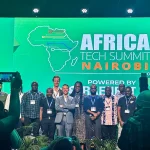
He was unanimously chosen by the West African delegation to be in the steering committee that was tasked to convene a launch conference in 2005, where The African Editors Forum (TAEF) was born.
Publishers in many African countries run shoestring operations with circulations of no more than 5000 copies weekly. Diallo was no exception.
He owned and published two papers, the satirical Le Lynx and La Lance, both very political and outspoken and influential. Born in a Guinea under French colonial rule, he grew up in the heydays of struggles for independence throughout Africa. These were the heady days of African intellectual revolutionaries such as Ahmed Sekou Toure in Guinea, Kwame Nkrumah in Ghana, Mwalimu Kambarage Nyerere in Tanzania and Ahmed Ben Bella in Algeria.
Guinea became the crucible of that revolution that was steadily dethroning the colonial masters from Ghana to Tanzania to Algeria. It was no wonder that when the United States-backed coup financed by the CIA overthrew Nkrumah, he found refuge in Conakry.
South African singer Miriam Makeba also found a home in Guinea and Sekou Toure appointed her the ambassador of his country to the United Nations so that she could use that position to advance the struggle of the people of South Africa.
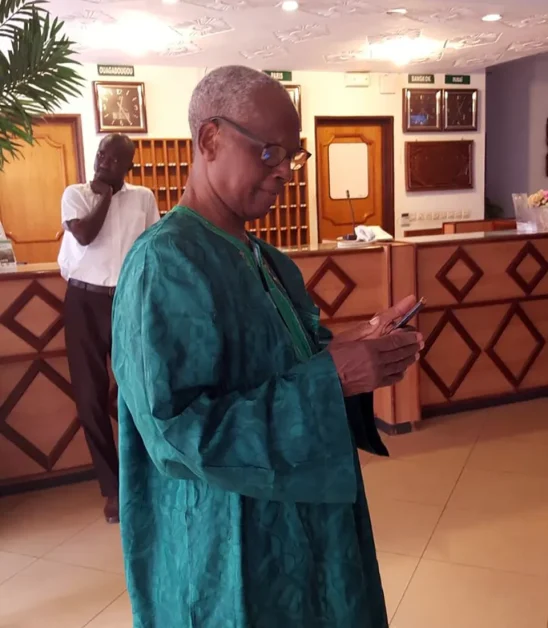
Diallo, born in 1946, grew up in this atmosphere and it shaped his belief system and convictions about right and wrong, and that wrong had to be fought, no matter who the perpetrator is.
As some of the first and second waves of independence leaders started going astray, Dialo used his pen to decry the betrayal of the struggle for freedom. This brought him unwanted attention of the new rulers. He was detained several times.
In December 2009, Reporters Sans Frontières (RSF) issued a statement saying its sources within the military had indicated that Diallo’s publishing house would be targeted with a clandestine attack.
“We are taking this information and the threat it entails very seriously,” RSF said. “With a climate of fear still prevailing within the Guinean media, we will hold the junta responsible for any use of violence against the Lynx-Lance press group and its employees. We also urge [then] Burkina Faso President Blaise Compaore, who is mediating in the Guinean crisis, to ask the junta to respect media freedom and the expression of diverse views.”
RSF said it was told that “the operation would consist of a night-time raid on the press group’s headquarters and ‘ambushes’ against some of its journalists. These attacks would be blamed on ‘uncontrolled elements.’ It appears that the military has decided to ‘silence’ the Lynx-Lance group because of its perceived support for the opposition.”
Diallo simply said then: “We must not let ourselves be discouraged by this information. We will continue to do our job with objectivity, as we always do.” 10 years later, Diallo was arrested and charged with endangering state security.
The case drew a lot of international attention, with TAEF sending a delegation to accompany him to court. The case failed, and in celebration, Dialo said: “The Lynx Group takes great pleasure and considers it a pleasant duty to thank all those who helped it escape the thunderbolts of injustice, following the complaint filed against it on August 19, 2019, by the Judicial Police Directorate in a press defamation case. To defeat this clear intent to cause harm, originating from an office at the Court of First Instance of Kaloum, you formed an unbreakable chain of solidarity. Our sincere thanks to each and every one of you!
“Thank you to all of you who helped us prove that we have never produced, broadcast, or made available to others anything that could disturb public order or public safety — and that we have never infringed upon human dignity through a computer system. Thank you for understanding that we are not even computer specialists. Poor us. Thank you all!”
RSF’s concern came to pass on the night of October 18 last year when attackers jumped the wall of the building housing the company’s printing presses and destroyed two working machines.
The Media Foundation of West Africa (MFWA) said in a statement at the time that the unidentified attackers “deliberately damaged the two functioning printing machines, leaving the press unable to operate. The intruders removed essential parts, including the main press compressor, copper rollers, and screws, and even prepared containers to carry dismantled components. According to employees, the sabotage appeared highly targeted, aimed at halting the press rather than opportunistic theft.”
This attack was the second in 10 days, and “followed a previous attack on the night of October 7–8, 2025, when vandals dismantled key parts of the press’s 100 KVA generator, critical for compensating Guinea’s frequent power outages, rendering it inoperable. Combined, these two incidents have completely halted production, threatening the regular publication of Lynx and La Lance, the group’s satirical newspapers,” MFWA said.
However, Diallo’s Editor in Chief for both publications, Mamadou Siré Diallo, said that whilst the attacks were deeply disturbing, the team’s commitment to continue publishing was unshaken.
“Despite these setbacks, we are finalising La Lance for Wednesday and will continue to publish Lynx every Monday,” he said.
This spirit of no surrender is the hallmark of Diallo. At TAEF meetings, he would sit quietly and only make strategic interventions that would steer the debate in a militant direction of the defence of press freedom.
He was the elder statesman, one to whom all members deferred for counsel. He was elected the first Deputy Chair at the founding conference of TAEF in 2005, having spearheaded the launch of the West African Editors Forum in Conakry earlier that year, where he hosted the delegates.
In a climate where colonial languages can sometimes derail organisations with animosities between so-called francophone and Anglophone members, Diallo was always the sober voice, insisting that we cannot allow the language of the colonisers to derail our project to unite editors across Africa.
And his depth came from his academic achievements obtained at various learning institutions in several countries around Africa and Europe. He graduated from the Lagos, Nigeria, Federal Advanced Teachers Training College in 1966. He got a Masters degree in 1970, and studied in Abidjan, Ivory Coast. He graduated with a number of degrees in English literature, Communications, and a Doctorate in 1985 in Nice, France.
In 2010, when the military junta was overthrown and a National Transitional Council (CNT) was formed, he was persuaded to join the CNT, where he was Chairman of the Communication Committee. Diallo used that position to ensure media-friendly laws were passed.
He also served as a judge in the CNN African Journalist of the Year Award, and on the UNESCO Advisory Committee on Freedom of the Press, and a Member of the Jury for the UNESCO/Guillermo Cano International Prize for Freedom of the Press.
Diallo published a number of research papers straggling from his 1987 Treatise on Structural Fulani Grammar, done through the Institute of African Languages, University of Sebha, Libya, to The Theme of Fear in the Novels of Peter Abrahams, University of Nice, France, in 1985, to the Roots of Black Nationalism in South Africa, University of Abidjan, Ivory Coast, in 1981.
Amongst his honours was the Press and Democracy Prize in 1999, conferred by the North-South Festival on Freedom of the Press (Geneva, Switzerland).
Diallo went to Canada to join his daughter Idiatou. His condition worsened and he was admitted to the hospital for surgery, but he passed on on June 1, just 10 days after he fell sick, according to Idiatou. He leaves behind his wife, Bah Fatoumata, and three daughters after the passing of his only son in 2021.
Preparations for Diallo’s remains to be repatriated back to Guinea are underway, and funeral arrangements will only be announced once this process has been concluded.
And when that day comes, Afrikan journalism will dip its banner in salute to a life dedicated to freedom from want, freedom to express and freedom not to fear. That is the legacy Diallo leaves behind.