THE broken doors told their own story. Splintered wood. Bloodstains trailing from the sitting room through the bedroom, continuing their crimson path toward the gate. In the early morning darkness of Monday, October 6, 2025, Humphrey Polepole—former ambassador, turned government critic, turned ghost—was ripped from his Dar es Salaam home in a scene that has become sickeningly familiar to Tanzanians.
A year ago, it was Ally Kibao’s acid-scarred face that haunted the nation. The CHADEMA official, a father of five and war veteran, was plucked from a public bus in broad daylight, his body discovered the next day bearing the unmistakable signatures of torture. The brutality was methodical: severe beatings, acid poured on his face, a message written in pain for anyone who dared challenge the status quo.
Now, as Tanzania limps toward elections on October 29, history appears to be repeating itself with chilling precision. And the question reverberating through this East African nation is no longer if these abductions are systematic, but when the pretence of reform will finally be abandoned altogether.
The Ambassador Who Wouldn’t Stay Silent
Humphrey Polepole made a choice that, in retrospect, appears almost suicidal in its courage. After resigning his ambassadorship to Cuba in July, he didn’t retreat into comfortable silence. Instead, he became a megaphone, holding online press briefings that systematically dismantled the ruling Chama Cha Mapinduzi (CCM) party’s carefully constructed facade.
His accusations were surgical: the CCM had flouted its own rules in selecting President Samia Suluhu Hassan as its candidate. The party was mired in corruption. And most damningly, it was orchestrating a campaign of abductions against its critics.
These weren’t whispered allegations in shadowy corners. Polepole was broadcasting them to anyone who would listen, a former insider turning state’s evidence in the court of public opinion. For a government allegedly committed to democratic reforms, his voice must have been particularly galling—the testimony of a man who had served at the highest levels, now burning his bridges with the ferocity of someone who had seen too much.
The broken doors of his home suggest someone decided he had seen—and said—enough.
Democracy’s False Dawn
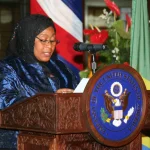
When President Hassan assumed power in 2021 following the death of John Magufuli, the international community exhaled in relief. Magufuli’s tenure had been marked by increasingly authoritarian tendencies, and Hassan’s early moves seemed promising. She reopened newspapers that had been shuttered, lifted bans on opposition rallies, and spoke the language of democratic reform with apparent sincerity.
“Our country is democratic, and every citizen has the right to live. The government that I lead does not tolerate such cruel acts,” she declared on social media following Kibao’s murder last year, promising thorough investigations.
Yet here we are, twelve months later, and the investigation into Kibao’s brutal killing has vanished into the bureaucratic ether. No findings have been made public. No perpetrators have been brought to justice. The acid that scarred Kibao’s face might as well have been poured on the promises of accountability.
The pattern is now impossible to ignore: several critics of Hassan’s government have disappeared since last year. Opposition parties have gone from alleging a campaign of abductions to documenting one. Human Rights Watch has raised alarms about a pre-election crackdown. The government’s response? A September 29 statement rejecting the allegations and calling reports of abductions “a major source of concern for the government”—a masterclass in acknowledging a problem while accepting no responsibility for it.
The Arithmetic of Repression
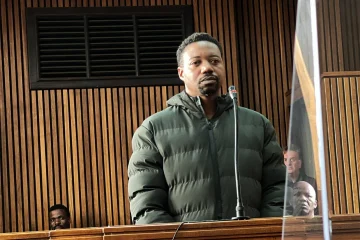
Consider the timeline: Opposition leader Tundu Lissu arrested in April. Charged with treason over a speech allegedly calling for rebellion. Now on trial, pleading not guilty, insisting the charges are politically motivated. In the same breath, the government speaks of democratic values.
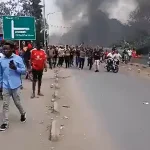
Gen Z-led protests erupted in late September—Tanzania’s youth finding their voice in the only language that seems to penetrate: collective action in the streets. The government’s response has been predictable.
And now, barely three weeks before an election, another critic vanishes in a pool of blood.
The arithmetic is simple, even if the government insists we cannot add: one abduction might be an aberration, two a troubling coincidence, but an ongoing pattern just weeks before polling day? That’s a strategy.
The Silence That Screams
What makes Polepole’s case particularly chilling is what it says about the boundaries—or lack thereof—that Tanzania’s security apparatus now recognises. This wasn’t a street activist or a grassroots organiser. This was a former ambassador, a man who had represented Tanzania on the international stage. If someone with his profile, his connections, his visibility can be dragged from his home, leaving a trail of blood, then the message is clear: no one is safe.
His brother Godfrey’s account is haunting in its matter-of-factness: the broken doors, the blood trail, the signs of violent struggle. There’s no mystery here about what happened, only about who did it and whether they’ll ever answer for it.
Police spokesperson David Misime has promised investigations, saying authorities are working “to ascertain the truth.” But Tanzanians have heard this song before. They heard it when Kibao was abducted. They heard it when other critics disappeared. The investigations begin with fanfare and end in silence.
Reform or Regression?
President Hassan finds herself at a crossroads entirely of her own making. She built her political brand on the promise of being different from Magufuli, of ushering Tanzania into a more democratic era. International donors and observers wanted to believe her. Many Tanzanians wanted to believe her.
But belief requires evidence, and the evidence is now running in the opposite direction. You cannot claim to champion democracy while your critics vanish in the night. You cannot promise accountability for abductions while the killers of Ally Kibao walk free. You cannot speak of the rule of law while your main opposition leader stands trial for treason over a speech.
The cognitive dissonance has become untenable. Either Hassan has lost control of the security forces that operate in her name, or she never truly intended the reforms she promised. Neither scenario bodes well for Tanzania’s democratic future.
The Election’s Shadow
Three weeks. That’s how long remains until Tanzanians head to the polls on October 29. The question is whether they’ll be casting votes or simply ratifying a foregone conclusion in an atmosphere thick with fear.
This is the insidious genius of pre-election repression: you don’t need to arrest every opposition supporter or abduct every critic. You simply need to make examples of enough people, brutally and publicly enough, that others internalise the message. Speak out, and you might disappear. Organise, and you might end up like Kibao, disfigured and dead. Even serve your country as an ambassador, and if you later criticise the wrong people, your blood might stain your own doorstep.
The international community watches, issues concerned statements, and largely moves on. Tanzania is not strategically important enough to warrant sustained pressure. The abductions will be noted in human rights reports, mentioned in diplomatic cables, and then filed away as the world’s attention moves to the next crisis.
A Nation’s Soul at Stake
But for Tanzanians, this is not a foreign policy footnote. This is about what kind of country they inhabit, what kind of future their children will inherit.
Kibao’s son captured this anguish perfectly in his social media tribute: “Is this the kind of country we want for Tanzanians? They didn’t just abduct him. They tortured him, damaged his body, and dumped him like a dog. No human deserves such cruelty.”
Those words, written in grief and rage a year ago, now echo with renewed urgency as another family somewhere in Dar es Salaam grapples with broken doors and bloodstains, with the sickening uncertainty of not knowing whether their loved one is alive or dead, suffering or already at peace.
The acid-scarred face of Ally Kibao was supposed to be a turning point, a moment so horrific that it would force meaningful change. Instead, it appears to have been a precedent, a template for silencing dissent that the state has decided works effectively enough to repeat.
The Verdict Before the Vote
As police “investigate” Polepole’s disappearance and President Hassan’s government issues carefully worded statements of concern, the real verdict is being delivered not in courtrooms but in the streets, homes, and hearts of ordinary Tanzanians. They are learning that reform was a mirage, that the brief flowering of political freedom under Hassan’s early tenure was merely a tactical retreat, not a strategic reorientation.
The broken doors, the blood trails, the disappeared critics—these are not the accoutrements of a functioning democracy. They are the tools of authoritarian control, wielded with increasing brazenness as Election Day approaches.
Tanzania stands at a precipice. The path back toward genuine democratic reform grows narrower with each abduction, each mysterious disappearance, each investigation that leads nowhere. The path toward deeper authoritarianism, meanwhile, is being paved with broken promises and broken bodies.
Three weeks before an election that should represent the voice of the people, the only voices being heard are those screaming in the night as they’re dragged from their homes. And in the deafening silence that follows, Tanzania’s democratic aspirations are bleeding out, one abduction at a time.
The shadows that briefly lifted when Hassan took power have returned, darker and longer than before. And this time, no one can claim they didn’t see them coming.