When FIFA awarded the 2026 World Cup to a tri-nation consortium of the United States, Canada and Mexico, the governing body spoke rapturously of a tournament that would be the biggest, most inclusive and most spectacular in football’s history. A record 48 teams. One hundred and four matches. The world united. Football without borders.
That promise is now in ruins for Africa.
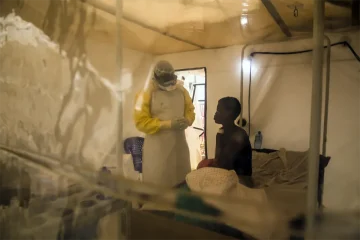
Across the full breadth of the African continent – from the Maghreb to the Horn, from West Africa to the Cape – the 2026 FIFA World Cup has delivered not inclusion but humiliation, not welcome but a wall. The evidence is not anecdotal. It is documented, systemic and damning. Africa’s fans have been denied visas en masse. Africa’s journalists – duly accredited by FIFA itself – cannot enter the country hosting the games. And Africa’s finest referee, award-winning and diplomatic passport-carrying, was turned back at the border.
FIFA’s mantra is that ‘football unites the world.’ At the gates of the 2026 tournament, that mantra has been exposed as hollow. For Africa, this World Cup does not unite. It divides. It demeans. It excludes.
The single most symbolic act of this tournament’s hostility toward Africa arrived before a ball had been kicked.
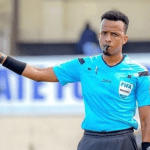
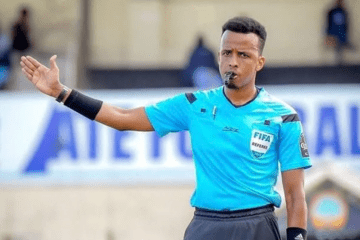
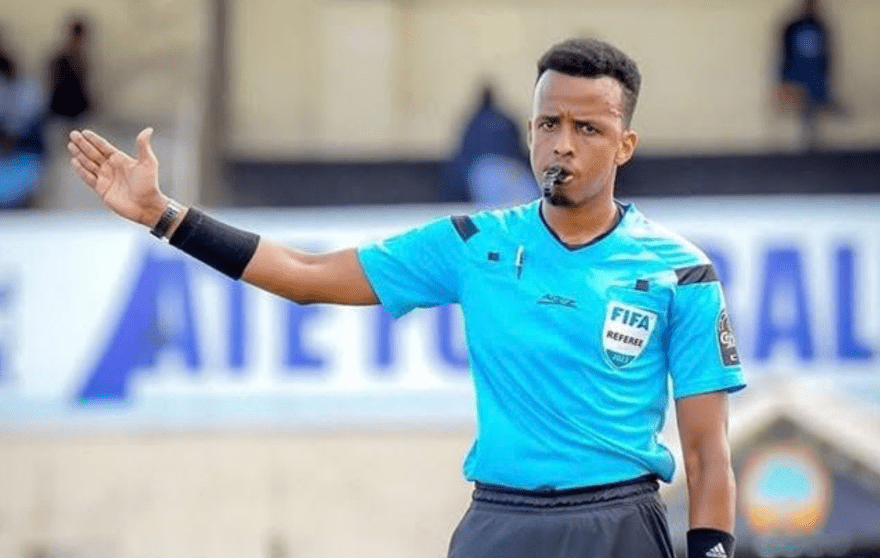
Omar Abdulkadir Artan is Somalia’s most celebrated sports official. The winner of the 2025 CAF Best Male Referee award, he had been selected as one of FIFA’s 52 World Cup referees – a historic honour that would have made him the first Somali ever to officiate at a World Cup. He arrived at Miami International Airport with a diplomatic passport and what his federation believed were fully resolved visa arrangements.
He was turned back.
The United States Department of Homeland Security confirmed in a terse email that Artan had been ‘determined to be inadmissible due to vetting concerns,’ offering no further explanation. FIFA confirmed his elimination from the tournament in its own statement, saying it had ‘been informed by authorities that Mr Artan’s status will not be changed at present.’
Somalia is on the Trump administration’s travel ban list — a designation the US president has made no secret of framing in terms of contempt. Late last year, Trump publicly referred to Somali immigrants in the United States as ‘garbage.’ Artan’s diplomatic credentials, his FIFA appointment, his continental award – none of it mattered.
The International Sports Press Association described his exclusion as ‘an infringement on his personal and professional rights.’ Across African social media, the anger was immediate and visceral. A man who had devoted his life to football — who had risen from the war-scarred streets of Mogadishu to the heights of the continental game — was denied his greatest moment not by any failure of merit, but by the country where he was meant to referee.
Two global football greats were strong in their criticism. England football legend Ian Wright has slammed the US: “Every few hours it’s another story about fans denied, officials denied, players denied, now referees. It’s not funny. Most expensive tickets ever, accommodation, transport through the roof. It has to be said. Is this how the hosts behave for the greatest tournament in the world? Is this the spirit of football, really? This is a World Cup of chaos.”
Liverpool legend was categoric: “This Fifa World Cup in USA is becoming the worst tournament even before it get started! This is not how it is supposed to be, the weather in the US is terrible for players to play in, and we have news of the Somali referee Omar Artan who was appointed by FIFA denied entry, Iran saying FIFA has withdrawn fans World Cup ticket allocation, couple with funny security checks [Kevin Debruyne Belgium and Senegal players] “I have to say it again this World Cup is starting to look like a mess, and the tournament hasn’t even properly begun yet.” “Usually, before a World Cup, we’re talking about the favourites, the star players, and the football. Instead, we’re talking about travel problems, ticket controversies, and immigration issues.” “The Omar Artan situation is one of the most disappointing stories I’ve seen. FIFA selected him because they believed he was good enough to officiate at the World Cup, yet he was denied entry into the United States and will miss the tournament.” “Imagine working your whole life to become the first Somali referee at a World Cup and then being prevented from taking part for reasons completely unrelated to football.” “Then you have Iran’s federation saying their allocation of World Cup tickets for supporters was withdrawn just days before the competition. Whether you agree with a government or not, supporters should not be the ones paying the price.” “I’ve also seen players and delegations complaining about the level of security checks and the delays involved. At some point, people stop feeling welcomed and start feeling like they’re being treated as suspects.” “The weather is another concern. We’re talking about matches being played in extreme summer conditions. The players are expected to perform at the highest level while dealing with heat that can completely change the rhythm of a game.” “A World Cup should be about bringing the world together. Instead, every day seems to bring another story that has nothing to do with football.” “The worrying thing is that these aren’t isolated incidents anymore. When ticket disputes, entry restrictions, and organisational concerns keep appearing, people naturally begin questioning the tournament itself.” “I still hope the football saves the competition because the World Cup is bigger than any host nation. But right now, the headlines aren’t making FIFA look good, and they certainly aren’t making this look like the celebration of football it was supposed to be.”
Thierry Henry said: “The more I look at this World Cup, the more it feels like football is fighting battles that have nothing to do with football. That’s what worries me.”
“We’re talking about the biggest sporting event on the planet, yet the conversation isn’t only about players, tactics, or the countries that qualified. It’s about travel issues, ticket disputes, and politics.”
“Look at the situation involving Iran. Reports say the country’s ticket allocation for supporters was withdrawn just days before the tournament. Whether you’re Iranian or not, fans should be part of the World Cup experience.”
“Then you have the Omar Artan story. FIFA selected him because they believed he was one of the best referees in the world. He earned that opportunity on merit.”
“Yet he was denied entry into the United States despite reportedly holding a valid visa. Suddenly, the story stopped being about football and became about something else entirely.”
“I feel for him because becoming the first Somali referee at a World Cup should have been a celebration for African football, not a controversy.”
“Then there are the supporters. Many people have complained about the cost of attending matches, accommodation, and travel. The World Cup should be accessible to ordinary football fans, not only the wealthiest ones.”
“Football has always been at its best when it unites people from different cultures, religions, and political backgrounds. That’s the beauty of the game.”
“The danger is when political disputes begin influencing who can attend, who can officiate, and how supporters experience the tournament. That is a road football should avoid.”
“I still believe the World Cup will produce incredible moments, but FIFA must make sure that football remains the main story. Politics has enough stages already; the football pitch shouldn’t be one of them.”
The Architecture of Exclusion: How African Countries Were Targeted
The structural picture is as comprehensive as it is calculated. Across the full sweep of African nations competing at this World Cup, an extraordinary web of US travel restrictions applies, creating a two-tier tournament where European and South American fans travel freely while African supporters are treated as suspects.
Somalia faces a full travel ban. Senegal and Côte d’Ivoire face partial travel restrictions. Egypt, Ghana, Morocco, Algeria, Tunisia, and Cape Verde – all face visa freezes or heightened scrutiny under the Trump administration’s January 2026 order. According to the Council on Foreign Relations, which has tracked this crisis with particular rigour, ‘many other qualified countries are on the Trump administration’s visa pause list,’ adding that anyone from those countries can certainly expect an extra level of scrutiny.’
The real-world consequences are stark. Thousands of Moroccan fans — many of whom had already committed significant sums to tickets, hotels and travel – had their US visa applications rejected. They lost their money. They lost their World Cup. The tournament that was meant to celebrate the Atlas Lions’ remarkable ascent in world football has become, for their fans, a source of bitter financial loss and institutional contempt.
What makes this more painful is the selective nature of the exemptions. The Trump administration did carve out exceptions for athletes, coaches and support staff — but only for those categories, and only for the tournament itself. Fans, journalists, corporate sponsors and delegation officials from restricted countries were systematically excluded. The State Department confirmed that ‘only a small subset of travelers’ would qualify for the exemption — meaning that Africa’s travelling public, its press corps and its institutional representatives were all left outside.
“They’re saying there’s something about this atmosphere — I don’t want to get to an airport and then have to explain myself for three hours. So they’re giving the United States a wide berth.”
Prof. Ebenezer Obadare, Council on Foreign Relations
The Press Under Siege: FIFA-Accredited Journalists Turned Away
The crisis extended with full force into the media. The International Sports Press Association — the global body representing sports journalists — was so alarmed by what was happening to its members that it sent a formal letter to FIFA’s Director of Media Relations on 5 June 2026, just days before the tournament’s opening match, demanding urgent intervention.
AIPS President Gianni Merlo’s letter was unambiguous: African journalists who had been duly accredited by FIFA to cover the World Cup were being denied US visas or issued single-entry visas that rendered meaningful coverage impossible. Those given single entries faced an impossible choice: if they followed their national team to games in Canada or Mexico, they could not return to the United States. They would be locked out of the tournament’s decisive stages.
‘We find ourselves facing a long-standing and unacceptable problem: the denial of entry visas to regularly accredited colleagues,’ Merlo wrote. ‘Politicians always say that sport unites and builds bridges between young people in countries in conflict, but in this case, we are going in the opposite direction.’
AIPS further warned that the delay in processing visas had already caused material harm to affected journalists, who had lost non-refundable flight bookings and incurred significant additional expenses — costs borne individually by reporters who had followed every procedure, secured every credential, and done nothing wrong.
New York City Mayor Zohran Mamdani, in a statement that captured the moral weight of the moment, said: ‘The denial of visas for journalists from certain countries, or the rejection of a visa for a coach of a team, as well as single-day visas for specific foreign national teams — this is anathema to what this tournament is supposed to be about.’
FIFA’s Silence and the Question of Complicity
Throughout this accumulation of outrages, one question has grown louder: where is FIFA?
The answer, so far, is: largely absent.
FIFA has confirmed the loss of Omar Artan. FIFA has acknowledged that it ‘is not involved in host country immigration processes, including visa adjudications.’ FIFA has received AIPS’s letter. FIFA has received Iran’s formal protests. And FIFA has, for the most part, expressed regret and done very little.
This posture of studied helplessness sits uncomfortably alongside the governing body’s thunderous rhetoric about football as a universal language. It also raises the question of what exactly FIFA negotiated with the United States when awarding it the right to co-host the tournament — and whether appropriate guarantees of access were secured, and if so, why they are not being enforced.
The crisis is not confined to Africa. Iran’s national team delegation was so thoroughly denied visas for the December 2025 World Cup draw that Tehran boycotted the ceremony entirely. Iran’s players are based in Mexico for the tournament and permitted to enter the US only on match days, then required to return. But Africa’s predicament is both the most numerically significant — with ten African nations competing in a record representation — and the most viscerally felt, given the continent’s history with Western immigration systems.
When the Stands Fall Silent: The Psychological Toll
There is a dimension to this crisis that statistics alone cannot capture, and which Professor Ebenezer Obadare of the Council on Foreign Relations gave voice to with particular clarity.
‘There’s something about having your fans in the stadium, rooting for you, shouting their heads off,’ Obadare said. He recalled the electric energy of Nigerian fans who flooded Atlanta for the 1996 Olympics — the sense of a nation transplanted, of home carried across the ocean, of belonging claimed in a foreign stadium.
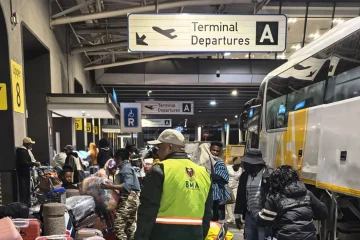
African fans at this World Cup, who cleared the travel ban and made it into the United States, have described something different: the anxiety of the secondary inspection room, the weight of a nationality that marks you out, the calculation of whether you dare follow your team across the Canadian or Mexican border.
‘They’re giving the United States a wide berth and going to Canada or Mexico,’ Obadare said of fans who could have attended US-based games. The fear of what might happen at the airport has become a self-fulfilling exclusion — African supporters staying away not because they were denied, but because they could not trust that they would be treated as ordinary football fans deserving of ordinary human dignity.
The stadiums where Africa’s ten teams play will be poorer for it. So will the tournament.
“Soccer would not exist without immigrants. Immigrants play and coach the game, work in the stadiums, fill the stands… Six of the players on the US Men’s National Team are immigrants.”
New York City Mayor Zohran Mamdani
The Verdict: A Tournament That Chose Exclusion
The 2026 FIFA World Cup was always going to be a political tournament. It was always going to unfold in the shadow of an American administration that has made immigration restriction its defining domestic project. But what has happened to Africa — to its fans, its officials, its journalists, its referee — goes beyond the predictable friction of geopolitics and sport.
What has happened is the systematic relegation of Africa to second-class status at a tournament it helped make meaningful. The ten African nations at this World Cup — more than at any tournament in history — represent a continent that has been fighting for football’s centre stage for decades. They earned their places in the qualification. Their fans earned the right to follow them. Their journalists earned accreditation. Their referee earned his appointment on merit so undeniable it won him a continental award.
None of it was enough. At the gates of the 2026 World Cup, Africa was met with suspicion, scrutiny, single-entry visas, secondary inspections and, in Omar Artan’s case, a flight home.
The question for FIFA — for its leadership, its reform agenda, and its proclaimed values — is simple: if the world’s greatest sporting event cannot guarantee that the world can attend it, what exactly is being celebrated?
Africa is watching. And Africa remembers.