IT is, by now, a familiar story – and that is precisely what makes it so alarming. One of Europe’s most wanted criminals, convicted in absentia to 24 years in a Dutch prison, goes about his alleged business in West Africa with the apparent ease of a man who has nothing to fear from the law.
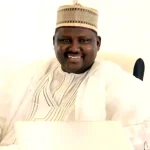
According to OCCRP, Dutch drug trafficker Joseph “Jos” Leijdekkers – who sits on the European Union’s most wanted fugitives list – is the prime suspect behind last month’s record-breaking cocaine seizure on the high seas off the West African coast. Spanish authorities told OCCRP that Leijdekkers is believed to have orchestrated the entire operation from his base in Sierra Leone’s capital, Freetown.
The scale of the seizure was staggering. Spain’s Civil Guard intercepted the cargo vessel Arconian in international waters, recovering more than 30 tonnes of cocaine with an estimated street value of over $954 million. Twenty-three people were arrested, including Dutch, Surinamese, and Filipino nationals. Spanish Interior Minister Fernando Grande-Marlaska described it as one of the biggest drug busts not just in Spain, but globally.
THE FREETOWN CONNECTION
According to OCCRP’s reporting, a Spanish court document confirmed the Arconian departed from Freetown. While the vessel’s declared destination was Benghazi in Libya, Spanish law enforcement alleges the real plan was for speedboats to rendezvous with the ship on the high seas and ferry the cocaine packages to the Spanish coast – a method Lieutenant Colonel Oscar Remacha, head of the Civil Guard’s anti-drug trafficking department, told OCCRP is becoming increasingly common.
“There has been a recently increased use of high-speed boats” to move cocaine from cargo ships to shore rather than risk port inspections, Remacha explained to OCCRP. He described the operation’s audacity with a striking image: dozens of speedboats rafted together 150 miles off the Spanish coast, “waiting to go out like they’re at a taxi stand.”
Remacha told OCCRP that Leijdekkers’ network had likely already used this method successfully before the Arconian was intercepted, suggesting the $954 million seizure represents only one chapter in a far longer criminal enterprise.
A FUGITIVE WITH IMPUNITY
The Leijdekkers case has exposed something that many in West African civil society have long suspected: that some of the continent’s states are being used as operational bases by internationally wanted criminals, shielded – whether through corruption, complicity, or simply institutional weakness – from the long arm of European justice.
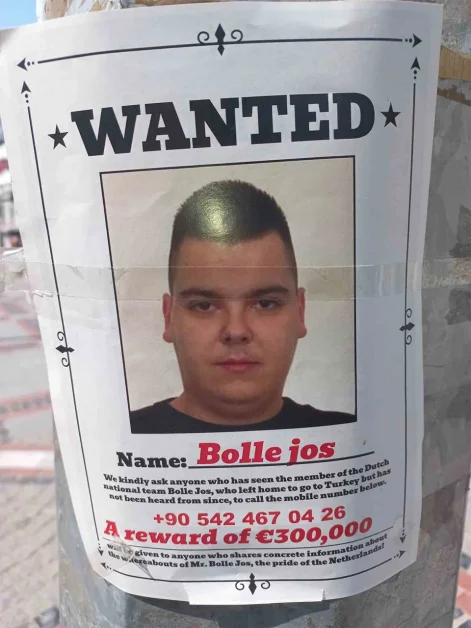
According to OCCRP, the Netherlands sentenced Leijdekkers in absentia in 2024 to 24 years in prison for drug trafficking, armed robbery, and ordering murder. Dutch authorities are offering a reward of 200,000 euros for information leading to his arrest. Yet he reportedly moves freely in Sierra Leone, where OCCRP notes he is widely reported to be well connected with the country’s political and economic elite.
Dutch authorities have so far been unable to secure his extradition. Netherlands police confirmed this week that they had searched the homes of four crew members of the Arconian – but the alleged mastermind himself remains at large.
Remacha was blunt in his assessment when speaking to OCCRP: Leijdekkers enjoys “total impunity, total confidence” in running trafficking operations out of Sierra Leone. “He knows getting it out of Sierra Leone is easy for him,” Remacha said. “After that, it’s not normal for a ship on that specific itinerary to undergo any inspection unless it approaches a port. So he was quite confident he wouldn’t get caught.”
SIERRA LEONE UNDER SCRUTINY
The Arconian bust has drawn fresh international attention to Sierra Leone’s growing reputation as a hub for drug trafficking. According to OCCRP’s reporting, the bust prompted Abdul Kargbo, leader of the opposition All People’s Congress party, to write an open letter on 10 May to President Julius Maada Bio, citing media reports about the country’s role and criticising what he called the government’s “prolonged silence and apparent hesitation” in responding firmly and transparently.
OCCRP reports that the United Nations Office on Drugs and Crime has also documented Sierra Leone’s role as a transit and operational hub for cocaine trafficking. The Sierra Leone Police and the Internal Affairs Ministry did not respond to OCCRP’s requests for comment. The government stated in February that it had secured 52 convictions related to drug trafficking and organised crime – but critics argue those numbers ring hollow while a man of Leijdekkers’ alleged stature operates freely within its borders.
Leijdekkers’ lawyer confirmed receipt of OCCRP’s questions but declined to respond, stating: “I see no reason to respond.”
THE WIDER AFRICAN STAKES
For The African Mirror, this story carries a significance that extends well beyond one fugitive Dutchman and one intercepted ship. The Leijdekkers case is a window into how organised crime exploits state fragility, corrupts institutions, and uses Africa as a throughway for narcotics destined primarily for Western markets – while leaving behind destabilisation, impunity cultures, and tarnished reputations.
West Africa has long been identified as a key cocaine transit zone on the route from South America to Europe. What the Arconian bust demonstrates is that the continent is no longer merely a corridor – it is now, in some instances, the operational command centre. The drugs were stored in Sierra Leone. The logistics were run from Sierra Leone. The alleged organiser lives in Sierra Leone.
That is not a transit story. That is a headquarters story.
The question now facing not just Sierra Leone, but the broader community of African states, is how long the continent will permit its sovereign soil to be exploited as a base for international organised crime – and what political will exists to confront it.