IN the end, it was not the oil blocks, nor the $1.8 billion offshore deal, nor even the seven-day birthday spectacle on the Caribbean island of Grenada that undid Aisha Achimugu. It was 136 bank accounts, a safe full of jewellery, and an Assets Declaration Form on which she chose not to tell the truth.
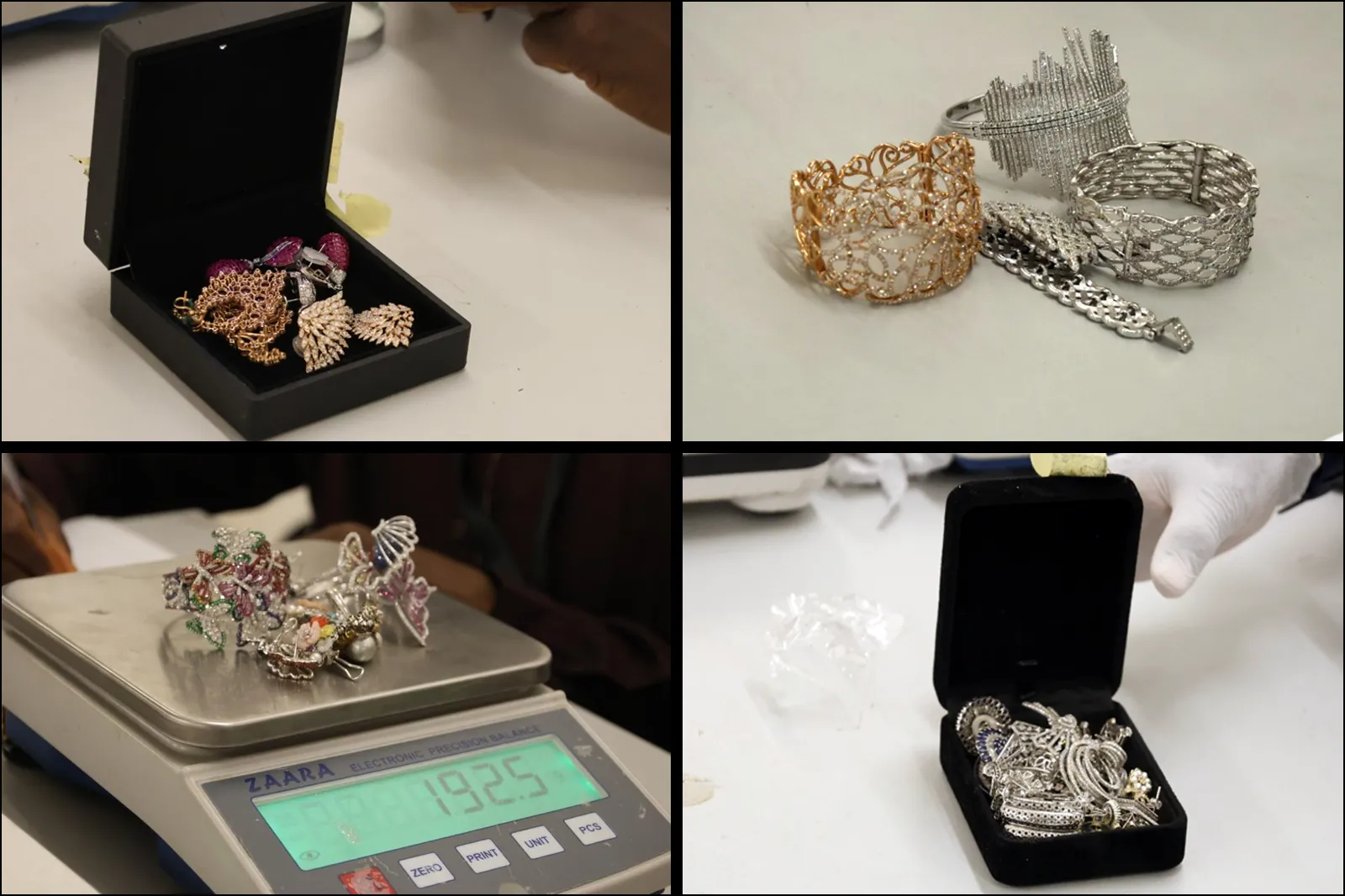
On Thursday, 16 July 2026, Justice Jude Onwugbuzie of the Federal Capital Territory High Court sitting in Apo, Abuja, delivered the final word in a case that has become a parable of Nigeria’s contemporary elite: a final forfeiture order stripping the once-untouchable oil and gas entrepreneur of jewellery valued at N4,645,170,294.90, eleven exotic vehicles worth N4,293,000,000, US$50,000 in cash and a further N30 million – a haul exceeding N8.9 billion, now the property of the Federal Government of Nigeria.
FROM GRENADA’S GLITTER TO ABUJA’S GAVEL
Achimugu’s fall is, in some sense, a case study in the arithmetic of impunity finally failing to add up. The Chief Executive of Oceangate Engineering Oil & Gas Ltd and Felak Concept Group built a public image as an industrialist and philanthropist, a woman who moved comfortably among Nigeria’s political elite and who, in January 2024, threw a lavish seven-day fiftieth birthday celebration in Grenada attended by prominent political and entertainment figures, including Lagos State Governor Babajide Sanwo-Olu. That party, and the questions it provoked about the true source of her wealth, proved to be the opening act of a reckoning that has now run for more than two years.
The Economic and Financial Crimes Commission’s interest in Achimugu was triggered not by rumour but by financial intelligence: a pattern of huge inflows and outflows running into billions of naira and millions of dollars across more than one hundred and thirty-six bank accounts linked to her. Investigators found that the sums moving through companies under her control were never declared as revenue in financial statements filed with the Federal Inland Revenue Service – a discrepancy that, in the anatomy of a laundering case, is often the first thread that unravels the whole garment.
THE JEWELLERY BOX AND THE LIE ON THE FORM
When the EFCC’s operatives searched Achimugu’s residence, they recovered the jewellery, cash and other assets now forfeited. What sealed the outcome, however, was not merely what investigators found in the house, but what its owner refused to admit was hers. Given an Assets Declaration Form during interrogation, Achimugu did not disclose the recovered valuables as her property – a choice the court would later treat as corroborating, rather than contradicting, the Commission’s case. Investigators concluded that the funds feeding her accounts bore no relationship to any lawful business activity, and that the jewellery, cars and cash sitting in her home could not be traced to legitimate sources either.
“The court found that Achimugu did not dislodge the evidence led by the EFCC and also failed to discharge the burden of showing that the assets were from lawful origins.”
Armed with that evidence, the EFCC’s legal team, led by Ekele Iheanacho, SAN, moved under Section 17 of the Advance Fee Fraud and Other Related Offences Act, which permits the interim and eventual final forfeiture of assets reasonably suspected to be proceeds of unlawful activity. Justice Onwugbuzie granted the interim order on 23 April 2026 and directed the Commission to publish it in national dailies, giving any person with a competing claim fourteen days to show cause. The EFCC complied. Achimugu’s lawyers filed affidavits contesting the order and sought to have it set aside; the Commission countered. After hearing both sides, the court reserved judgment – and on Thursday delivered the verdict that now closes this particular chapter: the assets belong to the Nigerian state.
A PATTERN, NOT AN ANOMALY
This is not Achimugu’s first encounter with Nigeria’s asset-recovery machinery, and that history matters for understanding the scale of what has now unfolded. She was declared wanted by the EFCC in March 2025 over allegations of criminal conspiracy and money laundering after failing to honour an invitation for questioning, arrested at the Nnamdi Azikiwe International Airport in April 2025, and has since been locked in overlapping legal battles over funds the Commission says trace back to a $250 million fraud scheme and questionable financing behind her acquisition of two oil blocks worth $25.3 million. In March 2026, a separate Federal High Court order forfeited a further US$13 million linked to Oceangate to the government – funds the presiding judge in that matter also found to be proceeds of fraud, after Achimugu and her company failed to establish a lawful origin for the money.
Achimugu, for her part, has not gone quietly. In interviews, she has insisted her wealth predates and is independent of any political patronage, telling Channels Television that she began building her business in 2001, long before her association with any serving governor, and that the cash found in her home – by her account, $50,000 and N13 million – belonged to her mother, not to her. Her lawyers have argued that her earlier arrest breached a standing court order and her fundamental rights. Those arguments, however, have not survived judicial scrutiny where it has mattered most: in the forfeiture courts, where the burden falls on the asset holder to prove legitimate origin, and where, twice now, that burden has not been discharged.
WHY THIS CASE MATTERS BEYOND ONE WOMAN’S JEWELLERY BOX
For Nigeria – and for a continent still wrestling with the long shadow of grand corruption – the Achimugu forfeiture is significant well beyond its naira value. It lands amid a broader recalibration in Abuja’s anti-graft posture, one in which the EFCC has increasingly pursued civil forfeiture as a faster, evidentially lighter route to recovering suspected proceeds of crime than the slower grind of criminal prosecution. Civil forfeiture asks only whether assets are reasonably linked to unlawful activity and whether the holder can prove otherwise; it does not require a criminal conviction. Critics of the mechanism warn it can be misused against political opponents or the merely unpopular. Its defenders, including the EFCC itself, argue it is precisely the tool needed against a class of Nigerians whose visible wealth – the exotic cars, the Caribbean parties, the vaults of jewellery – has for decades outrun any plausible legitimate income, while criminal trials stall for years in an overburdened judiciary.
There is also a harder question sitting beneath the headline figures: what does it say about the architecture of a financial system that allowed 136 accounts across ten banks to move billions of undeclared naira before a single flag was raised loudly enough to matter? Nigeria’s Financial Intelligence Unit and its banking regulators will face renewed scrutiny over how such volumes moved for so long. The forfeiture of Achimugu’s jewellery is a victory for the EFCC’s ledger, but it is also a reminder of how much slips through before any ledger catches up.
For now, the gavel has fallen, and the arithmetic of impunity has, in this instance, failed to balance. The diamonds, the fleet of exotic cars, and the cash once locked in a Maitama residence belong, as of Thursday, to the Nigerian people. Whether this becomes a genuine inflexion point in Nigeria’s fight against illicit enrichment, or simply another forfeiture order gathering dust in a state that has recovered assets before without recovering its institutions, will depend on what Abuja does next – not with the jewellery, but with the system that let it accumulate in silence for so long.
KEY FACTS
| Jewellery forfeited | N4,645,170,294.90 (≈ N4.65 billion) |
| Exotic vehicles | 11 vehicles worth N4,293,000,000 (≈ N4.29 billion) |
| Cash forfeited | US$50,000 and N30,000,000 |
| Total value of ruling | In excess of N8.9 billion |
| Presiding judge | Justice Jude Onwugbuzie, FCT High Court, Apo, Abuja |
| Applicant | Economic and Financial Crimes Commission (EFCC) |
| Lead prosecutor | Ekele Iheanacho, SAN |
| Legal basis | Section 17, Advance Fee Fraud and Other Related Offences Act |
| Interim order granted | 23 April 2026 |
| Final order granted | 16 July 2026 |
| Bank accounts under scrutiny | 136 accounts across ten banks |
| Related prior forfeiture | US$13 million linked to Oceangate Engineering Oil & Gas Ltd, ordered in March 2026 |