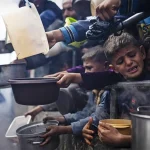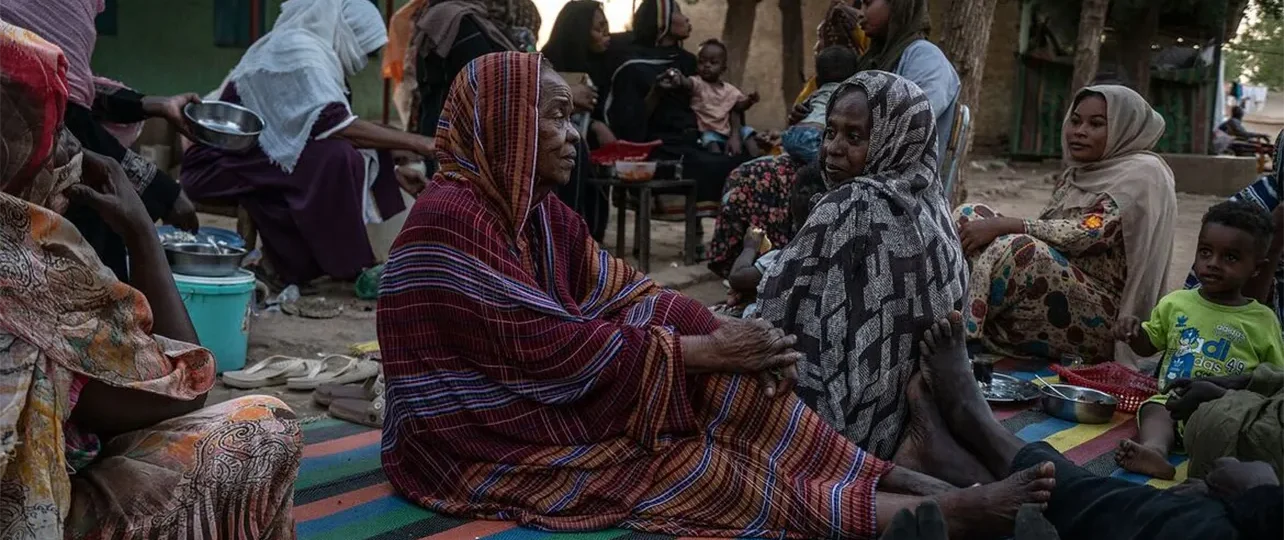

THERE is no safe hour left to fetch water in El Obeid. In the North Kordofan capital, women and girls now face an impossible calculation each day: venture out in daylight and risk death from drone strikes on wells and water points, or wait for dark and risk rape at the hands of armed men who exploit the cover of night. The United Nations says the pattern is not incidental but a deliberate, converging terror that is turning the search for water into a daily gamble with a woman’s life and body as the stake.
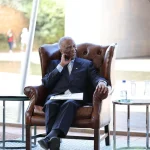
Speaking to reporters in Geneva while dialling in from Nairobi, Anna Mutavati, UN Women’s Regional Director for East and Southern Africa, described a city where sexual violence and aerial bombardment have fused into a single weapon of war. She said the emerging pattern in El Obeid mirrors the horrors already documented in El Fasher last year — a chilling signal that the tactics used to terrorise one Sudanese city are being repeated in another.
“Under the perception that darkness offers protection from aerial attacks, these women and girls have been harassed, raped, and subjected to other forms of sexual violence — all while trying to access water.”
Anna Mutavati, UN Women Regional Director for East and Southern Africa
A BATTLEFIELD BUILT AROUND CIVILIANS
El Obeid’s tragedy is a function of its geography. The city sits astride the arterial routes linking Khartoum to Darfur and the broader Kordofan region and onward to the south of the country, making it one of the most valuable prizes in Sudan’s grinding civil war. That strategic weight has made it a central battleground between the Sudanese Armed Forces and the paramilitary Rapid Support Forces since fighting erupted in April 2023 — and it is now paying the price in civilian blood.
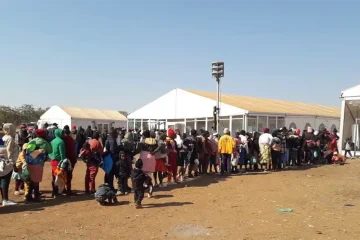
More than half a million people call North Kordofan’s capital home, among them roughly 83,000 people internally displaced by the war, the overwhelming majority of them women and children. For all of them, water is not a convenience but survival, and survival now runs through a gauntlet of missiles and militiamen.
THE DRONE WAR COMES HOME
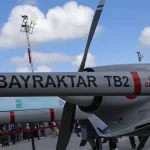
The proliferation of foreign-made drones on both sides of Sudan’s conflict has pushed the fighting deeper into civilian life than at any point since the war began, placing hospitals, markets and water infrastructure squarely inside the blast radius. The UN’s human rights chief warned in May that the conflict stood “on the cusp of entering yet another new, even deadlier phase.” The numbers bear that out: in the first four months of 2026 alone, drone strikes killed at least 880 civilians, accounting for more than 80 percent of all civilian deaths recorded by the UN human rights office in that period.
It is against this backdrop that the UN Fact-Finding Mission for Sudan issued its own warning earlier this month — that the RSF appears to be encircling El Obeid and striking critical infrastructure using the same playbook deployed in El Fasher, raising the spectre of mass atrocities in yet another Sudanese city.
DISEASE STALKS BEHIND THE GUNS
The rainy season, due to peak next month, brings its own emergency layered on top of the violence. Contaminated and inaccessible water sharply raises the risk of waterborne disease at precisely the moment the conflict is making clean water hardest to reach. Cholera is already spreading nationally, with the World Health Organisation recording 1,330 cases by early July. Malnutrition — which UN Women says is increasingly affecting women and girls — is compounding the danger, weakening immune systems and leaving displaced populations acutely vulnerable to severe illness and death, even as access to food and healthcare remains severely restricted, particularly inside displacement sites.
A WEAPON USED SINCE THE WAR BEGAN
Sexual violence has been documented as a weapon of war throughout Sudan’s three years of conflict, with testimony from the frontlines describing rape carried out in front of family members and accompanied by extreme physical brutality. UN Women estimates that the number of women and girls requiring gender-based violence services across Sudan has quadrupled since the war began, reaching an estimated 12.7 million people in 2026 — a figure that captures the scale of a crisis that remains largely hidden from international attention.
Women-led organisations have carried much of the humanitarian response in communities that larger agencies struggle to reach, providing protection and support that would otherwise not exist. But funding cuts are gutting that frontline capacity: two-thirds of these organisations have already been forced to close or scale back safe spaces and gender-based violence services. Half of those surveyed say that without urgent financial support, they expect to suspend operations or shut down entirely within the year.
THE ANALYSIS: A WARNING AFRICA CANNOT AFFORD TO IGNORE
What is unfolding in El Obeid is not a localised tragedy but a template. The deliberate targeting of water infrastructure, the use of sexual violence as an instrument of terror, and the encirclement tactics now being replicated from El Fasher all point to a war that has learned to weaponise the most basic necessities of civilian survival. For the African continent, the implications extend well beyond Sudan’s borders: a protracted, drone-intensified conflict on this scale destabilises an already fragile Horn of Africa and Sahel corridor, deepens displacement pressures on neighbouring states, and tests the credibility of continental and international bodies that have thus far struggled to force a ceasefire.
UN Women has renewed its call for an immediate ceasefire and inclusive peace talks. But with humanitarian funding retreating even as need quadruples, the gap between what is being asked for and what is being delivered is widening by the week. For the women and girls of El Obeid, that gap is measured not in policy terms but in the hours between dawn and dusk — the only window in which, for now, there is no safe time to fetch water.