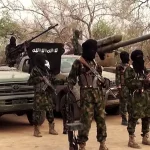
For sixteen years, Nigeria’s war against terrorism in the northeast has been fought on two fronts: the visible one, waged in the scrublands of Borno and Yobe against Boko Haram and its Islamic State-aligned offshoot, ISWAP; and the invisible one, waged within the ranks of the very institutions tasked with winning it. The arrest of Private Mohammed Yusuf, a soldier attached to the Army Ordnance Kits Factory in Lagos, has thrust that second, quieter war back into view – and with it, an uncomfortable question the Nigerian military has spent years trying to answer: how much of the insurgency’s staying power is being underwritten from the inside.
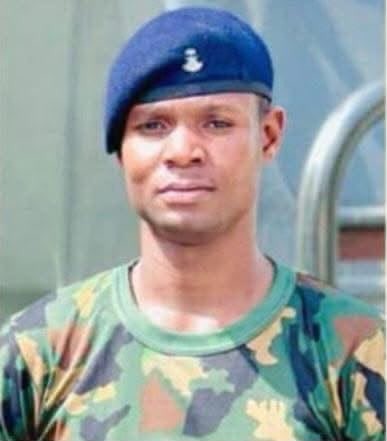
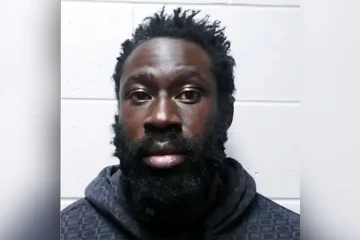
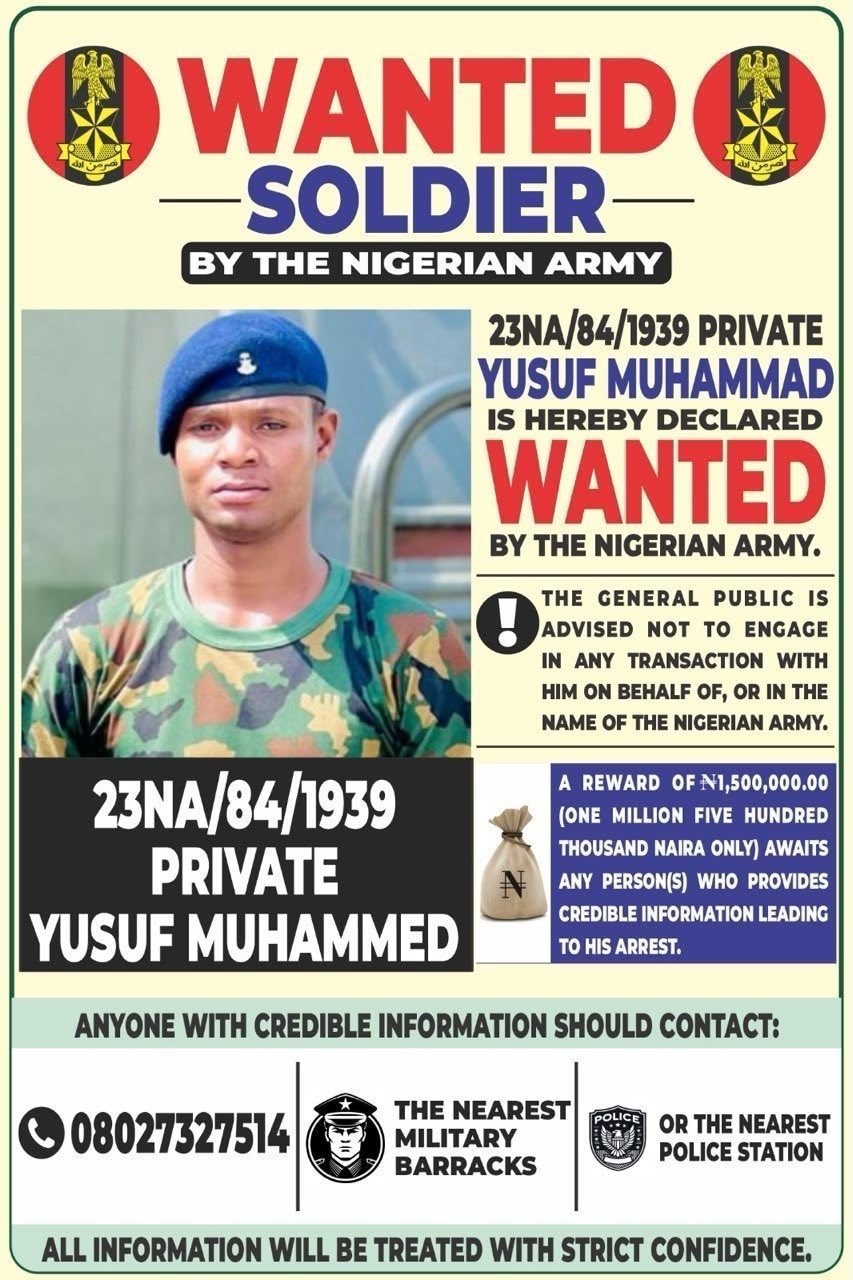
Troops of Operation HADIN KAI arrested Yusuf at about 6:30 p.m. on 25 July at Jidari Bus Stop in Maiduguri, allegedly as he attempted to cross into Cameroon. He had been declared wanted just two days earlier over accusations that he illegally supplied military accoutrements to terrorist and criminal networks. According to the Nigerian Army, he had absconded from his unit on 7 July and gone underground in the Gomari Costain area of Jere Local Government Area, reportedly with the help of an associate, before intelligence-led surveillance closed in.
The details matter less for their individual weight than for the pattern they confirm. This is not the first time a member of Nigeria’s security architecture has been accused of trading in the tools of the insurgency he was deployed to defeat. Over the years, the Nigerian Army has periodically announced the arrest or dismissal of personnel implicated in leaking troop movements, diverting fuel and rations, or supplying ammunition and equipment to armed groups operating across the Lake Chad Basin. Each case is presented, as this one was, as proof that the institution is cleaning its own house. Taken together, however, they describe something closer to a structural vulnerability than a series of isolated betrayals: a supply chain porous enough that materiel meant for counter-insurgency can, allegedly, be redirected toward the insurgency itself.
“There is no safe haven for individuals who support terrorism or any form of criminality, irrespective of their status.”
Operation HADIN KAI statement, 26 July 2026
It is a vulnerability with consequences that extend well beyond the northeast. Nigeria’s terrorism and banditry economy – the overlapping networks that traffic in kidnapping-for-ransom, cattle rustling, arms smuggling and, increasingly, ideologically driven violence — depends on a functioning logistics chain almost as much as any legitimate enterprise does. Weapons, ammunition, communications equipment and even uniforms have real market value to armed groups seeking to project state-like authority or simply to survive an increasingly aggressive air and ground campaign. Every credible allegation of a soldier acting as a node in that chain is also, implicitly, an allegation about how mass abductions – of schoolchildren, worshippers, travellers on federal highways – remain financially and logistically viable in a country that has poured enormous military and diplomatic capital into eradicating them.
Captain Mohammed Goni, Acting Military Information Officer at Headquarters Joint Task Force (North East), framed the arrest as evidence of the army’s improving intelligence apparatus and its “sustained effort to dismantle criminal support networks.” The statement leaned heavily on the language of deterrence, insisting that no individual is beyond the reach of accountability “irrespective of their status.” That formulation is doing deliberate work. It signals, to a domestic audience increasingly weary of a conflict that has outlasted a generation of political promises, that accountability will not stop at the insurgents themselves but will reach into the institution meant to defeat them.
Whether that signal translates into sustained institutional reform is the harder question, and one the army’s public statements rarely engage directly. Yusuf remains in the custody of the 7 Provost Group, where investigators say they are working to establish the full extent of his alleged activities and identify other individuals who may have been involved — language that notably leaves open the possibility of a wider network rather than a lone actor. Until that investigation concludes, the presumption of innocence properly attaches to Yusuf as an individual. But the institutional question his case raises does not require his guilt to be resolved first: how did a private attached to an ordnance factory in Lagos come to be the subject of a cross-border manhunt reaching all the way to the Cameroonian frontier, and what does that itinerary suggest about the reach of the networks he is accused of serving?
The army’s appeal for public cooperation – timely, credible information from civilians as critical to the restoration of lasting peace – is by now a familiar refrain in its communications strategy, and a reasonable one. But it also implicitly concedes the limits of internal vigilance alone. A counter-insurgency campaign cannot outsource its accountability entirely to citizen tip-offs while treating each internal breach as an isolated aberration. If Nigeria’s northeast is ever to move from a state of managed containment to one of genuine resolution, the same forensic energy currently applied to tracking down individual suspects like Yusuf will need to be applied, systemically, to the procurement and logistics chains that make such alleged betrayals possible in the first place.
For a region where abduction has become almost a background feature of civilian life — from Chibok to Kankara to the highways of Kaduna and Zamfara – the question of who arms the abductors is not a peripheral detail. It is, increasingly, the story itself.