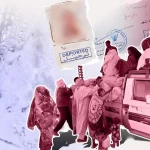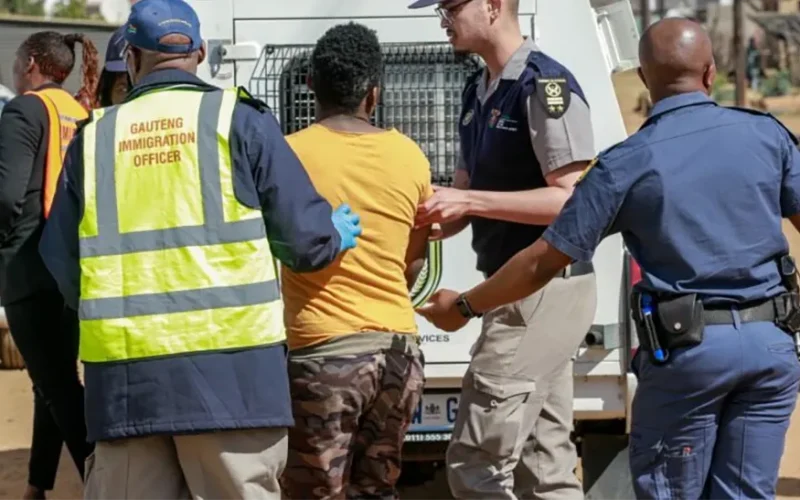
SOUTH Africa has deported more than 109,000 undocumented immigrants in the past two financial years, the Department of Home Affairs has confirmed, as the country confronts the most politically charged immigration crisis in its post-apartheid history.
Home Affairs Minister Dr Leon Schreiber announced that inland deportations reached 109,344 by 31 March 2026 – a 46% cumulative surge since the formation of the Government of National Unity in June 2024. The figure excludes direct deportations carried out by the Border Management Authority (BMA) at the country’s ports of entry, meaning the true scale of removals is considerably larger.
“These numbers show that we are now reaping the fruits of reforms focused on greater efficiency and intensified enforcement against immigration violators,” Schreiber said. “Through ongoing campaigns like Operation New Broom, as well as the increasing use of biometric verification tools, we have already increased deportations by 46%.”
His warning to those still in the country illegally was unambiguous: “If you are in South Africa illegally, self-deport now before we find you and ban you from ever entering our country legally in future.”
“If you are in South Africa illegally, self-deport now — before we find you and ban you from ever entering our country legally in future.”
Home Affairs Minister Dr Leon Schreiber
A CRISIS YEARS IN THE MAKING
The numbers reveal a government playing accelerated catch-up after years of porous enforcement. In 2023/24 — the last year of the previous administration — only 39,672 deportations were recorded. The first year of the GNU saw that figure jump by 30% to 51,560. The just-completed 2025/26 financial year recorded a further 12% rise to 57,784.
Acting spokesperson André Gaum described the trend as a “marked increase in law enforcement against immigration violations” that demonstrates the department’s commitment, alongside its law enforcement partners, to restoring the rule of law.
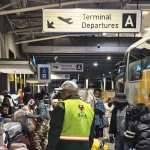
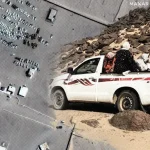
But inland deportations only capture part of the pressure. The BMA, which polices South Africa’s 4,862 kilometres of land border, has been intercepting entire busloads and taxiloads of undocumented travellers. In the first quarter of the 2025/26 financial year alone, border guards apprehended and deported 9,954 persons attempting to enter illegally. Since July 2022, border officials have stopped approximately 496,600 illegal crossing attempts.
BMA Commissioner Dr Michael Masiapato has bluntly called out South Africa’s neighbours – chiefly Zimbabwe, Mozambique, and Lesotho – for failing to commit sufficient resources to curb the outflow. “South Africa is bearing the brunt of illegal migration,” he said. “Our neighbours are not doing enough because the issue doesn’t affect them directly.”
THE COST TO THE FISCUS — AND TO SOCIETY
Parliamentary data tabled late last year showed that the Department of Home Affairs spent nearly R80 million deporting undocumented migrants in the 2024/25 financial year alone – a ballooning figure that reflects both rising volumes and the logistical complexity of removals across multiple nationalities and origin countries. The year before, the cost stood at just over R52.8 million for a partial period.
Beyond the fiscal burden, immigration has emerged as the most combustible social fault line in the country. Researcher and academic Buhle Ndoda, co-founder of GiveHope Foundation, describes the unchecked influx as creating what scholars call a “surplus population” — groups of people the state is unable to track, resource, or account for — placing acute pressure on jobs, social services, and community cohesion.
“In places like Johannesburg and Pretoria, foreigners have declared some areas ‘no-go zones’ for locals,” noted one analyst. “That level of territorial displacement is radicalising communities faster than any policy can respond to.”
VIGILANTES AT THE GATES OF HOSPITALS AND SCHOOLS
The social pressure has found its most alarming expression in the rise of vigilante groups — most prominently Operation Dudula and March for March — which have moved from street protests to physically blockading public hospitals, clinics, and schools.
Scenes of protesters stationing themselves at hospital entrances and demanding South African identity documents from patients became a defining crisis of 2025. At Durban’s Addington Hospital, members of Operation Dudula turned away pregnant women, elderly patients, and those seeking chronic medication. In Gauteng, the group extended its operations to dozens of public clinics, checking documents and denying entry to anyone deemed foreign.
“We’re going to be stationed at schools, and no foreign child will be allowed to attend a public school.”
Operation Dudula president Zandile Dabula, July 2025
The Johannesburg High Court issued an interdict ordering Operation Dudula to cease harassing migrants at health facilities. The group said it would appeal. By January 2026, it had pivoted to schools — announcing a national campaign to prevent the children of undocumented immigrants from enrolling in public institutions.
The South African Human Rights Commission has reiterated that no civic group or private individual holds any legal authority to control access to public health facilities or to enforce immigration laws. Section 27 of the Constitution guarantees healthcare access to “everyone” regardless of nationality or documentation status.
President Cyril Ramaphosa, in his 2026 State of the Nation Address, made the tension between enforcement and rights explicit. “We will not tolerate violence and acts of lawlessness directed at foreign nationals,” he said. “No foreign nationals should be unlawfully barred from accessing public facilities.” Simultaneously, he announced the recruitment of 10,000 labour inspectors to crack down on employers hiring undocumented workers.
TECHNOLOGY AND THE ELECTRONIC NET
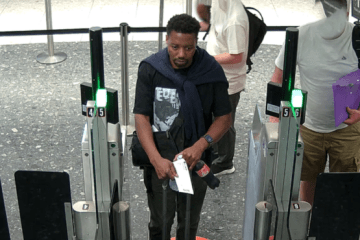
Minister Schreiber has positioned technology as the centrepiece of the enforcement scale-up. Drone surveillance and body camera deployments at border posts are already operational. The impending roll-out of the Electronic Travel Authorisation (ETA) system will, for the first time, record biometrics for every foreigner entering South Africa — sharply enhancing the state’s ability to track visa overstays and undocumented presence.
“The deployment of drone and body camera technology has already made a difference,” Schreiber said. “The impending scale-up of the ETA system will dramatically enhance our ability to detect and arrest anyone who is in South Africa illegally.”
During the Easter long weekend, the BMA monitored more than 72,000 people crossing South Africa’s busiest land ports of entry — a logistical demonstration of the authority’s expanding reach. Yet even as authorities tightened controls, investigators were probing how 32 undocumented passengers were found aboard a bus that had already been formally processed at the Beitbridge Border Post — a reminder that corruption and document fraud remain systemic vulnerabilities.
THE ROAD AHEAD: DETERRENCE OR DISPLACEMENT?
Critics of the government’s approach caution against conflating enforcement with a solution. Human rights organisations, including HIAS South Africa and SERI, argue that the migrant population — estimated at around 3.9% of South Africa’s total population as of the most recent reliable data — is being scapegoated for systemic failures in service delivery, employment, and governance that predate and far exceed any immigration pressure.
The International Court of Justice has urged South African courts to uphold international law in protecting migrants and refugees from discrimination, flagging what it describes as an “extra-legal” rewriting of access to fundamental rights.
Migration scholar Professor Loren Landau and other academics have consistently argued that Operation Dudula’s campaigns misdirect public frustration toward the most visible and vulnerable, rather than toward the structural governance failures — corruption, austerity, and institutional decay — that have genuinely strained public resources.
The department, for its part, shows no sign of slowing the deportation engine. With biometric tools, drones, ETA rollout, and a 10,000-strong labour inspectorate on the horizon, Schreiber’s South Africa is building an immigration enforcement architecture that is, by the government’s own admission, designed to keep scaling. The question for 2026 and beyond is whether the state’s machinery can outpace the social pressure — or whether the two will continue to feed each other.