
TWENTY-TWO years is a long time to wait for justice. For the survivors of Darfur’s scorched villages, for the families of the 300,000 dead, for the 2.7 million driven from their homes – it has been an eternity measured in mass graves and unanswered prayers.
On Monday, that wait yielded a verdict.
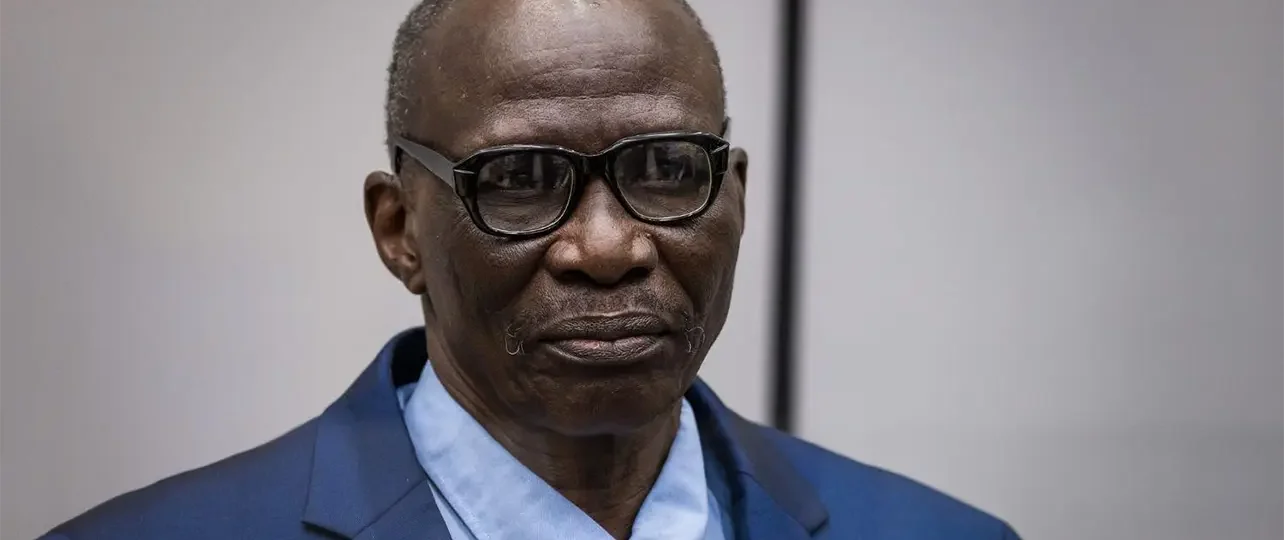
At The Hague, judges of the International Criminal Court convicted Ali Muhammad Ali Abd-Al-Rahman – known as Ali Kushayb – on 27 counts of war crimes and crimes against humanity. The charges paint a portrait of systematic brutality: murder, rape, torture, persecution. The orchestrated destruction of entire communities.
It is the ICC’s first and only conviction related to Darfur. That single word – only – carries the weight of countless other cases that remain unresolved, perpetrators who walk free, and a region still bleeding two decades after the world first looked away.
The Anatomy of Atrocity
The evidence presented over nearly three years tells a story of calculated cruelty. Abd-Al-Rahman commanded Janjaweed militia forces during the darkest chapter of the Darfur conflict, when the Arab-dominated government in Khartoum unleashed a counterinsurgency campaign against non-Arab rebel groups demanding an end to marginalisation.
What followed was not war in any conventional sense. It was ethnic cleansing by fire and blade.
Fifty-six witnesses testified during the trial, their accounts forming a mosaic of horror. Villages encircled at dawn. Men were executed in front of their families. Women raped as a weapon of war, their bodies transformed into battlefields. Homes and crops burned so systematically that survivors returned to find not just destruction, but erasure.
In one chilling account, Abd-Al-Rahman allegedly ordered his fighters to return to the attacked villages, commanding: “Repeat, repeat for these people. Maybe there are some that you have missed.” Prosecutors described his actions as “beastly violence”—words that somehow fail to capture the magnitude of suffering inflicted on communities that simply wanted to exist.
The Janjaweed campaign, backed by Sudan’s then-President Omar al-Bashir, killed an estimated 300,000 people and displaced 2.7 million more. Many died not from bullets but from the slower violence of starvation and disease in displacement camps, hidden from cameras but no less dead.
A Conviction Twenty Years in the Making
The journey to Monday’s verdict began in 2005, when the UN Security Council referred the Darfur situation to the ICC—an extraordinary step that acknowledged atrocities so severe that the international community could not ignore them.
Then came the waiting. The investigations. The warrants. The fugitives.
Abd-Al-Rahman himself remained at large for years until June 2020, when he voluntarily surrendered in the Central African Republic. His motives remain unclear—perhaps calculation, perhaps conscience. By April 2022, his trial had begun. He denied all 31 charges.
The prosecution called 56 witnesses. The defence called 18. Legal representatives for victims testified. Evidence was presented, cross-examined, and debated. Closing statements were concluded in December 2024. And then, finally, judgment.
The conviction represents something exceedingly rare in international justice: accountability. Not comprehensive accountability—that would require the dozens of other accused perpetrators to face trial. Not swift accountability—the victims waited more than two decades. But accountability nonetheless, in a world where warlords often die peacefully in their beds.
The Shadow of Impunity
Yet even as judges read their verdict, the shadow of impunity looms over Darfur.
Omar al-Bashir, the architect of the genocide, faces ICC charges but remains at large despite being ousted from power in 2019. Other Janjaweed commanders have never been arrested. Many were integrated into Sudan’s military and paramilitary structures, their past atrocities transformed into resumés demonstrating ruthlessness.
And Darfur itself? It burns again.
Fresh reports of atrocities and famine continue to emerge from the region, where fighting has escalated dramatically in recent years. In July, the ICC’s deputy prosecutor told the United Nations that war crimes and crimes against humanity are still being committed in western Sudan. The methods echo those of 2003: targeted ethnic violence, mass displacement, systematic sexual violence.
The victims of today’s atrocities watch Abd-Al-Rahman’s conviction from displacement camps and refugee settlements, wondering if they too will wait 22 years for justice—if they live that long.
What Justice Means
For the survivors who testified, who relived their trauma in a courtroom thousands of miles from where it occurred, the verdict offers something precious and insufficient: recognition. The world has said, officially, that what happened to them was not random violence or tribal conflict or the unfortunate side effects of war. It was a crime. They were victims. Someone is being held accountable.
This matters. It matters to the woman who testified about being raped. It matters to the man who watched his village burn. It matters to the children who grew up stateless in camps, their childhood stolen by men who ordered: “Repeat, repeat.”
But recognition is not restoration. A guilty verdict does not bring back the dead, rebuild the villages, or heal the wounds that never close. It does not stop the current violence. It does not guarantee that other perpetrators will face trial.
What it does do is establish a principle: that there are some acts so monstrous that time and distance cannot shield the perpetrator. That even a powerful militia commander can be held to account. That justice, while slow and imperfect, is not impossible.
The Long Road Still Ahead
Abd-Al-Rahman will be sentenced after a new round of hearings. He may spend the rest of his life in prison. Meanwhile, his former comrades continue their campaigns. Al-Bashir remains free. The ICC has opened investigations into more recent atrocities in Sudan, but lacks the resources and cooperation to pursue them effectively.
The Darfur conflict has never truly ended—it has merely evolved, its violence waxing and waning with Sudan’s political convulsions but never disappearing. The same dynamics that sparked the 2003 uprising—marginalisation, resource competition, ethnic tension—remain unresolved. The same tactics that characterised the Janjaweed campaign reappear in new conflicts.
For Sudan’s victims, justice is not a single verdict but a generational struggle. Every conviction is a victory, but every conviction is also a reminder of how many perpetrators will never face trial, how many victims will never see accountability.
A Historic, Insufficient Milestone
The ICC’s conviction of Ali Kushayb is historic because it is unprecedented: the first Darfur conviction after 20 years of impunity. It is also historic because it is singular: one conviction where there should be dozens, one small victory in a vast landscape of injustice.
Monday’s verdict matters because it proves that international justice, however flawed and delayed, can function. It sends a message to current and future war criminals that impunity is not guaranteed. It honours the courage of the 56 witnesses who testified, the survivors who kept demanding accountability when the world had moved on.
But as celebrations of this milestone echo through human rights organisations, the verdict also underscores how much work remains undone. Justice for 56 witnesses in a conflict that claimed 300,000 lives is not full justice. It is a beginning—two decades late, desperately needed, but still only a beginning.
In Darfur today, new victims wait to see if they will endure another 22 years before the world acknowledges their suffering. The fight for justice does not end with a single conviction. It barely begins.