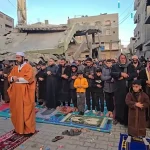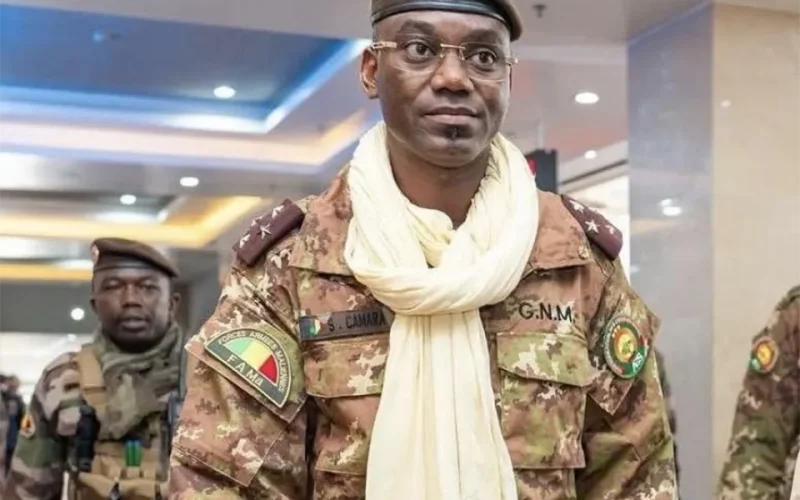
THEY had come, as the faithful do, in the deep quiet before sunrise. Men and women, stepping softly through the dark streets of Kati, drawn not by politics or power but by prayer – by the simple, ancient rite of standing before God at the hour when the world is still. The mosque near the residence of General Sadio Camara, Mali’s Minister of Defence, was a place of worship, not a theatre of war. By 05:20 on the morning of Saturday, 25 April 2026, it had become both.
The worshippers were seated in the hush of pre-dawn waiting, the Fajr prayer fifteen minutes away, when the attackers came. They came without mercy and without hesitation. When it was over, every man and woman inside the mosque was dead. Every one, save for the imam – Adam Camara – who had arrived late that morning, still unwashed for prayer, and was caught by the blast outside. Debris from the shattered wall tore into his head, his back, his left leg. He dragged himself onto his motorbike and rode home bleeding, too wounded to reach the military hospital through streets that had become a war zone.
It was a fellow worshipper, Ishaq Aboubakar Koné, who later bore witness. Writing in a shared messaging group, his words careful and devastated, he described how he had called in civil protection officers to treat the imam after the zuhr prayer – midday, hours after the massacre – because the insecurity of the morning made any movement impossible. He described how search teams were still working through the rubble for bodies. “Many men have been found,” he wrote, “but few women so far.”
Few women so far.
The mosque was not the only target. Metres away – perhaps mere seconds of running distance – the residence of General Sadio Camara himself was obliterated. A suicide bomber drove a car packed with explosives into the minister’s home, an assault attributed to the al-Qaeda-affiliated Group for the Support of Islam and Muslims, known by its French acronym JNIM. The blast was described as particularly powerful, completely destroying the residence. Camara, his second wife, and two of his grandchildren perished in the explosion.
Camara was one of the most influential figures within the ruling military leadership and had been seen by some as a possible future leader of Mali. As the architect of the junta’s military strategy, he embodied the hardline stance adopted by Bamako against armed groups, particularly since the strengthening of partnerships with Russian actors. He was a general, a powerbroker, a man who believed that Russian guns and Kremlin patronage could hold the Sahel together where the West had failed. In the end, a suicide car bomb reduced his convictions – and his family – to rubble before sunrise.
Other senior officials, including military ruler General Assimi Goïta, were reported to have gone into hiding. The man who twice seized power by coup, who expelled French forces and welcomed Wagner’s successors, who strutted before Africa’s juntas as a model of sovereign defiance – on this morning, he was a fugitive in his own garrison town.
Kati is not just any town. It is the home of Mali’s main military base, a heavily fortified garrison about 15 kilometres northwest of Bamako – the nerve centre of the junta’s power. It is the place where coups are launched, where generals sleep soundly behind the highest walls in the country. Kati is considered one of the most secure locations in the country, yet fighters from the al-Qaeda-linked JNIM, along with Tuareg fighters from the Azawad Liberation Front, were able to launch the attack. The symbolism is devastating. If Kati is not safe, nowhere is.
The scale of Saturday’s offensive was, by any measure, unprecedented. Gunmen attacked Mali’s capital Bamako and several locations across the country in an apparently coordinated assault involving multiple groups – including Kati, Sevare, Gao and Kidal in the north. Videos on social media showed militant convoys in trucks and motorcycles moving through Kati’s deserted streets, while residents looked on fearfully. In Kidal and Gao, videos showed gunfire exchanges in the streets, with dead bodies lying on the ground.
By Sunday, Tuareg rebels announced an agreement allowing Russian forces backing Mali’s army to withdraw from the northern city of Kidal, which they claimed was “totally” under their control. Russia’s Africa Corps – the rebranded remnant of Wagner, now under direct Kremlin command – brought in to guarantee the junta’s survival – was negotiating an exit from a city it was supposed to be defending. The great power patron, retreating. The strongman state, exposed.
The men and women who died in that mosque in Kati’s pre-dawn darkness had nothing to do with any of this. They were not generals or coup-makers or geopolitical gambits. They were believers, gathered in the oldest human act of seeking something greater than the chaos around them. They were killed anyway – and in the name of Islam, a faith whose very greeting is a prayer for peace.
Koné put it plainly at the top of his testimony, in words that carry more moral weight than any political statement issued from Bamako: Ce n’est pas de l’Islam, cette barbarie. This barbarity is not Islam.
He is right. But it is Mali’s reality now – a nation where the generals who seized power to bring security have presided over its collapse; where Russian mercenaries cannot hold the north; where worshippers at Fajr prayer cannot be guaranteed to see the sunrise; where a Defence Minister is buried under the rubble of his own home alongside his wife and grandchildren; and where an imam rides home bleeding on a motorbike through streets too dangerous for an ambulance.
The death of Sadio Camara marks a clear halt and a significant setback – not just for a man, but for the entire strategic posture of a military government that staked its legitimacy on the promise of security. That promise lies in ruins this Sunday morning, just like the mosque in Kati, just like the house of the general, just like the families of the nameless faithful whose bodies search teams are still pulling from the debris.