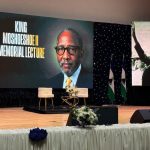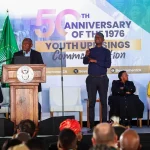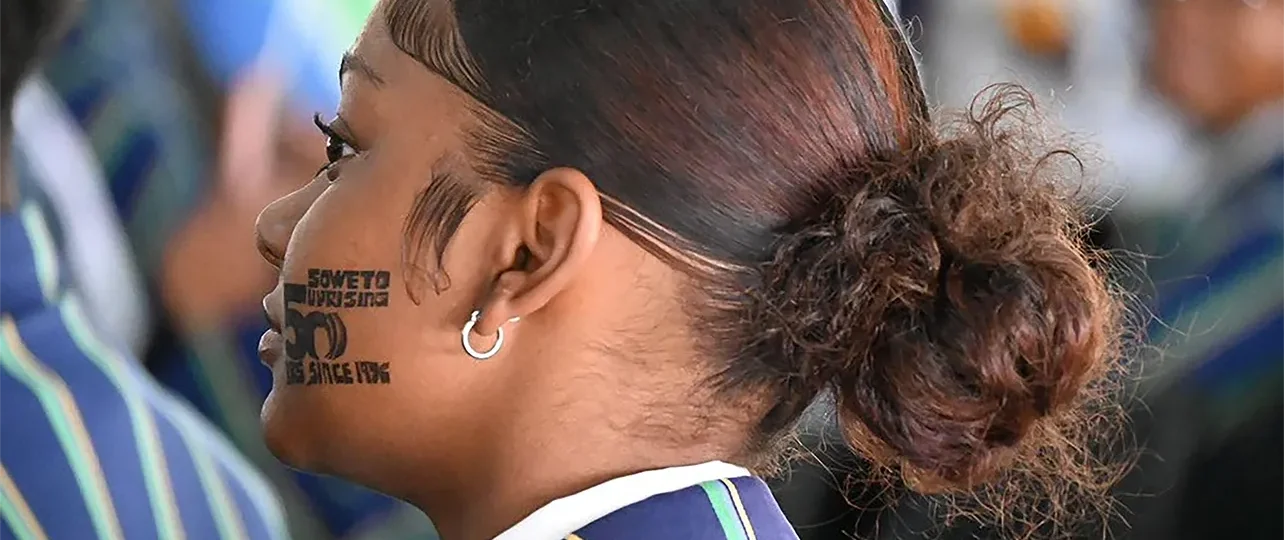

HALF a century after the bullets of 16 June 1976 tore through Soweto’s streets and ignited a generation, South Africa’s political and intellectual establishment gathers on Wednesday at the Maslow Hotel in Sandton to confront a question that grows more urgent with every passing year: has the country delivered for the young people whose sacrifice made its democracy possible?
The answer, on almost every measurable indicator, is a damning no.
Youth unemployment in South Africa stands at over 45 percent among those aged 15 to 34. School dropout rates remain deeply entrenched. Skills mismatches widen by the year. And the TVET and higher education systems that were meant to serve as engines of social mobility are straining under chronic underfunding, governance failures and a curriculum debate that has never been resolved. Against that backdrop, Frank Dialogue Holdings has convened two back-to-back national dialogues on Wednesday – one on the future of education and skills development, the other a June 16 commemorative reflection – bringing together a formidable cast of political figures, academics, civil society voices and private sector leaders for what organisers bill as a platform for ‘robust engagement, knowledge-sharing and collaborative problem-solving.’
| “The uprising of 1976 was not merely a protest against Afrikaans as a medium of instruction — it was a declaration that the youth of this country demanded the right to determine their own future. Fifty years on, that demand remains unanswered.” |
THE POLITICAL WEIGHT OF THE GUEST LIST
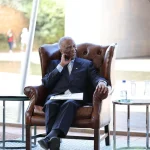
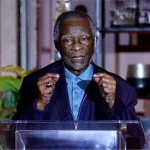
The choice of Former President Kgalema Motlanthe as Guest of Honour for the June 16 Commemorative Dialogue is not incidental. Motlanthe – the third president of the Republic, former ANC Secretary-General, and one of the few senior figures in South African public life who retains credibility across ideological lines – brings both symbolic gravity and frank analytical capacity to a conversation that risks descending into ritual commemoration rather than honest reckoning.
His presence alongside Collen Malatji, President of the ANC Youth League, Dr Rekgotsofetse Chikane of the Wits School of Governance, Seth Mazibuko of the Seth Mazibuko Foundation, and political analyst Kim Heller creates a panel that spans the full arc of post-1976 youth political experience – from those who lived the uprising to those who inherited its legacy and must now answer for it.
Moderating the session is Tessa Dooms, Director at Rivonia Circle, whose track record of structured civic dialogue lends credibility to a platform that could otherwise become a showcase rather than a scrutiny exercise.
GWARUBE IN THE ROOM: ACCOUNTABILITY OR OPTICS?
The morning session on education and skills development carries a different kind of political charge. Minister of Basic Education Siviwe Gwarube – one of the more credible reformist voices in the Government of National Unity’s cabinet – is confirmed as Guest of Honour and is scheduled for both a pre-session briefing and a substantive mid-day response and engagement after the panel discussions.
That structure matters. Rather than delivering a keynote and departing, Gwarube is expected to sit with the analysis and respond – a format that, if held to, creates genuine accountability rather than ministerial window-dressing. The minister arrives at the dialogue with significant political capital but also significant inherited challenges: infrastructure backlogs, a chronic teacher shortage in mathematics and science, and the unresolved legacy of pandemic-era learning losses that disproportionately affected the poorest learners.
The panel assembled to interrogate these challenges is among the more substantive convened in recent memory. Professor Bonang Mohale, Chancellor of the University of the Free State and one of the country’s most respected voices on leadership and institutional transformation, delivers the first keynote. Dr Pali Lehohla, former Statistician-General of South Africa, leads the first panel – bringing the rare discipline of data rigour to a debate often dominated by anecdote and ideology.
| The question is not whether South Africa has the intellectual firepower to diagnose its education crisis. It does. The question is whether Wednesday’s dialogue produces a single binding commitment, a single measurable outcome — or whether it joins the long archive of excellent conversations that changed nothing. |
THE DECOLONISATION FAULT LINE
One of the most politically charged agenda items is the third keynote, titled ‘Decolonisation: The Curriculum Transformation,’ delivered by Professor Linda Meyer, Managing Director at Rosebank College IIE. The curriculum transformation debate – which encompasses language policy, the decolonisation of knowledge, African epistemologies and the question of what South African children should learn about their own history and identity – has become one of the most contested sites in post-apartheid public discourse.
Also notable is the inclusion of Werner Human, Deputy CEO of AfriForum, on the second panel. AfriForum’s presence in a dialogue explicitly framed around June 16’s legacy and curriculum decolonisation will test whether the event is genuinely committed to uncomfortable pluralism or whether it devolves into managed consensus. The organisation’s well-documented opposition to certain aspects of curriculum transformation and its litigation record on minority rights in education make its participation either an act of courageous convening – or a provocation, depending on where one stands.
Unathi Mtya, Chairperson of the UNISA School of Business Leadership Advisory Board, addresses what may be the single most consequential skills question of the current decade: the intersection of human potential, leadership development and artificial intelligence. Her keynote on ‘Skills, Leadership and Human Potential in the Age of AI’ arrives at a moment when South Africa’s skills development framework has yet to meaningfully grapple with the displacement effects of automation on a workforce already characterised by structural unemployment.
THE JUNE 16 QUESTION: LEGACY OR ALIBI?
There is a particular danger in commemorative events of this kind – that the moral authority of the 1976 uprising is invoked to confer legitimacy on present-day actors and institutions without honest accounting for what those actors and institutions have or have not delivered.
The students who marched in Soweto on 16 June 1976 were not protesting abstractly. They were protesting a specific, named injustice – the imposition of Afrikaans as a medium of instruction in Black schools – and they paid for that protest with their lives. Fifty years later, the injustices facing South Africa’s young people are different in form but no less structural in nature: an economy that excludes them, a schooling system that fails to prepare them, a skills development apparatus that does not connect training to employment, and a state that too often responds to their frustration with force rather than investment.
Dr Rekgotsofetse Chikane – son of Reverend Frank Chikane and a scholar who has written with characteristic rigour about the failures of post-apartheid governance to deliver for the generation that inherited the liberation dividend – will be among those expected to hold that line in the commemorative session.
EVENT AT A GLANCE
| Organiser | Frank Dialogue Holdings |
| Date | Wednesday, 18 June 2026 |
| Venue | Maslow Hotel, Sandton, Gauteng |
| Session 1 | Frank Dialogue on the Future of Education and Skills Development | 09:00–15:00 |
| Session 2 | June 16 Commemorative Dialogue | 15:00–17:30 |
| Guests of Honour | Minister Siviwe Gwarube (Education) | Former President Kgalema Motlanthe (June 16) |
| Key Voices | Prof. Bonang Mohale, Dr Pali Lehohla, Prof. Linda Meyer, Unathi Mtya, Werner Human (AfriForum), Dr Rekgotsofetse Chikane, Seth Mazibuko, Kim Heller |
| Media Enquiries | Busi Radebe | [email protected] | 081 782 2037 |