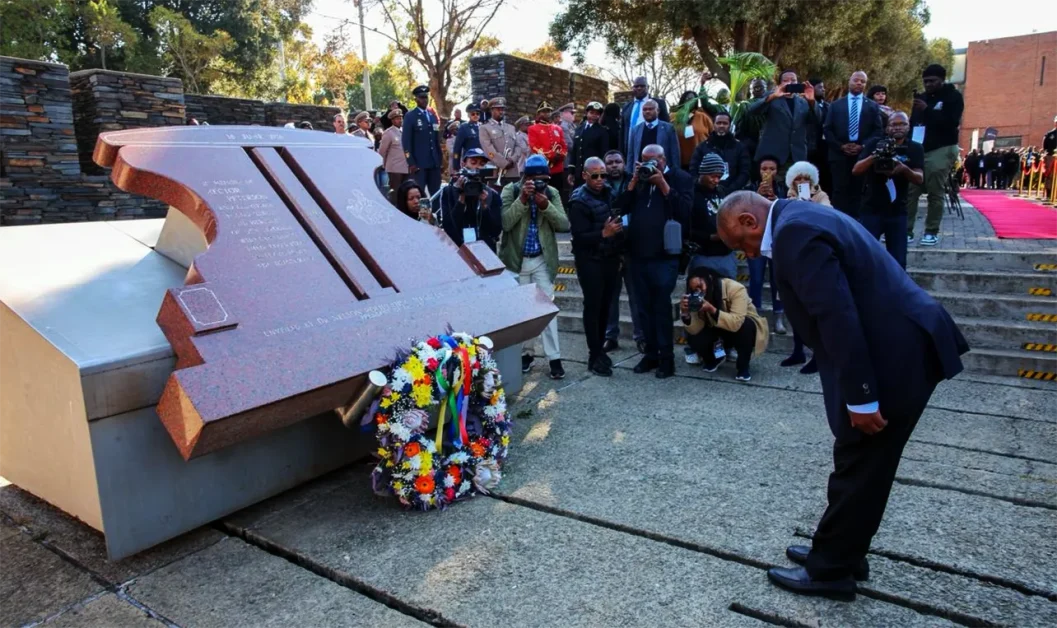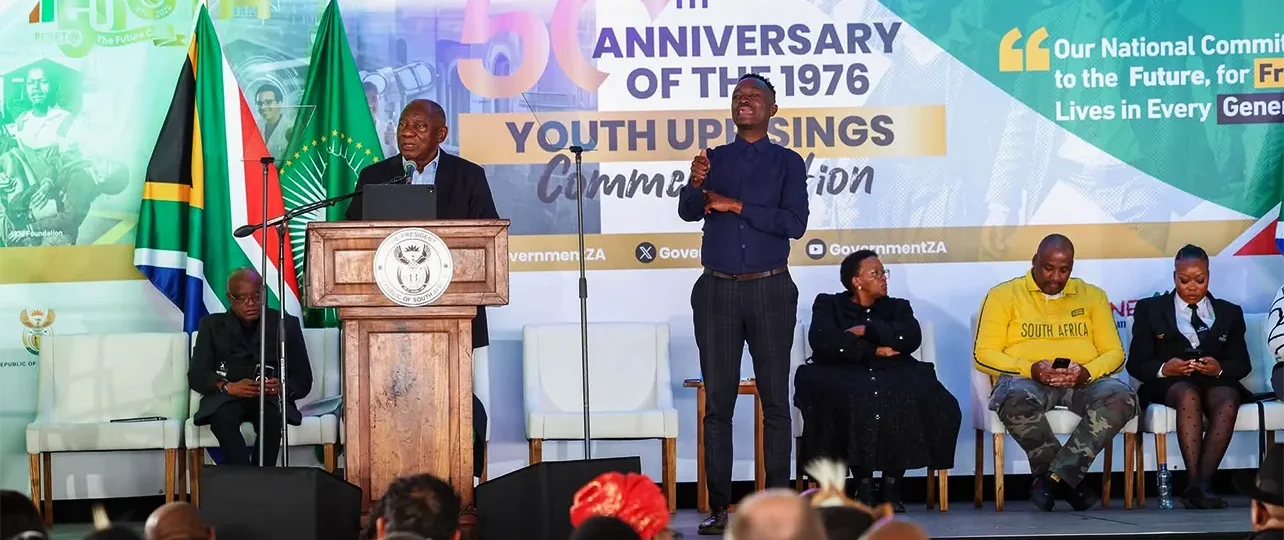

President Cyril Ramaphosa has used the 50th anniversary of the 1976 Soweto uprising to issue a stark challenge to South Africa’s youth and a blunt warning against afrophobia and xenophobia, saying the country must not allow migrants to be scapegoated for failures that stem from inequality and slow growth.
The 50th anniversary was commemorated across South Africa, the official event hosted by the government, with many political organisations such as the Azanian People’s Organisation, the Economic Freedom Front, the Black Consciousness Movement United and many other civil society organisations holding separate events.
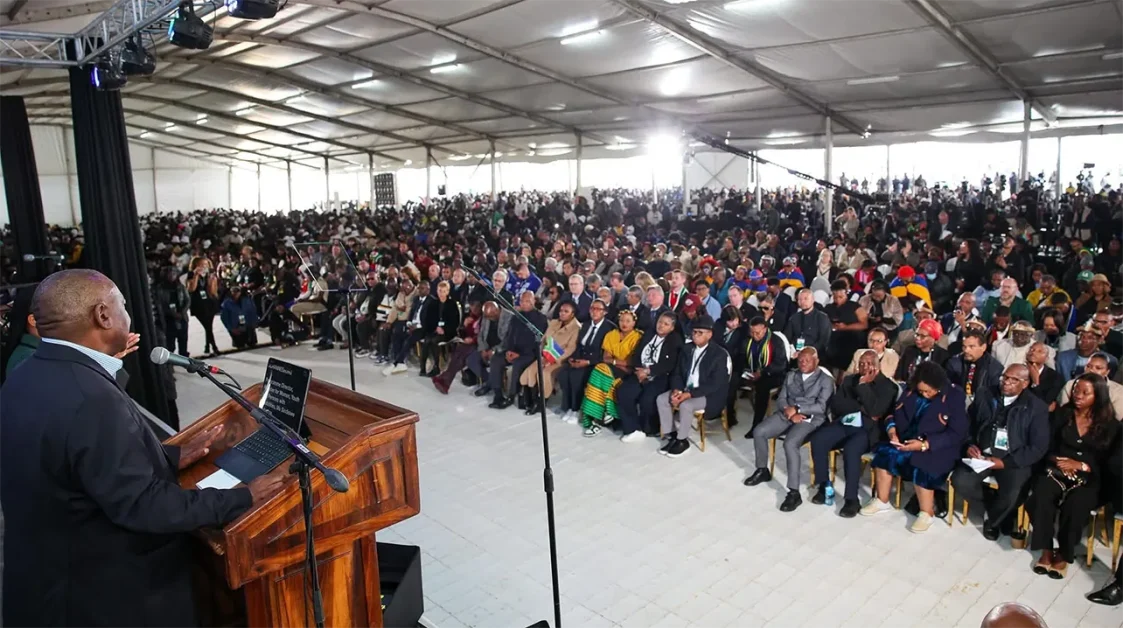
Speaking at FNB Stadium in Johannesburg before tens of thousands of people gathered for Youth Day, Ramaphosa framed the commemoration of the students who marched against Bantu education as a moment to test whether the country had converted the sacrifices of 1976 into real opportunities for young people today.
“Fifty years ago, thousands of young South Africans marched carrying nothing but their schoolbooks, their courage and their dreams,” Ramaphosa said. “They faced bullets with bare hands. They confronted injustice with extraordinary bravery. Through their sacrifice, they changed the course of our nation’s history. The question before us is whether South Africa is doing enough to create opportunities worthy of their sacrifice.”
Ramaphosa placed young graduates at the centre of the speech, citing persistently high youth unemployment as one of the country’s biggest threats. He said more than 4.7 million young people were unemployed and the youth unemployment rate stood at 46 percent – a statistic he said represents “a young person who wants to work, wants to contribute and wants to build a future.”
“It is the graduate who sends out dozens of applications and receives no response. It is the young entrepreneur with an idea but no access to capital. It is the skilled artisan who cannot find an opportunity to demonstrate their talents,” he said. “We cannot accept this as normal.”
Against a backdrop of recent violent protests targeting foreign nationals in parts of the country, Ramaphosa warned directly that anger at crime, unemployment and poor service delivery must not become a licence for xenophobic attacks. “Faced with these challenges, there are some who blame the problems of unemployment, crime and poor service delivery on foreign nationals,” he said. “Even as we recognise the challenge of illegal immigration – which we are taking decisive action to address – our problems are our own. And which we have a responsibility to fix ourselves.”
He repeated that frustration in communities was real but urged honest diagnosis of root causes. “The roots of these challenges lie primarily in inequality, slow economic growth and weaknesses in service delivery. Addressing these challenges requires practical solutions, not the scapegoating of vulnerable people,” he said.
Ramaphosa outlined a three-pronged government response aimed at keeping young people out of the unemployment queue and into work: expanding public employment and youth service programmes; reshaping the skills system to link qualifications more clearly to jobs; and opening the productive economy to young people through state investment and sectoral priorities.
He highlighted the Presidential Employment Stimulus and other interventions that, he said, have created work and training opportunities for millions. “More than 5.7 million young people are now registered on the SA Youth.mobi platform. Of these, more than 2 million young people have gained access to earning opportunities. The Presidential Employment Stimulus has created work and livelihood opportunities for more than 2.5 million unemployed South Africans. Of these, 82 percent were young people and 66 percent were women,” Ramaphosa said.
But the president acknowledged the limits of current programmes and called on the private sector to hire differently. “I want to speak directly to the employers of South Africa — to every business owner, every manager, every person who holds in their hands the power to hire. The young person in front of you does not lack ability. They lack only the chance to prove it. I am asking you to open the door. Hire for potential, not only for experience,” he said, adding that government would strengthen incentives such as the Employment Tax Incentive to share the cost of taking on first-time workers.
Ramaphosa also announced that the state will invest R1 trillion in infrastructure over the next three years – an intervention he said will create apprenticeships, artisan development, skills transfer and enterprise opportunities for young people. He listed priority growth sectors that the government believes can absorb labour at scale: manufacturing, mining beneficiation, digital infrastructure, agriculture, green industrialisation, energy, logistics, critical minerals, tourism and the creative economy.
The president repeatedly tied the current crisis of youth unemployment to the symbolism of June 16, arguing that the legacy of 1976 demands action. “The youth of 1976 marched for the right to learn. They faced down bullets armed with nothing but the conviction that their minds mattered. Today’s generation inherits that courage, but the battle has changed. The youth of 1976 fought exclusion. Ours must fight unemployment, poverty and inequality,” he said.
Ramaphosa’s address sought to balance commemoration with policy prescriptions and a moral appeal. He urged young people to engage politically – to register and vote – and to participate in building municipal capacity in roles beyond elected office: “Young people must not only be councillors. They must be the engineers, planners, artisans, water technicians, electricians, data specialists and entrepreneurs who build sustainable cities, towns and villages.”
But the president’s call comes as frustration among young South Africans has increasingly spilled into protests and unrest. Analysts say the convergence of high unemployment, slow economic growth and deteriorating municipal services has intensified public anger, creating fertile ground for mobilisations and, at times, violent scapegoating of migrants.
Civil society leaders who attended the event welcomed Ramaphosa’s denunciation of xenophobic violence but warned that rhetoric must be matched by faster, measurable progress on jobs and services. “Words matter, and the president was right to name afrophobia and xenophobia for what they are,” said one youth activist. “But for the millions of young people who cannot find work, we need quicker delivery, transparent hiring by municipalities and real access to capital for start-ups.”
Ramaphosa acknowledged the scale of the task and framed it as a national responsibility. “Unemployment must be seen as a societal problem. All stakeholders in our country must work together to provide sustainable solutions to reduce unemployment among young people,” he said.
As the stadium crowd – a mix of veterans, activists and large numbers of young people – observed the 50th anniversary, the president called for the commemoration to be followed by sustained action. “Let us honour the youth of 1976 not only by remembering their courage, but by continuing the work for which they sacrificed so much. Let us build a South Africa in which freedom lives in every generation,” he said.
The speech will sharpen expectations on the government’s ability to translate large-scale commitments, including R1 trillion in infrastructure spending and expanded public employment programmes, into meaningful, measurable job outcomes for graduates and other young jobseekers who are central to the country’s political stability going forward.