THE scars run deep across Eastern and Southern Africa. From the bustling markets of Mozambique to the rural villages of South Sudan, terrorism has left communities shattered, families torn apart, and economies crippled. The statistics tell only part of the story—behind every attack lies a web of illicit financial flows that fuel violence and perpetuate instability across the continent.
But in the coastal city of Dar es Salaam, Tanzania, a powerful alliance struck back with a weapon that terrorists fear most: financial transparency.
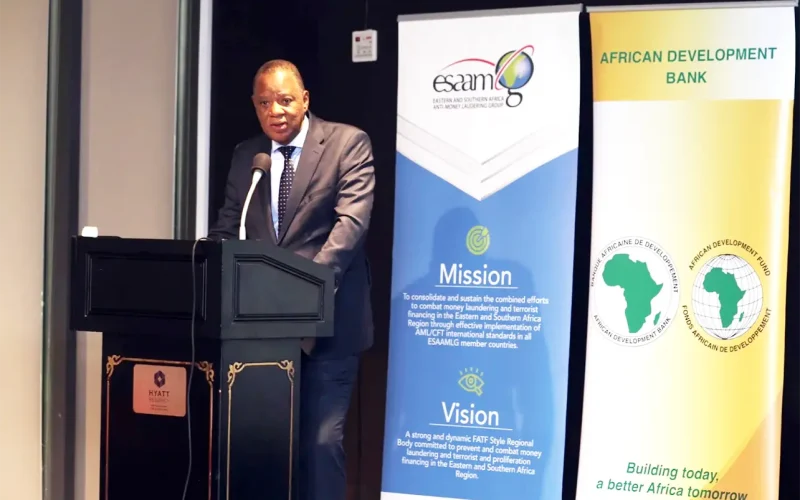
In a conference room overlooking the Indian Ocean, representatives from the African Development Bank Group and the Eastern and Southern Africa Anti-Money Laundering Group (ESAAMLG) gathered for what would mark a turning point in the fight against terrorism financing. The occasion was the launch of a three-year, $5.2 million initiative with an ambitious goal: to cut off the financial lifelines that keep terrorist networks operational.
“When we disrupt their money, we disrupt their operations,” explained Abdoulaye Coulibaly, Director of Governance & Economic Reforms at the African Development Bank, as he addressed the assembled delegates. “This project isn’t just about compliance—it’s about protecting lives.”
The initiative, formally titled the “Regional Capacity Development Project for Eastern and Southern Africa Anti-Money Laundering Group (ESAAMLG) on Anti-Money Laundering and Combating the Financing of Terrorism,” targets five countries that have borne the brunt of regional instability: Burundi, Eritrea, Madagascar, Mozambique, and South Sudan.
Where Terror Meets Finance
These nations, classified as countries in transition, face unique vulnerabilities. Their financial systems often lack the sophisticated monitoring capabilities needed to detect suspicious transactions. Cross-border trade flows through informal channels where oversight is minimal. Mobile money systems, while revolutionary for financial inclusion, can be exploited by those who understand their weaknesses.
Fikile Zitha, ESAAMLG’s Executive Secretary, has witnessed firsthand how terrorist groups adapt their financial strategies. “They’re incredibly sophisticated,” she noted during the launch ceremony. “They use legitimate businesses as fronts, exploit regulatory gaps between countries, and constantly evolve their methods. We need to be equally sophisticated in our response.”
The timing couldn’t be more critical. ESAAMLG has just begun its third round of mutual evaluations—comprehensive assessments of how well member countries are implementing international standards for combating money laundering and terrorism financing. For the five beneficiary countries, this project offers crucial support as they work to strengthen their defences.
Building Fortress Finance
The $5.2 million grant from the African Development Bank Group’s Transition Support Facility represents more than just funding—it’s an investment in regional stability. The project will focus on building the technical capacity of financial intelligence units, training investigators to follow complex money trails, and helping countries develop the legal frameworks necessary to prosecute financial crimes effectively.
Patricia Laverly, the African Development Bank’s Tanzania Country Manager, emphasised the multiplier effect of this investment. “When we strengthen one country’s capacity to detect illicit financial flows, we create benefits for the entire region. Money launderers and terrorist financiers rely on weak links in the chain—we’re working to eliminate those weak links.”
The approach is deliberately comprehensive. Rather than simply providing equipment or one-time training, the project will establish sustainable capacity-building programs. Countries will develop their own expertise, create regional networks for information sharing, and build institutions capable of adapting to emerging threats.
A Continental Strategy
This initiative aligns with the African Development Bank’s broader commitment to fighting financial crimes across the continent. The Bank has already established partnerships with other regional bodies, including the Inter-Governmental Action Group against Money Laundering in West Africa (GIABA) and the Central African Financial Action Task Force (GABAC).
The strategy reflects a hard-learned lesson: terrorism financing is inherently transnational, so the response must be equally coordinated. A suspicious transaction in Maputo might be connected to terrorist activity in Mogadishu. A seemingly legitimate business in Bujumbura could be channelling funds to extremist groups operating across multiple borders.
Coulibaly highlighted this interconnected approach: “We’re not just supporting individual countries—we’re building a regional ecosystem of financial integrity. The terrorists may be networked, but now our response is networked too.”
Beyond Compliance: Human Impact
While the technical aspects of anti-money laundering might seem abstract, the human stakes are viscerally real. Every successful disruption of terrorist financing potentially prevents attacks that would claim innocent lives. Every strengthened financial system makes it harder for criminal networks to operate.
The five beneficiary countries each bring unique challenges and opportunities to the project. Mozambique faces ongoing insurgency in its northern provinces, where illicit mineral trade helps fund violent extremism. South Sudan’s oil revenues and cross-border trade create vulnerabilities that criminal networks exploit. Madagascar’s geographic position makes it a potential transit point for illicit flows across the Indian Ocean.
For these countries, the project offers more than technical assistance—it provides hope that financial tools can complement military and diplomatic efforts in building lasting peace.
The Technology of Transparency
Modern terrorism financing often exploits the same technologies that have revolutionised legitimate commerce. Mobile money platforms, cryptocurrency exchanges, and online remittance services all create new opportunities for both financial inclusion and financial crime.
The ESAAMLG project will help countries navigate this technological landscape, developing the expertise needed to monitor digital financial flows without stifling innovation. This balance is crucial in regions where mobile money has become a lifeline for millions of people lacking access to traditional banking.
“We’re not trying to slow down financial innovation,” Zitha explained. “We’re trying to ensure that innovation serves legitimate economic development rather than criminal enterprise.”
Looking Forward: A Three-Year Journey
As the launch ceremony concluded in Dar es Salaam, participants understood they were embarking on a complex, three-year journey. Success won’t be measured simply in new regulations or trained officials, but in measurable improvements to regional security and stability.
The project’s design acknowledges that building effective anti-money laundering systems requires patience and persistence. Year one will focus on assessment and planning, helping countries understand their current vulnerabilities and develop improvement strategies. Year two will concentrate on capacity building and system development. Year three will emphasise sustainability and regional integration.
ESAAMLG’s position as both a Financial Action Task Force observer member and a key stakeholder in African Development Bank policies ensures that lessons learned from this project will inform broader continental strategies. The knowledge gained in Burundi or South Sudan will benefit countries across Africa facing similar challenges.
The Road Ahead
The fight against terrorism financing in Eastern and Southern Africa is far from over. Criminal networks will adapt to new countermeasures, technology will create fresh vulnerabilities, and political instability will continue to create opportunities for exploitation.
But the launch in Dar es Salaam represents a significant escalation in the region’s defensive capabilities. By combining the African Development Bank’s financial resources with ESAAMLG’s technical expertise, the project creates a platform for sustained progress against one of the continent’s most persistent threats.
As delegates departed Tanzania, many carried with them a renewed sense of possibility. The scourge of terrorism has indeed wreaked havoc across African communities, leaving trails of death and devastation. But now, those communities have new allies in their fight for peace: financial investigators armed with cutting-edge tools, regional networks sharing critical intelligence, and institutions capable of choking off the money that fuels violence.
The battle for Africa’s future will be fought on many fronts. Thanks to initiatives like this ESAAMLG project, one of those fronts is now significantly reinforced. In the war against terrorism, following the money may prove just as important as following the militants—and Africa is finally equipped to do both.