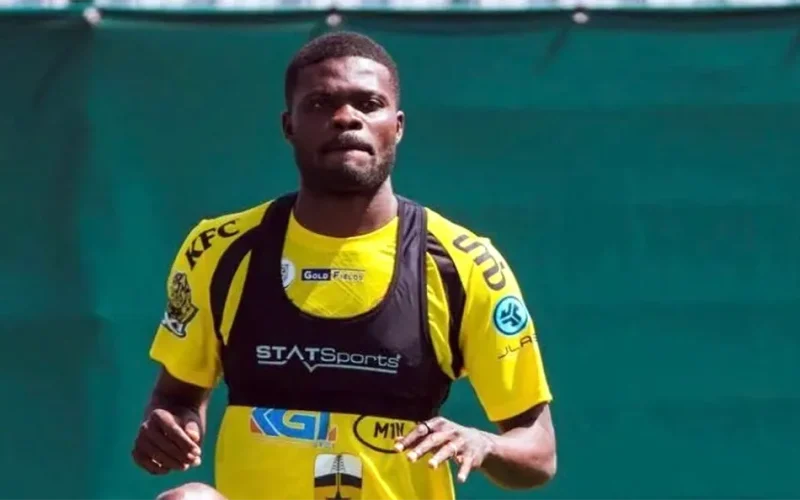
THE Government of Ghana has moved swiftly and forcefully against Canada following the host nation’s decision to deny midfielder Thomas Partey a visa to participate in the 2026 FIFA World Cup, escalating what began as a sporting setback into a fully-fledged diplomatic confrontation – and threatening legal action in the Canadian courts.
Ghana’s Ministry of Foreign Affairs has formally lodged a protest with Canada, demanding that Ottawa reverse its refusal of a temporary residence application for Partey, a key member of Ghana’s senior national team. The language deployed by Accra is unambiguous: measured in register, but pointed in legal and moral content.
“High-Handed and Extremely Unfair”
Foreign Affairs Minister Samuel Okudzeto Ablakwa described Canada’s decision as “high-handed and extremely unfair” in a public statement, confirming that Ghana has “dispatched an official note of protest” to Ottawa and that the note “also requested that Canada review its unfortunate decision.”
The minister went further. Invoking one of the foundational pillars of democratic jurisprudence, Ablakwa’s ministry reaffirmed “the fundamental legal principle of the presumption of innocence, a cornerstone of justice and due process in democratic societies,” positioning Ghana’s protest not merely as a sporting grievance, but as a matter of international human rights principle.
In a direct appeal to the spirit of bilateral relations, the minister stated: “Ghana remains committed to constructive engagements with Canadian authorities and to upholding the rule of law, human rights, and the presumption of innocence.” He added: “The Government of Ghana cherishes our longstanding excellent bilateral relations with Canada and hopes that diplomatic rapprochement within the context of our historically cordial and friendly traditions would lead to an amicable resolution in a timely manner.”
That language — statesmanlike in tone, but unmistakably firm in substance — signals that Accra is keeping every avenue open, including the most consequential one.
Judicial Review Before Canada’s Federal Court
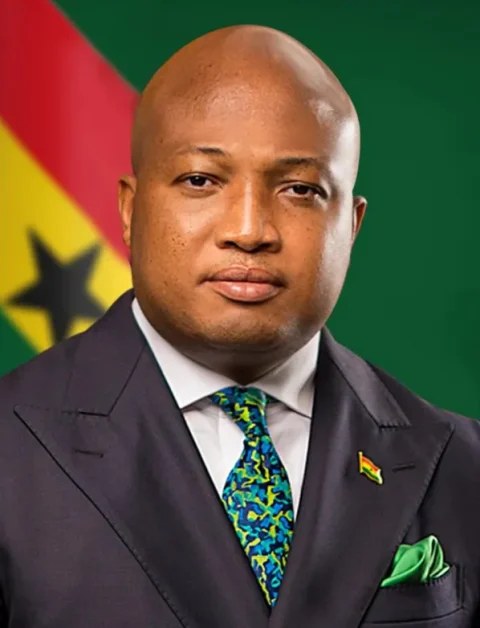
In an extraordinary escalation, Ghana has signalled a readiness to challenge the visa refusal through the Canadian judicial system itself. The ministry’s statement confirmed that Ghana “is determined to explore and pursue all available diplomatic, legal and administrative remedies under Canadian and international law, including, where appropriate, judicial review before the Federal Court of Canada, to ensure full and fair consideration of all relevant legal and factual issues in accordance with due process.”
This is not the language of diplomatic throat-clearing. It is a legal warning shot.
The ministry also disclosed that Ablakwa has been in direct discussion with Canadian officials since the issue emerged, including with Canada’s High Commissioner to Ghana, Her Excellency Myriam Montrat. That engagement — at the highest bilateral level — underscores just how seriously Accra is treating this matter.
The Legal Fault Line
At the heart of the dispute is a question that cuts to the core of how liberal democracies exercise sovereign discretion against individuals who have not been found guilty of anything.
Canadian immigration authorities based their refusal on inadmissibility under paragraph A36(1)(c) of Canada’s Immigration and Refugee Protection Act, linked to criminal proceedings currently pending against Partey in the United Kingdom — despite there being no conviction or judicial finding of guilt.
The Villarreal midfielder, who previously played for Arsenal, has pleaded not guilty to seven charges of rape and one count of sexual assault relating to allegations by four different women between 2020 and 2022, with a trial set for next year.
Ghana does not contest Canada’s sovereign right to administer its own immigration law. What it contests is the proportionality and fairness of applying that law against an athlete who remains legally innocent. While acknowledging Canada’s sovereign right to enforce its immigration laws, Ghana argued that relying on unproven charges without a judicial determination raises “fundamental questions of fairness and proportionality.”
It is a distinction that will resonate across much of the Global South, where the intersection of immigration discretion and legal presumption has long been a source of friction.
The Sporting Cost
FIFA has confirmed that Partey will be unable to travel from Ghana’s team base camp in Boston to Canada for their opening match against Panama on 17 June, with the governing body noting that immigration decisions fall solely within the authority of host governments.
The loss is immediate and significant. Partey is Ghana’s midfield fulcrum — the defensive shield, the transition engine, the experienced voice in an engine room now exposed under pressure. Coach Otto Addo faces a forced tactical reconfiguration for a group-stage opener where the margins are knife-thin.
Yet there is a cruel irony in the geography of this episode. The 32-year-old remains eligible for Ghana’s subsequent Group L fixtures against England and Croatia, both to be played in the United States, which granted him entry despite the identical legal proceedings. Canada has chosen to draw a line that its co-host declined to draw — a divergence that will not go unnoticed on either the diplomatic or sporting planes.
Africa’s Recurring Off-Field Crisis
The Partey affair arrives not in isolation, but as the latest iteration of a structural problem that has dogged African football’s engagement with international tournament logistics for decades. African clubs and national teams have repeatedly found their competitive prospects undermined not by opponents on the pitch, but by visa queues, consular discretion, and diplomatic frictions in foreign capitals.
The lesson for African football’s governing institutions is sharp and unambiguous: preparation for global tournaments can no longer end at the training ground. Legal teams, consular engagement, and pre-tournament visa frameworks must be part of the operational architecture from the moment a squad is assembled.
For Ghana, the immediate task is tactical. For African football collectively, the Partey incident should become the catalyst for binding, codified visa protocols in future FIFA host agreements — protocols that protect players who are charged but not convicted from being denied the right to represent their nations on the world’s biggest stage.
The Broader Signal
What makes Minister Ablakwa’s intervention particularly significant is its refusal to stay within the polite conventions of quiet diplomacy. By issuing a public statement describing Canada’s decision as “high-handed,” invoking the presumption of innocence as a universal democratic value, and openly threatening recourse to Canada’s own federal courts, Ghana has chosen to prosecute this dispute in the court of global opinion as much as in any formal legal chamber.
That posture sends a message that reaches beyond the Partey case. It says: African governments will no longer accept the quiet humiliation of visa refusals as an unremarkable cost of participation in global sport. They will name it, contest it, and, where necessary, litigate it.
The ball is now firmly in Ottawa’s court — and for once, that metaphor is almost literal.
Thomas Partey, who has pleaded not guilty to all charges against him, is expected to be available for Ghana’s matches against England in Boston and Croatia in Philadelphia should his team advance from Group L.