ISRAEL expelled South Africa’s most senior diplomat on Friday in immediate retaliation for Pretoria’s expulsion of its own chargé d’affaires hours earlier, marking an unprecedented breakdown in bilateral relations between the two nations whose ties have collapsed over South Africa’s support for Palestine and its genocide case against Israel at the International Court of Justice.
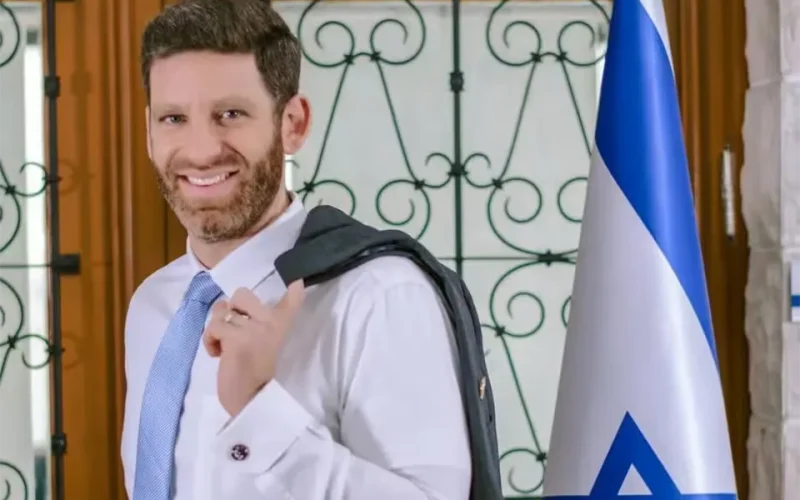
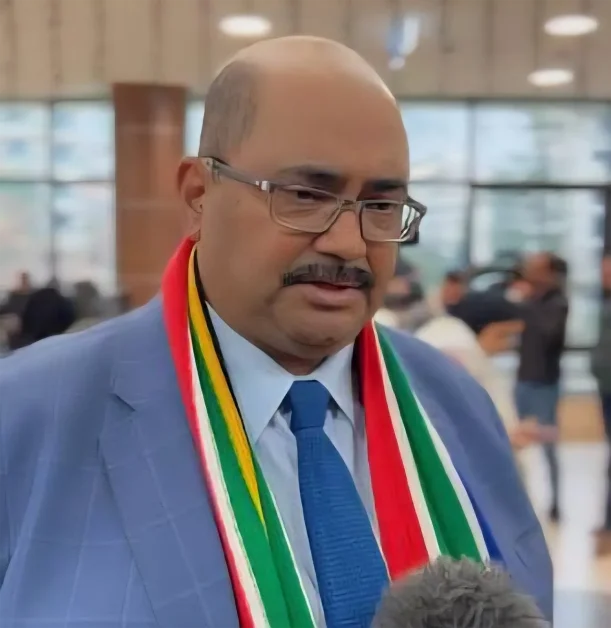
Israel’s Foreign Ministry declared South African Minister Shaun Edward Byneveldt, the country’s chargé d’ambassador to Palestine, persona non grata and ordered him to leave Israel within 72 hours. The expulsion came just hours after South Africa took identical action against Israeli Chargé d’Affaires Ariel Seidman in Pretoria.
“Following South Africa’s false attacks against Israel in the international arena and the unilateral, baseless step taken against the Chargé d’Affaires of Israel in South Africa… South Africa’s senior diplomatic representative, Minister Shaun Edward Byneveldt, is persona non grata and must leave Israel within 72 hours,” Israel’s Foreign Ministry stated.
The rapid-fire diplomatic expulsions represent the culmination of a crisis rooted in South Africa’s unwavering support for Palestine – support that has triggered aggressive Israeli lobbying efforts in Washington, strained US-South Africa relations, and exposed deep tensions over Israeli humanitarian projects operating in rural South African provinces without full governmental approval.
Earlier Friday, South Africa’s Department of International Relations and Cooperation (DIRCO) announced its decision to declare Seidman persona non grata, citing repeated violations of diplomatic protocol. These included using official Israeli social media platforms to launch what DIRCO characterised as ‘insulting attacks’ against President Cyril Ramaphosa, and failing to inform the department of visits by senior Israeli officials to South Africa.
‘Such actions represent a gross abuse of diplomatic privilege and a fundamental breach of the Vienna Convention,’ DIRCO stated in its announcement. ‘They have systematically undermined the trust and protocols essential for bilateral relations.’
The statement emphasised South Africa’s sovereignty: ‘South Africa’s sovereignty and the dignity of its offices are inviolable. Mr Seidman is required to depart from the Republic within 72 hours.’
Israel’s swift counter-expulsion of Byneveldt, described by Israeli officials as a response to ‘false attacks’ in international forums, ensures that neither country will maintain normal diplomatic representation in the other. Both nations now face the prospect of conducting relations through third parties or closing embassies entirely.
The diplomatic rupture is inseparable from South Africa’s decision to file genocide charges against Israel at the ICJ. On December 29, 2023, South Africa stunned the international community by accusing Israel of violating the Genocide Convention through its military operations in Gaza following the October 7 Hamas attacks.
The case, detailed in a 750-page memorial filed in October 2024 and supported by more than 4,000 pages of exhibits, has since been joined by numerous countries, including Brazil, Ireland, Belgium, Bolivia, Chile, Spain, Turkey, and the Maldives. The ICJ has issued three sets of provisional measures directing Israel to prevent genocidal acts, ensure humanitarian aid delivery, and halt military operations in Rafah.
Israel has dismissed the allegations as politically motivated and has largely defied the court’s orders. Israeli officials have characterised South Africa’s legal action as part of a broader anti-Israel campaign orchestrated by countries hostile to the Jewish state.
President Ramaphosa has repeatedly framed South Africa’s action as a moral imperative rooted in the country’s own liberation struggle. ‘We know too well that our freedom is incomplete without the freedom of the Palestinians,’ he has said, echoing Nelson Mandela’s historic solidarity with the Palestinian cause.
In response to South Africa’s ICJ filing, Israel launched an aggressive lobbying campaign targeting US lawmakers. According to leaked diplomatic cables reported by Axios in September 2024, the Israeli Foreign Ministry instructed its Washington embassy and consulates to pressure Congress to issue statements condemning South Africa and threatening suspension of trade relations.
The campaign bore fruit. In February 2024, the US House of Representatives introduced the US-South Africa Bilateral Relations Review Act, which explicitly criticised Pretoria for the ICJ case, describing it as ‘politically motivated’ and accusing South African leaders of making anti-Semitic statements. More than 200 members of Congress denounced South Africa’s legal action.
By early 2025, the Trump administration had escalated pressure dramatically. An executive order issued on February 7, 2025, suspended most US aid to South Africa—including critical HIV/AIDS programs that had previously received $440 million annually, citing the ICJ case as evidence of South Africa’s alignment with Iran and Hamas.
Secretary of State Marco Rubio declared South Africa’s newly appointed US ambassador, Ebrahim Rasool, persona non grata, and senior US officials boycotted G20 ministerial meetings in South Africa. The threat of removal from the African Growth and Opportunity Act (AGOA), which provides duty-free access to US markets, has hovered over the relationship.
Analysts note that Israel’s diplomatic offensive in Washington has been remarkably effective in transforming South Africa’s legal action at the ICJ into a broader crisis in US-South Africa relations – precisely the outcome Israeli strategists sought.
The Aid Controversy: Water Projects and Sovereignty
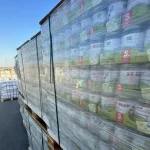
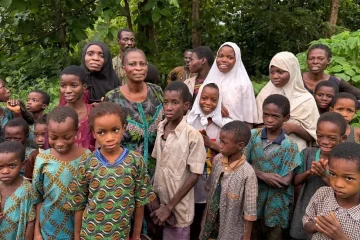
Complicating the diplomatic rupture are longstanding tensions over Israeli humanitarian initiatives operating in South Africa, particularly water and health projects in the rural Eastern Cape and other impoverished regions.
The issue first gained prominence during Cape Town’s 2017-2018 water crisis, when Israel repeatedly offered expertise and technology assistance. The ANC government, already hostile to Israel over Palestine, rejected the offers. A 2016 water conference in Johannesburg was cancelled after the BDS movement successfully lobbied against Israeli Ambassador Arthur Lenk’s participation.
Despite official rejection at the national level, Israeli organisations and private entities have continued operating water management and healthcare projects in South African provinces, often coordinated at the municipal rather than the national level. These projects, some facilitated by South African Jewish community organisations, have created friction with both provincial governments in the Eastern Cape and national authorities in Pretoria.
South African officials view such projects as circumventing central government authority and potentially serving Israeli public relations objectives. ‘South Africans suffer when the South African government refuses to treat Israel and the Palestinian Authority as separate and distinct entities,’ the South African Zionist Federation argued in 2023, defending municipal-level cooperation.
But the ANC-led government sees these initiatives differently, as attempts to normalise relations and deflect from Israel’s treatment of Palestinians, undertaken without proper diplomatic channels or oversight. Eastern Cape provincial officials have complained that Israeli projects operate in their territory without adequate consultation or approval from provincial authorities.
The controversy underscores a broader tension: while many South African municipalities face desperate water and health infrastructure challenges, the national government’s political stance on Palestine prevents it from accepting Israeli assistance that might alleviate those challenges.
The current rupture represents a dramatic reversal of the close military and ideological alliance that existed between Israel and apartheid South Africa in the 1970s and 1980s. During that era, both governments viewed themselves as threatened outposts of Western civilisation, and Israel provided substantial military support to the white minority regime.
After the democratic transition in 1994, the ANC government, shaped by decades of Palestinian support for the anti-apartheid struggle, adopted a starkly different position. The party has maintained close ties with Hamas and Palestinian Authority leadership and consistently supported Palestinian statehood and rights.
Relations deteriorated sharply after October 7, 2023, when Hamas attacked Israel, killing approximately 1,200 people and taking more than 250 hostages. While most Western governments condemned Hamas unequivocally, South Africa’s DIRCO issued a statement attributing the attack to ‘Israel’s continued illegal occupation of Palestine.’ The ANC’s December 2023 national conference, which included Hamas delegates, passed resolutions to downgrade diplomatic relations and formally filed the ICJ genocide case days later.
The mutual expulsions come at a delicate moment in South African politics. The ANC lost its parliamentary majority in May 2024 elections and now governs in coalition with the pro-Western Democratic Alliance and other smaller parties. Foreign Minister Naledi Pandor, who spearheaded the ICJ case and was known for her strong anti-Israel stance, lost her seat and was excluded from the new cabinet.
Israeli officials had reportedly hoped the new coalition government might prove more amenable to normalising relations. However, President Ramaphosa, facing pressure from within his own party to maintain the liberation movement’s historic commitments, has doubled down on support for Palestine.
The decision to expel Seidman and the defiant tone of DIRCO’s statement signal that the government will not retreat under US or Israeli pressure. Israel’s immediate counter-expulsion demonstrates that neither side is seeking de-escalation.
South Africa’s actions have broader resonance across the African continent. The African Union has strongly supported Palestinian statehood and condemned Israeli actions in Gaza. In April 2024, Israeli Ambassador Avraham Nigusse was expelled from an AU commemoration event in Addis Ababa, illustrating Israel’s diplomatic isolation on the continent.
Despite Israel’s efforts to cultivate relationships with African nations through development aid- particularly in East Africa – most countries have aligned with South Africa’s position since October 2023. South Africa’s ICJ case has provided a focal point for African and global south solidarity with Palestine.
However, the diplomatic rupture carries significant costs for South Africa. Beyond strained US relations and potential AGOA exclusion, South Africa faces isolation from Western financial institutions and possible individual sanctions on officials under the Magnitsky Act. The terminated PEPFAR programs will affect hundreds of thousands of South Africans living with HIV/AIDS.
For Israel, the breakdown with South Africa, once a strategic ally during the apartheid era, represents a diplomatic setback on a continent where it has struggled to build lasting relationships. The tit-for-tat expulsions virtually guarantee that Israel will have no meaningful diplomatic presence in Africa’s most industrialised economy.
With both countries’ senior diplomats now declared persona non grata, the path forward appears bleak. The ANC has repeatedly called for complete severance of ties, including closure of the Israeli embassy in Pretoria and South Africa’s embassy in Tel Aviv. Friday’s mutual expulsions bring both nations closer to that outcome.
Israel’s counter-memorial in the ICJ genocide case is due March 12, 2026, after multiple deadline extensions. The case could take years to resolve, meaning the diplomatic freeze between the two countries may persist indefinitely.
For President Ramaphosa, the challenge is balancing the ANC’s historic solidarity with Palestine against the economic and strategic costs of alienating the United States and its allies. The expulsion of Seidman and the willingness to accept Israel’s retaliatory expulsion of Byneveldt suggest that, at least for now, the government has chosen principle over pragmatism.
As DIRCO’s statement concluded: ‘We urge the Israeli government to ensure its future diplomatic conduct demonstrates respect for the Republic and the established principles of international engagement.’ Israel’s response – expelling South Africa’s diplomat within hours – suggests such respect will not be forthcoming.
The mutual expulsions mark a new nadir in bilateral relations. Whether this represents the final rupture or merely another step toward complete diplomatic severance remains to be seen.