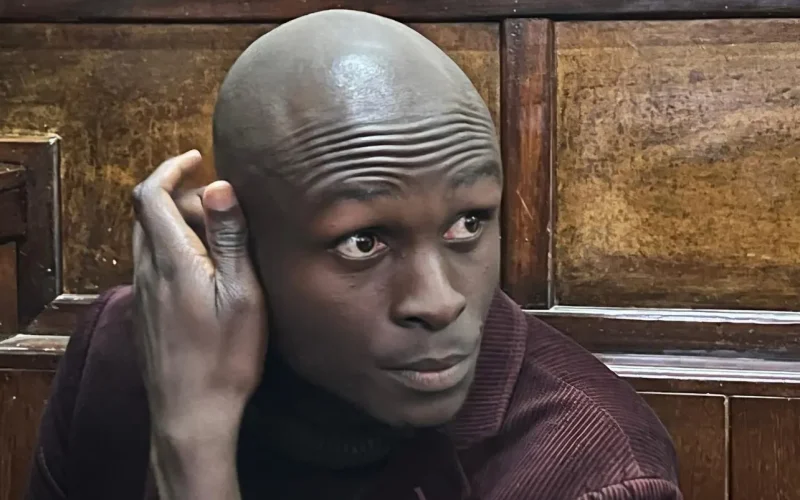
IN a landmark decision, the Kenyan courts have sent a resounding message against violence targeting LGBTQ+ individuals. Jacktone Odhiambo, a 25-year-old photographer, has been sentenced to 50 years in prison for the brutal murder of his housemate and LGBTQ+ activist, Edwin Kiprotich Kipruto, known to many as Edwin Chiloba.
Judge Reuben Nyakundi, who presided over the case, condemned the “diabolical manner” in which the killing was carried out, emphasizing the severity of the crime and the lack of remorse displayed by the accused. Chiloba, a 25-year-old fashion designer and a beacon of self-expression within Kenya’s LGBTQ+ community, was smothered to death. His body, a tragic symbol of his silenced voice, was later discovered in a metal box dumped by the roadside in Eldoret.
Chiloba’s murder, nearly two years ago, sent shockwaves through Kenya and beyond, exposing the perilous realities faced by the LGBTQ+ community in a society where acceptance remains fragile.
Jackton Odhiambo sentenced to 50 years in prison for the murder of LGBTQ Activist Edwin Kiprotich alias Chiloba; Justice Nyakundi dismisses Chiloba family's plea for death sentence. pic.twitter.com/I7MqEbGgjY
— tv47ke (@Tv47Newske) December 16, 2024
Justice Served Amidst a Grim Crime
Delivering the decades-long sentence, Justice Nyakundi remarked that the court could not overlook Odhiambo’s chilling actions and his apparent lack of remorse. The judge described Odhiambo as a “vengeful person” who turned on his close friend and housemate in an unforgivable act of betrayal.
“I have considered all factors and found that Odhiambo was a vengeful person who committed the killing of his close friend,” the judge said.
Moments after the sentence was pronounced, the courtroom erupted in an unexpected scene as Odhiambo collapsed to the floor, weeping uncontrollably. His dramatic display contrasted starkly with his earlier demeanor throughout the proceedings, where he remained impassive despite the overwhelming evidence against him.
The prosecution, led by state attorney Mark Mugun, presented a damning case built on meticulous investigation and the testimony of 23 witnesses. DNA evidence firmly placed Odhiambo at the scene of the crime, and chilling details emerged of how he smothered Chiloba to death, stuffing socks into his mouth and tying a piece of denim over his face. A post-mortem confirmed that asphyxiation was the cause of death. Even more disturbingly, evidence revealed that Chiloba had been sexually assaulted before his life was taken.
The court heard how, in the aftermath of the murder, Odhiambo splurged Chiloba’s money, a callous act that underscored his ruthless betrayal.
A Community in Mourning
For Kenya’s LGBTQ+ community, Chiloba’s death became a devastating rallying cry for justice and recognition in a country where queer individuals remain marginalized and often face hostility. Chiloba was not just a fashion designer; he was a bold advocate for LGBTQ+ visibility and self-expression, using his craft and courage to inspire others. His murder highlighted the deep-rooted vulnerabilities of LGBTQ+ individuals in Kenya, where acceptance is often outweighed by stigma.
While the motive behind the killing remains clouded—with speculation of intimate partner violence—the court refrained from making a specific determination. Nonetheless, the case served as a grim reminder of the dangers posed by prejudice and unchecked violence.
Jackton Odhiambo sentenced to 50 years in prison for the murder of LGBTQ Activist Edwin Kiprotich alias Chiloba; Justice Nyakundi dismisses Chiloba family's plea for death sentence. pic.twitter.com/MzmBp7LoPo
— Samson Jura (@ojsamsons) December 16, 2024
A Step Toward Justice
The sentencing of Jacktone Odhiambo to 50 years in prison resonates far beyond the courtroom. It stands as a powerful statement that violence against LGBTQ+ individuals will not be met with impunity. Judge Nyakundi’s decision, rooted in the heinous details of the crime, reflects a growing acknowledgement within Kenya’s judicial system of the need to protect all citizens, regardless of identity.
For Chiloba’s family, friends, and the LGBTQ+ community he fought to empower, this verdict offers a measure of justice, even as it underscores the work still to be done in building a society where such tragedies are no longer possible. Edwin Chiloba’s voice may have been silenced, but his legacy continues to shine as a symbol of courage and defiance in the face of adversity.