THE Indian Ocean island nation of Madagascar is reeling from its worst political crisis in years as violent protests over catastrophic utility failures have left at least five people dead, businesses ransacked, and the government scrambling to contain an explosion of public fury that threatens to topple the administration.
Streets in the capital Antananarivo resemble a war zone after days of unprecedented unrest, with looters armed with knives terrorising business owners, security forces firing rubber bullets and tear gas into crowds of young demonstrators, and entire neighbourhoods plunged into darkness for up to 12 hours daily. The government has imposed a desperate nighttime curfew from 7 p.m. to 5 a.m., but angry protesters vow to continue their campaign until basic services are restored.
“They Told Us They Would Kill Us”
The human toll of Madagascar’s infrastructure collapse became viscerally clear Friday morning when restaurant worker Marie Razafy arrived at her workplace to find armed thieves still ransacking the premises.
“When we arrived this morning, thieves were still here taking what was left,” she recounted, her voice trembling. “They had knives and threatened and insulted us. They told us not to move or they would kill us. We can do nothing but cry. They told us they were poor, that they had nothing, and that they were forced to steal.”
Her experience captures the desperation gripping Madagascar’s 30 million citizens as chronic blackouts and water shortages push the nation toward complete breakdown. Businesses across the capital report similar scenes of lawlessness as the social contract between government and governed disintegrates.
Youth Rebellion Ignites National Powder Keg
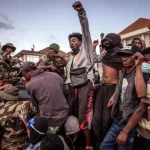
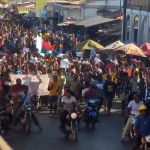
The protests, spearheaded by students and young workers under the banner “Leo Délestage” (“Fed up with load shedding”), have transformed from peaceful demonstrations into a full-blown uprising that has caught President Andry Rajoelina’s administration completely off-guard.
“We have about 12 hours of power cuts a day,” said student Lala Herizo, her frustration palpable. “That means for 12 hours a day, we leave home, go to work, pay taxes, and when we return home, still no electricity. The students at Ankatso are protesting so that classes return to normal. Because right now it’s been a month since they haven’t studied.”
The youth-driven movement has galvanised urban communities through social media, with protesters systematically targeting government buildings, energy infrastructure, and the homes of officials they blame for the crisis. They’ve blocked major arteries, set fires to a new cable car system, and created a climate of fear that has paralysed normal life.
Government in Full Crisis Mode
Facing the gravest threat to his presidency, Rajoelina fired his energy minister on Friday in a desperate bid to appease protesters, but the gesture appears to have done little to quell the rage. The president has branded the demonstrations “acts of destabilisation” and even a “coup d’état,” inflammatory language that risks further escalating tensions.
Security forces have responded with increasing brutality, deploying tear gas, rubber bullets, and in some cases live ammunition against demonstrators. Critics accuse police of protecting property while failing to stop the looting that has devastated small businesses.
“Protesters say the security forces are repressing the population instead of protecting them from looters,” highlighting the government’s complete loss of legitimacy in many communities.
International Alarm Grows
The crisis has triggered alarm across the Southern African Development Community (SADC), which condemned the violence and urged immediate dialogue between the government and protesters. Multiple countries have issued travel advisories warning their citizens to avoid non-essential travel to Madagascar, particularly the volatile capital region.
The unrest spotlights the catastrophic failure of basic governance in Madagascar, where decades of political instability and economic mismanagement have left critical infrastructure crumbling. For a population where youth comprise the majority, the daily reality of studying by candlelight and working without reliable electricity has become an unbearable symbol of government incompetence.
A Nation on the Brink
As protesters prepare for continued demonstrations despite the curfew, Madagascar faces a precarious future. Some demonstrators have even joined cleanup efforts, revealing the complex dynamics of a population desperate for both change and stability.
“The city is ransacked, and it is our duty to clean it up,” said one young protester. “I support the demonstrations that are happening peacefully. I wish there weren’t so much damage, but looters, unfortunately, there will always be.”
The crisis represents far more than utility failures—it embodies the complete breakdown of the social contract in a nation where citizens pay taxes but receive no basic services in return. With no clear resolution in sight and protesters vowing to continue their campaign, Madagascar stands at a crossroads that could determine whether it emerges from this crisis stronger or descends further into chaos.
The world is watching as this Indian Ocean nation of extraordinary biodiversity and rich culture fights to prevent a complete collapse of governance—with the stakes being nothing less than the future of democracy in Madagascar.