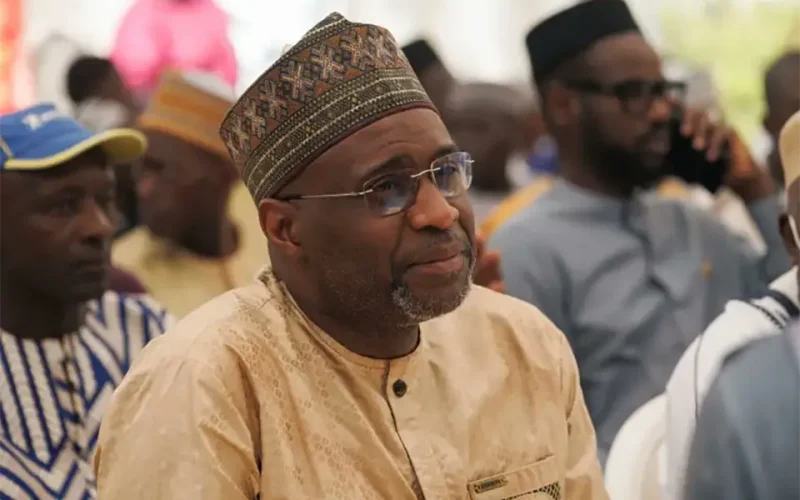
A Bamako court has sentenced former Prime Minister Moussa Mara to one year in prison, marking a stark escalation in the military junta’s campaign to silence critics and opposition voices through the judicial system.
The conviction of Mara – a prominent political figure who served as prime minister from 2014 to 2015 – centred on a single social media post from July in which he expressed solidarity with political prisoners. The court found him guilty of “undermining the credibility of the state and opposing legitimate authority,” charges that critics say reveal the ruling junta’s intolerance for even modest expressions of political dissent.
Beyond the prison term, Mara received an additional one-year suspended sentence and a fine of 500,000 CFA francs (approximately $887). He has been detained since August 1.
A Message of Intimidation
The prosecution’s case hinged entirely on Mara’s July post, in which he described meeting with political prisoners and pledged to pursue justice on their behalf. That this statement alone warranted criminal charges illustrates the narrow parameters for acceptable political discourse under Col. Assimi Goita, the military leader who consolidated power through successive coups in 2020 and 2021.
The targeting of a former prime minister—someone who once occupied the country’s second-highest office—sends an unmistakable signal about the junta’s willingness to use the courts as an instrument of political control. If a figure of Mara’s stature can be imprisoned for expressing support for detainees, the message to ordinary citizens is clear: any criticism, however measured, carries severe personal risk.
Legal Challenge Ahead
Mara’s attorney, Mountaga Tall, announced plans to appeal, telling AFP: “This is not the end… We will discuss with our client and determine the next course of action.” Yet the decision to contest the verdict poses its own challenges in a judicial environment many observers believe has been compromised by military influence.
An unnamed associate of Mara captured the absurdity perceived by many in Mali’s opposition circles, asking simply: “What exactly is his crime?”
Democratic Backsliding Under Military Rule
The conviction represents the latest evidence of systematic repression under Goita’s regime, which has steadily narrowed space for political opposition and independent media since seizing power. International observers have repeatedly voiced alarm over Mali’s democratic deterioration, as the junta repeatedly delays promised elections while tightening control over civilian institutions.
The use of vague charges like “undermining state credibility” to prosecute political speech follows a familiar authoritarian playbook, allowing authorities to criminalise virtually any criticism while maintaining a veneer of legal process. That the courts appear willing to enforce such charges against high-profile defendants suggests either judicial complicity or the complete subordination of the legal system to military authority.
The Mara case underscores a troubling reality for Mali: under military rule, even former government officials are not immune from prosecution for expressing political views, a development that bodes poorly for the country’s democratic prospects.