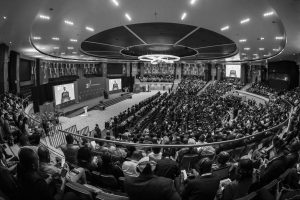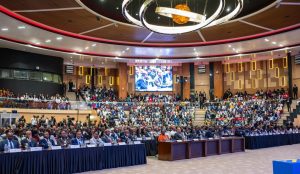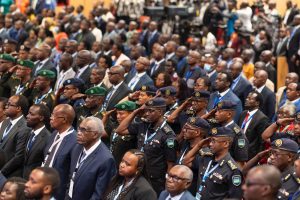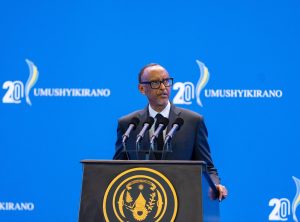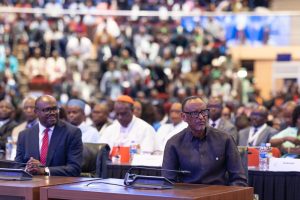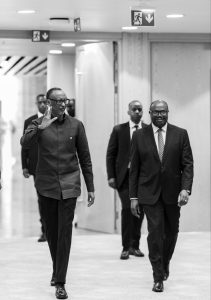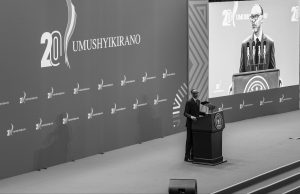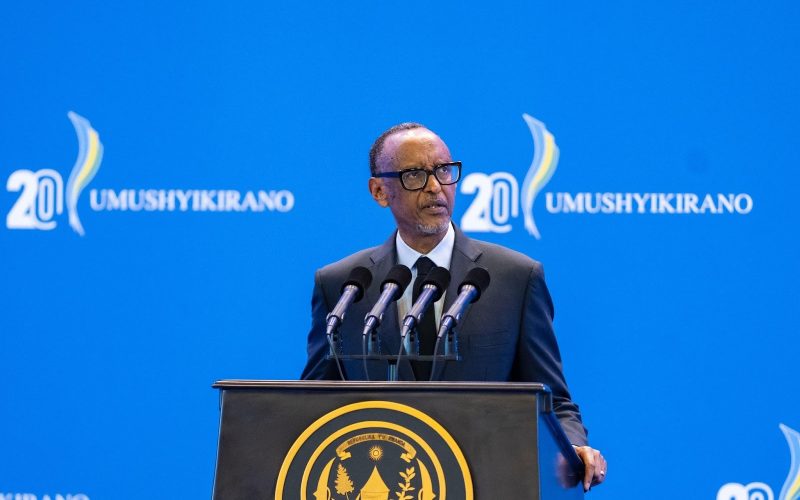
RWANDAN President Paul Kagame delivered a defiant address at the country’s 20th National Dialogue Day on Wednesday, forcefully rejecting international criticism of Rwanda’s involvement in neighbouring Democratic Republic of Congo (DRC) while emphasising national self-reliance over dependence on foreign goodwill.
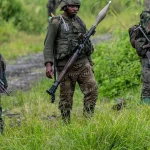
Kagame directly confronted longstanding accusations that Rwanda’s military operations in eastern DRC are motivated by mineral wealth or territorial expansion. Instead, he framed Rwanda’s cross-border activities as existential security concerns centred on the presence of Interahamwe militia forces – remnants of the groups responsible for Rwanda’s 1994 genocide.
“They try to avoid the real issue,” Kagame said, asserting that Interahamwe forces have been “settled” and “armed” in DRC, with some integrated into the Congolese military. The president questioned international expectations that Rwanda should comply with external demands “even if it is leading to our own destruction.”
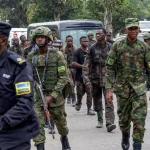
The remarks come amid sustained international pressure on Rwanda over its alleged support for M23 rebels in eastern DRC, accusations Kigali has repeatedly denied while acknowledging legitimate security concerns regarding armed groups across its border.
Beyond the immediate security dispute, Kagame used the platform to articulate a broader philosophy of national sovereignty and self-determination that has defined his 25-year tenure. He explicitly rejected what he characterised as assumptions of inferiority or dependence on more powerful nations.
“We were not created by anyone, whoever they may be. No one owns us,” Kagame declared, adding that Rwanda must “stand up to” external pressure regardless of others’ power or wealth.
The president framed self-reliance as both practical policy and philosophical imperative, warning against dependency “on the goodwill of others who might choose to help us today and withdraw tomorrow.” This rhetoric appears aimed at Western donors and international institutions that have periodically suspended aid to Rwanda over regional conflicts.
Kagame’s speech reflects Rwanda’s increasingly assertive posture in regional affairs and international forums. His comparison of Rwanda’s development trajectory to other nations that “started where we were, or even behind us” positions the country’s post-genocide economic growth as validation of his governance model, even as critics point to authoritarian practices and regional destabilisation.
The timing is significant as tensions in eastern DRC have escalated in recent months, with renewed fighting involving M23 forces and regional intervention troops. Rwanda faces mounting diplomatic isolation over the crisis, including from traditional Western partners.
The National Dialogue forum, known locally as Umushyikirano, has served since 2003 as an annual platform for government accountability and policy discussion, though critics note limited space for genuine dissent in Rwanda’s tightly controlled political system.
Here is Kagame’s final message to Rwandans: “I would like to remind all of us that meetings like these, and the discussions we have had, should not become a place where we come to repeat ourselves with no outcome. They should not turn into routine gatherings, where we come, talk about problems, identify solutions, and then a year later return only to find that everything is still the same. Let’s examine ourselves. Many of you here have the capacity and the technical knowledge. But then something comes along and removes that capability, and suddenly one wonders where it went, where it disappeared to. When you have capacity, knowledge, and everything that is needed, yet nothing tangible comes out of it; when you cannot point to where you were yesterday and where you are today, and be able to say we are moving forward and progress is visible, then there is a problem. What is said and discussed here must lead to visible actions that show we are making progress. We should hold one another accountable, asking questions and providing answers, with the objective of constantly moving forward.”