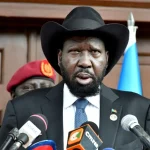
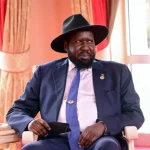
SOUTH Sudan erupted into its gravest political and constitutional crisis since achieving independence as President Salva Kiir suspended First Vice President Riek Machar from office Thursday, hours after his justice minister filed explosive charges of murder, treason and crimes against humanity against the country’s second-highest official.
The dramatic escalation of South Sudan’s leadership feud threatens to shatter the tenuous peace agreement that ended a devastating five-year civil war in 2018, potentially plunging the world’s youngest nation back into the ethnic violence that has claimed hundreds of thousands of lives and displaced millions more.
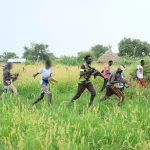
Machar, who has been under house arrest since March, faces accusations of commanding the notorious White Army militia in attacks against federal forces in the northeastern town of Nasir. The charges represent an unprecedented constitutional crisis in a country where the vice president serves as co-leader under a fragile unity government designed to prevent renewed warfare.
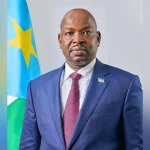
“Evidence further reveals that the White Army operated under the command and influence of certain leaders of the Sudan People’s Liberation Movement/Army-in-Opposition, including Dr. Riek Machar Teny,” Justice Minister Joseph Geng announced at a packed press conference in the capital Juba.
The suspension, announced via presidential decree on state radio, marks the collapse of the power-sharing arrangement that international mediators crafted to end Africa’s deadliest conflict of the 21st century. An estimated 400,000 people died and nearly 4 million fled their homes during the 2013-2018 civil war that began as a political dispute between Kiir, an ethnic Dinka, and Machar, a Nuer.
International powers immediately expressed alarm at the developments, warning that Machar’s detention and now suspension could trigger a return to the ethnic massacres and mass displacement that devastated the oil-rich nation. The United Nations, the United States, and regional powers have repeatedly demanded Machar’s release, viewing his house arrest as a violation of the peace agreement.
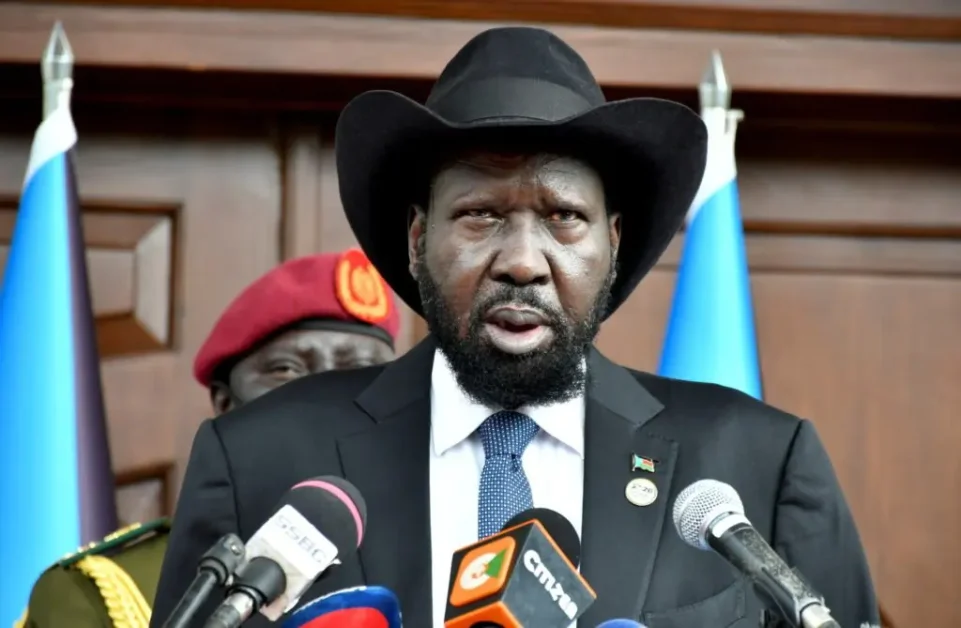
President Kiir also suspended Petroleum Minister Puot Kang Chol, who faces similar charges alongside Machar, signalling a broader purge of opposition figures from the unity government. The oil ministry controls South Sudan’s primary source of revenue in a country where crude exports represent the lifeblood of the struggling economy.
Beyond Machar, prosecutors have indicted 20 additional individuals in connection with the Nasir attacks, with 13 still at large, according to Justice Minister Geng. The scope of the charges suggests authorities are pursuing a comprehensive legal case against the opposition leadership.
The constitutional crisis unfolds as South Sudan grapples with multiple humanitarian emergencies, including widespread hunger, economic collapse, and continued ethnic violence despite the official peace deal. Sporadic fighting between forces loyal to Kiir and Machar has persisted throughout the supposedly peaceful transition period.
“While the government of the Republic of South Sudan appreciates the engagement of international partners, public and media on the Nasir incident, this matter is now sub judice,” Geng declared, effectively dismissing international pressure for Machar’s release.
Civil society leaders warned that South Sudan’s fragile judicial system lacks the credibility to fairly prosecute such politically charged cases. Edmund Yakani, executive director of Community Empowerment for Progress Organisation, expressed hope that any court proceedings would be conducted fairly rather than serving as “a kangaroo court of law.”
The timing of the charges and suspension raises questions about Kiir’s motives, with critics suggesting the president is exploiting the justice system to eliminate his primary political rival and consolidate power. Such moves directly contradict the spirit of the peace agreement, which established the unity government precisely to prevent either leader from dominating the other.
South Sudan’s international partners now face the prospect of their carefully negotiated peace framework disintegrating, potentially forcing renewed intervention in a country that has consumed billions in aid and peacekeeping resources since independence in 2011.
The crisis threatens to destabilise the broader East African region, where neighbouring countries host millions of South Sudanese refugees who could face renewed displacement if violence erupts again. Regional powers invested significant diplomatic capital in brokering the 2018 peace deal and will likely pressure both sides to prevent a return to war.
As tensions escalate in Juba, the international community watches anxiously to see whether South Sudan’s democratic institutions can survive this constitutional test or whether the world’s youngest nation will once again descend into the ethnic violence that has defined its brief, troubled existence.