IN the sterile halls of Uganda’s national tally centre in Lweza, electoral officials are performing an elaborate pantomime of democracy. They are counting votes, announcing percentages, updating spreadsheets with bureaucratic precision. The theatre is meticulous. The outcome was never in doubt.
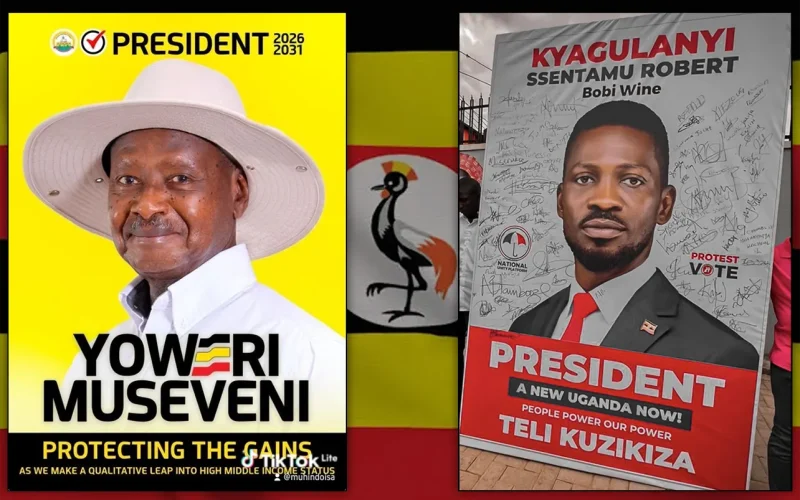
As tallies from nearly half of polling stations emerged Friday, President Yoweri Museveni commanded 76 percent of the vote, his main challenger Bobi Wine trailing with roughly 20 percent. The numbers scroll across screens like a script written long before the first ballot was cast. For this is not an election in any meaningful sense – it is a census of fear, a ritual reaffirmation of power that has calcified over nearly four decades into something resembling permanence.
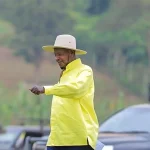
At 81 years old, Museveni stands as Africa’s third-longest serving head of state, seeking a seventh consecutive term in office. He has ruled Uganda since 1986, when many of today’s voters were not yet born. Term limits were abolished. Age limits were removed. The constitution, once a barrier, became pliable under his touch. And now, in January 2026, Uganda finds itself conducting what international observers might charitably call an “electoral exercise” – the motion of democracy without its substance.
The Vanishing Opposition
The most telling element of this election is not who participated, but who could not. Dr Kizza Besigye, opposition heavyweight and four-time presidential candidate, did not participate, following his detention for more than a year without trial on treason charges. Besigye, once Museveni’s personal physician during the bush war that brought the president to power, later became his most persistent challenger. He was abducted by unidentified men while on a visit to Kenya in November and taken to Luzira Maximum Security Prison in the Ugandan capital, facing treason charges that carry the possibility of death.
The symbolism is stark: a political rival removed not through debate or ballot, but through abduction across international borders. Even after Uganda’s Supreme Court ruled that trying civilians in military courts is unconstitutional, the government pressed forward, demonstrating the hollowness of institutional checks when power flows from the barrel of a gun rather than the consent of the governed.
What opposition remained faced systematic dismantling. Undue restrictions have been imposed on opposition parties, particularly the National Unity Platform, through roadblocks, raids, seizure or blocking of access to party headquarters, forced confinement at residences, and forced dispersal of gatherings. The UN Human Rights Office documented how authorities deployed legislation, including the Computer Misuse Act, the NGO Amendment Act, and the Defence Forces Amendment Act, to arrest activists, raid opposition offices, suspend radio stations, and tighten control over civil society.
Democracy Under Digital Blackout
On January 13, just days before the vote, Uganda’s Communications Commission imposed a suspension of mobile internet services, citing misinformation, electoral fraud and incitement of violence. The pattern is grimly familiar. In 2021, the government shut down the internet for four days during the previous election, restoring it only after Museveni’s victory was declared. This time, even satellite internet provider Starlink was reportedly instructed to disable services.
The darkness serves a purpose. Without internet access, opposition candidates cannot mobilise supporters. Journalists cannot report on irregularities in real time. Citizens cannot document security force abuses. The information landscape becomes what the state allows it to be—a carefully curated performance of legitimacy for international consumption.
On election day itself, technical failures added another layer to the spectacle. At his polling station in Rwakitura, electronic voter identification devices failed to authenticate Museveni’s fingerprints, after similar challenges were reported earlier in opposition strongholds in central Uganda. The irony was not lost on opposition candidates, who accused authorities of weaponising technological failure to disenfranchise voters selectively.
The Architecture of Coercion
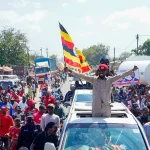
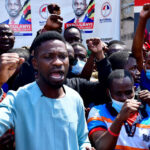
The campaign period revealed the full machinery of state control. Security forces repeatedly opened fire at Wine’s rallies, killing at least one person, and arrested hundreds of his supporters. The government’s explanation – that they were responding to lawless behaviour – rings hollow when video evidence shows armed security personnel firing tear gas and live ammunition at unarmed crowds.
Amnesty International characterised the campaign as marked by a brutal campaign of repression, citing the use of tear gas, pepper spray, beatings and other acts of violence. In a New Year’s Eve address, Museveni himself recommended that security forces use more tear gas against what he termed “the criminal opposition,” noting with chilling pragmatism that tear gas doesn’t kill, making it preferable to live bullets, a statement that inadvertently confirmed the violent suppression as policy rather than aberration.
Opposition party deputy president Jacklyn Jolly Tukamushaba was driven to the army barracks together with other agents and electoral materials intended for use after the elections. The abductions continue even as votes are tallied, suggesting that the post-election period may see further crackdowns on dissent.
The Illusion of Competition
Technically, eight candidates competed in this election. In reality, only one had access to state resources, security apparatus, and the institutional machinery necessary for a national campaign. Museveni told reporters after voting that he expected to win 80 percent “if there’s no cheating” – a remarkable statement that frames any resistance to his victory as inherently fraudulent, inverting the logic of democratic accountability.
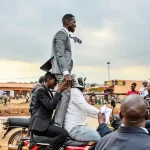
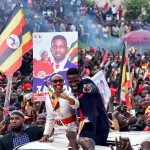
Bobi Wine, the 44-year-old musician-turned-politician who represents the aspirations of Uganda’s majority-youth population, campaigned under conditions that would break most political movements. His supporters were beaten, arrested, and intimidated. His rallies were violently dispersed. His party officials were detained. Yet he persisted, calling on citizens to protect their votes and warning that if security forces attempt to subvert the people’s will, “citizens have every right to protest unarmed and non-violently.”
By Friday afternoon, Wine’s National Unity Platform reported that military and police had surrounded his house in Kampala, effectively placing him under house arrest – a tactic deployed in 2021 to contain him for days after that contested election. Police denied knowledge of any such restriction, but the pattern is established: opposition figures who pose genuine electoral threats are neutralised through confinement, not competition.
A Regional Pattern, An International Silence
Uganda’s trajectory mirrors broader authoritarian consolidation across the continent. Museveni’s longevity – approaching four decades in power – reflects not popular legitimacy but the successful construction of what political scientists call a “security state”: a system where governance flows from military dominance rather than democratic consent.
The international response has been muted at best, complicit at worst. Despite the United States declaring the 2021 election neither free nor fair, Uganda remains a key security partner in the region, particularly in operations against armed groups in eastern Democratic Republic of Congo. Strategic interests trump democratic principles. Regional bodies like the African Union and East African Community dispatch observation missions that produce diplomatically worded reports, but impose no meaningful consequences.
The result is a system that has perfected the aesthetics of democracy while gutting its substance. Elections are held. Ballots are counted. Results are announced. But the core bargain of democratic governance, that power derives from citizens and can be peacefully transferred through their will, has been replaced by a different social contract: stability in exchange for silence, order in exchange for obedience.
Counting Votes in a Predetermined Race
As electoral officials continue their tabulations, announcing updated percentages with the solemnity of a genuine democratic process, the entire exercise resembles nothing so much as a coronation dressed as an election. The numbers being counted represent not the free expression of Uganda’s 21.6 million registered voters, but a complex calculus of fear, coercion, institutional capture, and the raw exercise of state power.
The tragedy is not that Museveni will win—that was certain before the first vote was cast. The tragedy is the systematic demolition of political space where genuine competition might occur. It is the normalisation of repression as an electoral strategy. It is the international community’s acquiescence to increasingly brazen authoritarian consolidation, provided that stability and strategic cooperation continue.
And so the count continues. Officials will soon announce the final results. Museveni will be inaugurated for his seventh term. The machinery of state will roll on. And Uganda’s millions, particularly its youth, who constitute 70 percent of the population and have never known any other leader, will be left to navigate the yawning gap between the democracy their country claims to practice and the authoritarian reality they inhabit.
This is not an election. It is a performance of one, staged with sufficient procedural correctness to maintain the fiction of democratic legitimacy while ensuring that power remains exactly where it has resided for nearly four decades. The votes are being counted. The outcome was never in question. And that, ultimately, is the entire point.