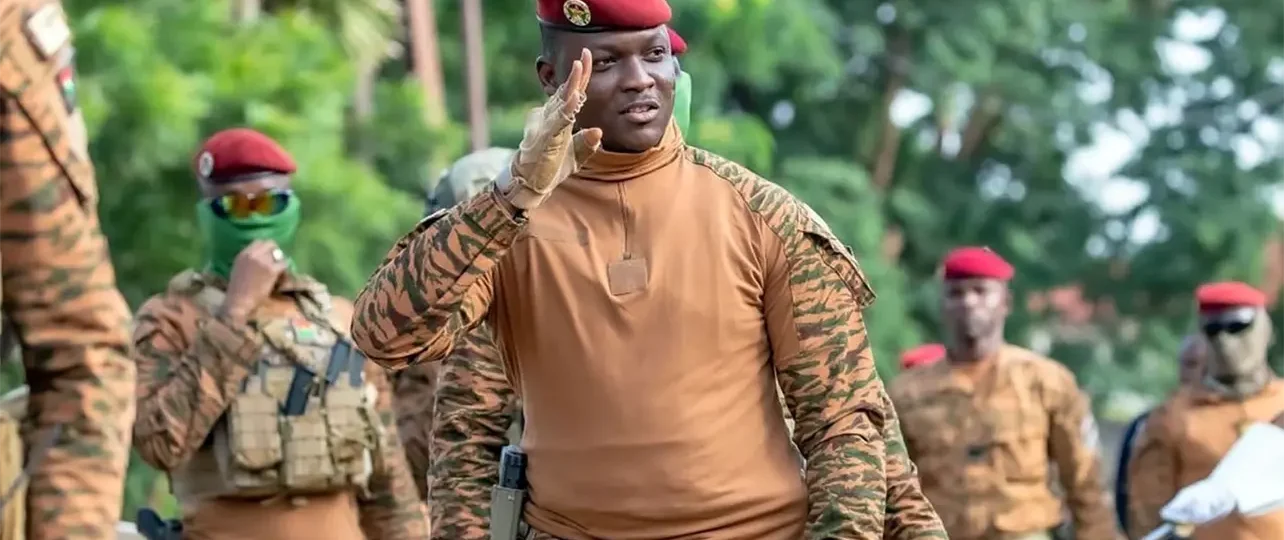

BURKINA Faso, once a hopeful democracy in West Africa, has fallen into a dark era of repression under military rule. Since Captain Ibrahim Traoré seized power in a coup in September 2022, the country has witnessed an alarming erosion of press freedom, human rights violations, and economic instability. Journalists, who are crucial for transparency and accountability, have become primary targets in the junta’s campaign to silence dissent.
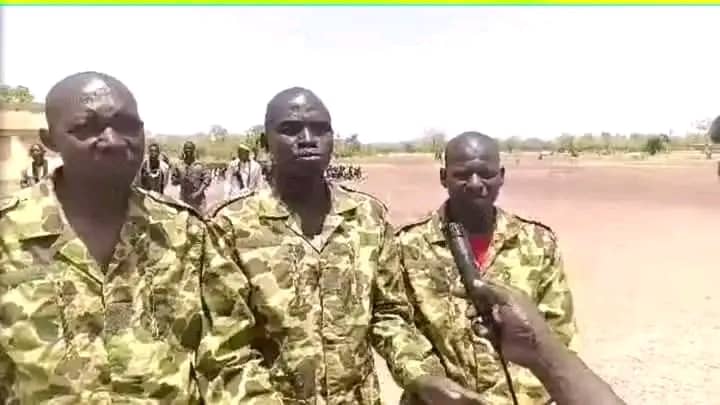
The military regime’s crackdown on journalists reached a disturbing peak with the arrest of three prominent media figures: Guézouma Sanogo (President of Burkina Faso’s Journalists Association), Boukari Ouoba (Vice President), and Luc Pagbelguem (a journalist at BF1 TV). These arrests followed their criticism of the junta’s restrictions on media freedom. A video circulating on social media showed the detained journalists humiliated, dressed in military uniforms – a clear attempt to criminalize and degrade them publicly.
The African Editors Forum (TAEF) has strongly condemned these actions, stating: *“This deeply disturbing footage confirms growing fears for their safety and raises serious concerns about the deliberate humiliation and criminalisation of journalists by the Burkinabe military authorities.”* TAEF has demanded their immediate release, emphasizing that such acts violate international laws like the African Charter on Human and Peoples’ Rights and the Universal Declaration of Human Rights.
TAEF further warned that these detentions create *“a climate of fear that undermines journalistic independence and citizens’ right to information.”* The forum called on regional and international actors- including ECOWAS, UNESCO, and the UN Human Rights Council – to pressure Burkina Faso’s authorities to end media repression.
Under Traoré’s leadership, Burkina Faso has seen an aggressive campaign against both local and international media. Foreign correspondents have been expelled, investigative outlets shut down, and critical journalists either arrested or forced into exile. The Journalists Association was dissolved after criticizing government policies – a move emblematic of the regime’s intolerance for dissent.
A Human Rights Watch report revealed that dozens of journalists have fled Burkina Faso under threats of imprisonment, torture, enforced disappearance, or forced conscription into the military. One journalist lamented: *“Free media is dead here; only government propaganda remains.”
The repression extends beyond journalists to broader human rights abuses. Civilians continue to suffer under both Islamist insurgents and state security forces. Mass executions, arbitrary arrests, and enforced disappearances have become common during counterinsurgency operations. In 2024 alone, over 6,000 civilians were killed in conflict-related violence – a stark increase compared to pre-coup levels.
Additionally, marginalized groups face heightened persecution under new laws criminalizing homosexuality and plans to reinstate the death penalty. These measures further demonstrate the junta’s disregard for fundamental rights.
While Burkina Faso has seen some economic recovery through gold production and agriculture, these gains are overshadowed by rising public debt and widespread poverty. Half of the population lives below $2.15 per day. The junta’s pivot toward Russian security support has strained relations with Western partners without resolving territorial insecurity – half of Burkina Faso remains outside government control.
Burkina Faso’s descent into authoritarianism under military rule has devastated its democratic institutions and human rights landscape. The silencing of journalists epitomizes broader repression that stifles public accountability and access to information. As TAEF aptly stated: *“Journalism is not a crime. It is a vital pillar of democracy and public accountability.”Unless regional and international actors intervene decisively, Burkina Faso risks further isolation and instability under this oppressive regime.”