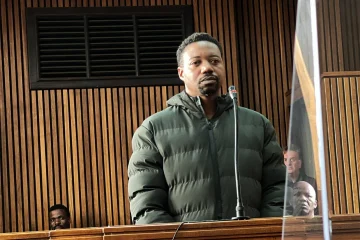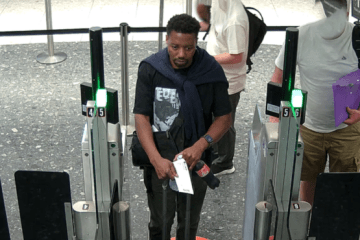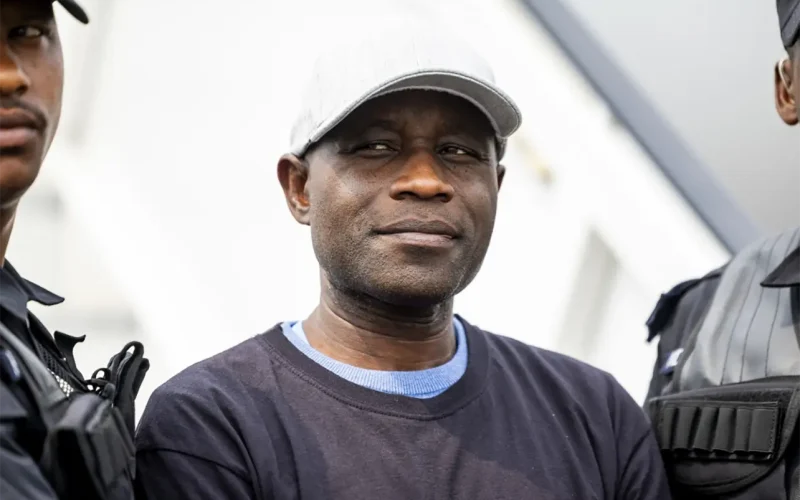
FOR three decades, François Gasana lived believing he had successfully outrun his past. The former student who participated in Rwanda’s 1994 genocide had reinvented himself as “Franky Dusabe” in the Norwegian capital of Oslo, where he built a new life thousands of miles from the blood-soaked hills of his homeland. But on August 8, 2025, the long arm of international justice finally reached him as he stepped off a plane at Kigali International Airport, flanked by Rwandan authorities ready to ensure he faced the consequences of his crimes.
The extradition of the 53-year-old genocide suspect from Norway represents far more than a single case closure – it stands as a powerful testament to the principle that time cannot wash away accountability for the gravest of human crimes. Gasana’s journey from freedom in Scandinavia to a Rwandan courtroom illuminates both the persistent pursuit of justice and the evolving landscape of international cooperation in prosecuting crimes against humanity.
The Anatomy of Deception: How Identity Changes Cannot Erase Criminal Responsibility
Gasana’s story begins in 1972 in Bitabage Cell, Ngororero District, where he was born into a world that would soon be consumed by ethnic hatred. By 1994, the 22-year-old student had transformed from an ordinary young man into an active participant in one of the 20th century’s most horrific genocides. In the former Kivumu Commune, Gasana was accused of killing a child during the genocide while also inciting others to join the systematic slaughter that would claim an estimated 800,000 lives over 100 days.
The meticulous nature of his crimes was later documented when the Nyange Gacaca Court tried him in absentia in 2007, finding him guilty of genocide and sentencing him to 19 years in prison. But by then, Gasana had already fled Rwanda and eventually established himself in Norway under an assumed identity. The name change to “Franky Dusabe” represented a calculated attempt to sever all connections to his genocidal past – a strategy that worked for over two decades.
Yet this case demonstrates a fundamental truth about international justice: geographical distance and false identities provide only temporary refuge. Norway’s National Criminal Investigation Service (Kripos) eventually tracked him down through patient investigative work, leading to his arrest in Oslo in October 2022. The fact that Norwegian authorities could identify and apprehend someone living under a false name for decades speaks to both improved international intelligence sharing and the unwavering commitment to pursuing genocide perpetrators regardless of how much time has passed.
Legal Persistence: The Three-Year Extradition Battle
Gasana’s legal challenges in Norwegian courts – from the Oslo District Court’s September 2023 ruling in favour of extradition, through his failed appeal to the appellate court in April 2024, to the Supreme Court’s final rejection in June 2024- reveal the robustness of international legal frameworks designed to prevent war criminals from finding permanent sanctuary.
The Norwegian judicial system’s handling of Gasana’s case reflects a broader commitment to international justice that extends beyond rhetoric. Faustin Nkusi, spokesperson for Rwanda’s National Public Prosecution Authority, emphasised this partnership: “We are grateful for the continued collaboration with Norwegian judicial authorities. This extradition underscores their commitment to ensuring that perpetrators of heinous crimes do not find safe havens.”
This cooperation represents part of a pattern. Norway previously extradited Charles Bandora in 2013, who is now serving a 30-year sentence in Rwanda, and convicted another genocide suspect, Sadi Bugingo, in its own courts in 2013. Four other genocide-related cases are currently under review between Rwandan and Norwegian authorities, indicating that Gasana’s extradition is part of an ongoing systematic effort rather than an isolated incident.
The Persistence of Memory: Why Thirty Years Cannot Erase Genocide
The significance of Gasana’s extradition extends beyond the specifics of his individual case to broader questions about justice, memory, and accountability. His return to Rwanda comes at a time when genocide survivors are ageing and many direct witnesses have passed away, yet the commitment to prosecution remains unwavering. This persistence sends a clear message to other fugitives: that time does not diminish culpability for genocide.
The fact that Gasana will now face a Rwandan court system – likely to serve his original 19-year sentence with the possibility of additional charges – demonstrates how post-genocide Rwanda has built institutions capable of delivering justice. The transformation from a country torn apart by ethnic violence to one that can credibly prosecute its own war criminals represents one of the most remarkable aspects of Rwanda’s post-genocide trajectory.
For survivors and their families, Gasana’s return represents more than legal closure – it affirms that their suffering was not forgotten and that those responsible cannot simply disappear into comfortable anonymity abroad. The image of the 53-year-old being escorted from the plane at Kigali International Airport serves as a powerful symbol that justice, however delayed, can still be delivered.
International Justice in an Era of Global Mobility
Gasana’s case also highlights the challenges and successes of pursuing international justice in an era of unprecedented global mobility. His ability to establish a new identity in Norway and live freely for decades demonstrates how globalisation can benefit those seeking to escape accountability. Yet his eventual capture and extradition also show how the same interconnected world that enabled his escape ultimately facilitated his apprehension.
The cooperation between Norwegian and Rwandan authorities required navigating complex legal frameworks, including ensuring that human rights standards would be met in Rwanda’s justice system. The successful completion of this process, despite Gasana’s persistent legal challenges, demonstrates the maturation of international legal cooperation mechanisms.
As Norwegian authorities noted in March when announcing his impending extradition, conditions had been met for his return to Rwanda. This careful legal process, while time-consuming, ensures that extraditions are conducted according to international standards while still enabling justice to be served.
The Message to Other Fugitives
Perhaps most importantly, Gasana’s extradition sends an unmistakable message to other genocide fugitives who may believe they have successfully escaped accountability. The case demonstrates that new identities, decades of peaceful living, and even citizenship in countries with strong legal protections cannot ultimately shield those responsible for crimes against humanity.
The patient, methodical approach taken by both Norwegian and Rwandan authorities – involving careful investigation, proper legal procedures, and international cooperation – creates a template for future cases. It shows that justice systems can work together across borders and decades to ensure that the gravest crimes do not go unpunished.
As Gasana begins his journey through Rwanda’s justice system, his case stands as a reminder that while justice may be delayed, it need not be denied. In an era when authoritarian leaders worldwide seek to normalise mass atrocities, the successful prosecution of genocide perpetrators thirty years after their crimes carries significance far beyond Rwanda’s borders.
The long arm of the law has reached across decades and continents to deliver François Gasana to justice. For a world still grappling with ongoing atrocities and seeking to prevent future genocides, his extradition offers both a warning to perpetrators and hope to victims that accountability, however long it takes, remains possible.