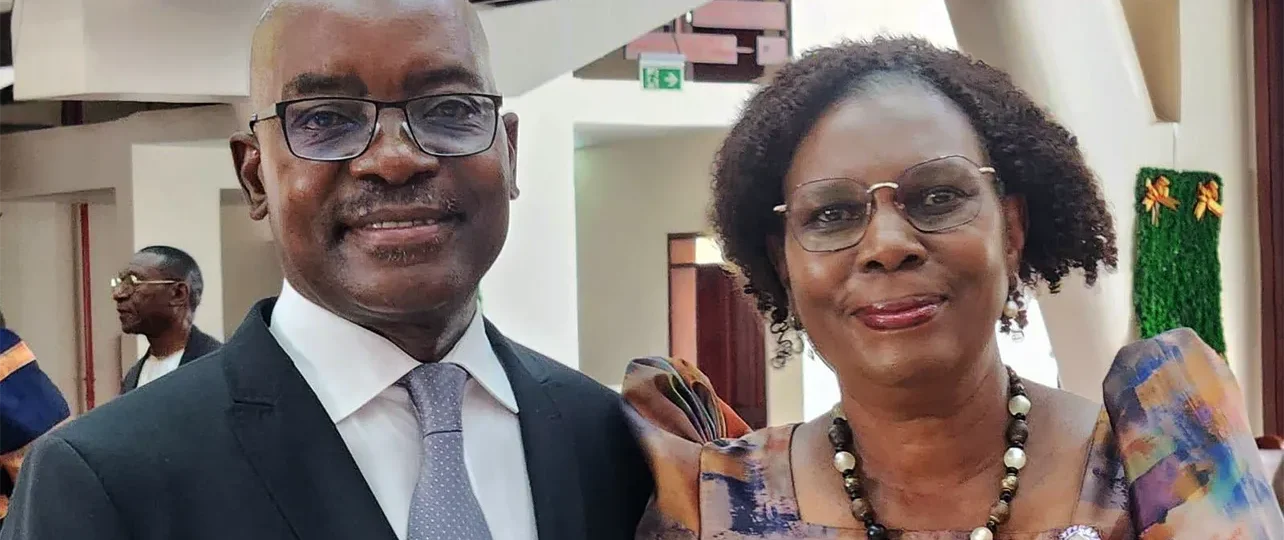

ON the morning of Wednesday, 27 May 2026, a quiet graveside ceremony in the Swiss municipality of Dubendorf, on the outskirts of Zürich, concluded one of the most wrenching odysseys in recent Ugandan social and legal history. Two urns containing the cremated remains of David Baagala Mutaaga, 69, and his wife Deborah Florence Naizuwa Mutaaga, 62 – a couple who had dreamed of spending their twilight years on the fertile red-clay soil of their homeland — were finally lowered into the earth of a continent they had left decades before as young strivers, and to which their children had now determined they could not safely return, even in death.
Ten months had passed since Ugandan police discovered their bodies in the early hours of 6 July 2025, inside their home in Lugonjo, Nakiwogo Cell, Entebbe Municipality – both bearing fatal stab wounds to the chest, the house carrying signs of a calculated intrusion. The couple had hosted a joyous homecoming celebration with friends and relatives just hours before. They had been back in Uganda for barely two weeks.
A DREAM DEFERRED, THEN DESTROYED
The story of David and Deborah Mutaaga is, at its heart, the story of the African diaspora’s oldest and most poignant longing: to build something abroad, to accumulate security and dignity, and then – at last – to come home. The couple had spent more than three decades in Zurich, building their lives, raising their children, Mark Ernest Kabenge Mutaaga and Isabel Najitta Mutaaga, both of whom would grow up as Swiss citizens. They married in Uganda in 1988, and after years abroad, chose to retire to the quiet lakeside suburb of Nakiwogo in Entebbe, settling into a modest home that was to be their final chapter – a chapter of peace, proximity to family, and the comforts of the familiar.
It was not to be. According to multiple investigators’ accounts, a masked attacker scaled the perimeter wall of their home after the guests had gone, gaining entry through a broken bedroom window. A sniffer dog later lost the scent trail at the main gate – a detail investigators say suggests the perpetrator was not only familiar with the property’s layout but may have exited unhurriedly, with knowledge of the security arrangements. Nothing was stolen. Mobile phones and cash were left untouched. The attack was targeted. The Mutaagas had barely unpacked.
THE MOTIVE THAT DARE NOT SPEAK ITS NAME
From the earliest hours of the investigation, police found themselves navigating terrain more treacherous than a conventional robbery-homicide. The crime scene spoke of premeditation. CCTV footage captured a masked figure. But it was what police sources described as the killer’s own statements – reportedly recorded in an audio clip that circulated in the immediate aftermath, in which a voice could be heard calling out in what appeared to be an accusation over property – that pointed investigators toward a different and far darker motive.
David Mutaaga had, it emerged, inherited the family’s ancestral land from his late father. The inheritance, according to investigators, had long simmered as a source of grievance among extended family members who felt excluded. When the couple returned from three decades abroad, police sources told reporters, some relatives allegedly saw their arrival not as an occasion for celebration but as a moment of reckoning. “Police believe some family members may have harbored resentment and saw the couple’s return to Uganda as an opportunity,” one senior investigator confirmed, though with the caveat that the motive remained officially unconfirmed.
| The ancestral land itself became a breeding ground for jealousy and bloodshed. When that happens, the ebijja loses its sanctity. |
Two suspects were arrested in the days following the murders. Yet nearly a year later, with the couple buried and the killer still unidentified behind the mask, justice remains elusive. The murders carry case reference Entebbe CRB No. 747/2025.
NINE MONTHS IN A KAMPALA FUNERAL HOME
As investigations stalled, the Mutaaga children faced an additional torment: the bodies of their parents lay in a Kampala mortuary, then in A-Plus Funeral Home in Mengo, for month after month after month. Initial postmortems had been completed. Investigators had confirmed they no longer required the remains. Yet the bodies could not move, because a family war had erupted over where – and how – the couple would be buried.
A family meeting on 17 July 2025, held eleven days after the murders, agreed to delay the funeral until investigations advanced. That delay stretched to nine months. In December 2025, Mark Kabenge, acting with his sister, approached the Criminal Investigations Directorate for clearance to cremate the remains and repatriate them to Switzerland. The clan said no.
Omutaka Sendagire Seruwagi Ssengaluma, a clan leader and cousin of the late David Mutaaga, led the traditionalist bloc’s objection: the patriarch of a Baganda family heir must be buried at the ebijja – the ancestral burial grounds – at Buddo. To deviate was not merely unconventional; it was, in Kiganda spiritual cosmology, the ultimate act of ancestral severance; an excommunication not just of the dead, but of the living lineage.
JUSTICE NAGAWA AND THE RULING THAT REWROTE CUSTOM
In April 2026, the matter came before Justice Celia Nagawa of the Family Division of Uganda’s High Court. The judge’s ruling, dated 20 April, was unambiguous and historic. She held that Mark Kabenge Mutaaga and Isabel Najitta Mutaaga, as the biological children of the deceased, possessed the paramount right to determine both the mode and place of their parents’ burial – overriding the claims of the clan leadership.
“This Court therefore finds and holds that the applicant has the paramount right to determine the mode and place of disposal of the remains… by virtue of their position as the biological children of the deceased,” Justice Nagawa ruled. She ordered the Attorney General and police authorities to facilitate the unconditional release of the remains within 48 hours.
Critically, the court also dismissed a personal note left by David Mutaaga, which the clan had cited as evidence of his wish to be buried at Buddo. The judge found it reflected cultural sentiment, not formal burial instructions. She further noted that the nine-month delay had caused “undeniable anguish” to all parties, and observed that Kabenge had already secured clearance from the Swiss Embassy for cremation and repatriation.
WINNIE BYANYIMA: ‘THE CRUEL MURDERER MUST BE BROUGHT TO JUSTICE’
The laying to rest of the Mutaagas drew a response from one of Africa’s most prominent human rights voices. Winnie Byanyima, the Ugandan executive director of UNAIDS and former member of parliament, posted a tribute that captured the grief of a broad community of friends and colleagues who had known the couple.
“Rest in peace, dear Deborah and Mutaaga. We were blessed to know you and to share in your warmth, kindness, and friendship. May your children find healing, comfort, and strength in the love that surrounds them. This senseless tragedy has left us heartbroken. The cruel murderer must be brought to justice,” Byanyima wrote.
Her use of the singular — “the cruel murderer” — was deliberate. Nearly a year on, the masked figure who ended two lives in Nakiwogo remains at large.
THE EBIJJA, THE LAW, AND THE BREAKING OF A COVENANT
The cultural dimensions of this case extend far beyond the Mutaaga family. David Soita Masinde, the journalist and commentator whose analysis of the case drew widespread attention, frames what has happened as a civilisational rupture within Buganda tradition. “In classical Buganda culture, to deny a patriarch burial in the ebijja is the ultimate spiritual excommunication,” he writes. “Yet, this case exposes a harsh new reality.”
That reality, as Masinde observes, is a generational shift being driven not by contempt for tradition but by the compounded failures of the state. The Mutaaga children chose Switzerland, he argues, because Uganda’s law enforcement failed to secure justice, leaving the masked assassin at large. Because the very land at the heart of the case was also, allegedly, the motive for murder. And because diaspora safety, emotional closure, and peace of mind now outweigh, for a growing number of Ugandans, the rigid expectations of cultural conformity whose enforcers may include those with blood on their hands.
The trend is measurable and accelerating. Across East and Southern Africa, diaspora deaths are increasingly resulting in burials abroad or in public cemeteries rather than ancestral grounds – a shift driven by the cost of repatriation, the trauma of contested customs, and, as in the Mutaaga case, the visceral fear of returning to the place where someone you love was killed and where their killer has not been caught.
‘A MASSIVE GENERATIONAL SHIFT’
There is no small irony in the fact that the Mutaagas’ journey ends in Dubendorf – a municipality in Canton Zurich, a city of precision, order, and democratic accountability, built on the very values that Uganda’s institutions have, in the eyes of the couple’s children, so catastrophically failed to deliver. Mark and Isabel Mutaaga will now tend their parents’ graves within commuting distance of the city where their family built their life. The return to the homeland ended in horror. The departure from it has ended in permanence.
For Ugandan social commentators, the Mutaaga case has crystallised a debate that has been building quietly for years: the question of what obligation the living owe to the dead when the systems meant to protect them – police, justice, law – have failed so visibly. The answer the High Court gave was clear: the obligation runs primarily to the biological children, not to the clan, not to the ancestral custom, not to the political authority of the omutaka.
Masinde’s framing is sharper still: “State failure and family betrayal are driving a massive generational shift toward cremations, public cemeteries, and diaspora burials. Safety, peace, and emotional closure now officially outweigh the rigid, sometimes fatal, expectations of cultural conformity.”
JUSTICE DEFERRED, JUSTICE DENIED?
The final chapter of the Mutaaga story has not yet been written. The couple’s cremated remains are interred. Their children are left to grieve thousands of kilometres from the country that drew their parents home. And somewhere in Wakiso District — or perhaps nearby — the person who entered a modest Entebbe home on a warm July night in 2025 and extinguished two lives still walks free.
The families’ original public statement, issued days after the murders, appealed for privacy: “It is with profound sorrow and heartbreak that the Mutaaga-Nabeta families announce the tragic passing of our beloved David Baagala Mutaaga and Deborah Naizuwa Mutaaga.” Ten months later, the sorrow has not lifted. The heartbreak has calcified into something colder and harder — the knowledge that justice, like the burial they could not hold on home soil, remains deferred.
For the broader community of Ugandans in the diaspora — the tens of thousands who dream, as David and Deborah Mutaaga once dreamed, of coming home — this case stands as a devastating cautionary tale. It asks, in the starkest possible terms: is Uganda safe enough to retire in? And if the answer is uncertain, what does that mean for the dream of return that sustains so many African diaspora families across generations?
The Dubendorf cemetery does not ask such questions. It offers only what the couple was ultimately denied at home: a quiet, certain, dignified rest.