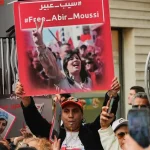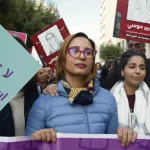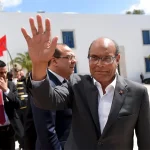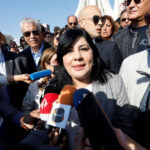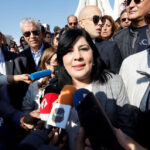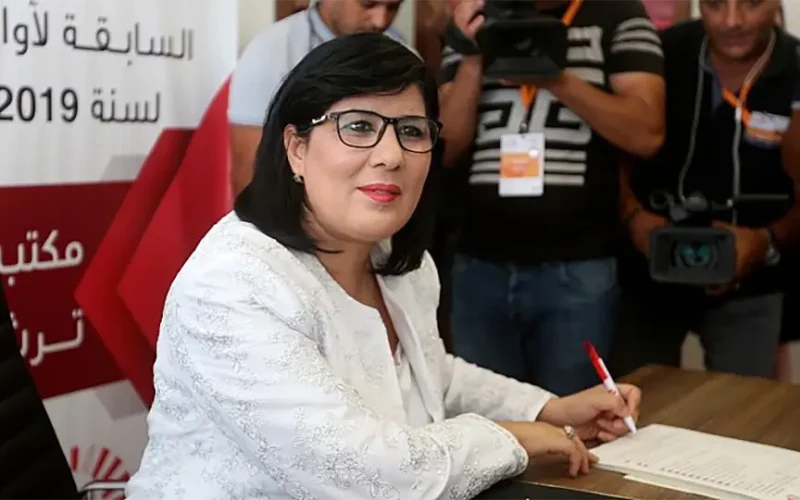
ON a sweltering Thursday in June 2025, the gavel fell in a Tunisian courtroom with the weight of a nation’s democratic aspirations crashing down alongside it. Abir Moussi, the defiant leader of the Free Constitutional Party and one of President Kais Saied’s most vocal critics, was sentenced to two years in prison – not for violence, not for corruption, but for the simple act of criticising the country’s electoral commission.
This moment represents far more than the punishment of a single opposition figure. It marks the crystallisation of Tunisia’s transformation from the birthplace of the Arab Spring into a cautionary tale of how democratic institutions can be systematically weaponised to crush dissent.
Moussi’s journey to this courtroom began in 2023, when she was arrested at the gates of the presidential palace—a symbolic location that would prove prophetic. The charges against her have multiplied like a carefully orchestrated legal avalanche: assault with intent to provoke disorder, attempting to change the form of government, inciting violence. Each accusation carries the veneer of legal legitimacy while serving the unmistakable purpose of political elimination.
The latest sentence, delivered for her criticism of the electoral authority, strips away any pretence of coincidence. In Saied’s Tunisia, questioning the integrity of elections has become tantamount to sedition. The message is clear: the electoral process is beyond scrutiny, beyond criticism, beyond the reach of democratic accountability.
President Saied has demonstrated a masterful understanding of how to dismantle democracy while maintaining its facade. Rather than resorting to crude authoritarian tactics, he has chosen a more sophisticated approach—turning the very institutions meant to protect democracy into instruments of its destruction. The courts, once guardians of justice, have become extensions of executive power, processing opposition figures with the efficiency of an assembly line.
Moussi’s case illustrates this judicial machinery in action. Her 16-month sentence, completed in May 2025, was merely the appetiser; the two-year sentence handed down in June represents the main course in a feast of legal persecution. The charges under Decree-Law 54 and Article 72 of the Penal Code provide the legal framework, but the political motivation is transparent to anyone willing to see it.
Moussi’s imprisonment reverberates far beyond her personal fate or even the fortunes of her Free Constitutional Party. It represents the systematic dismantling of Tunisia’s brief experiment with pluralistic democracy. Each opposition figure silenced, each critical voice muted, each dissenting organisation disbanded moves the country further from the ideals that once made it the Arab Spring’s only success story.
The international community watches with growing alarm as Tunisia’s democratic institutions are hollowed out from within. Human rights organisations, including Amnesty International, have documented the pattern of persecution, but their reports seem to fall on deliberately deaf ears. The Biden administration’s tepid response and Europe’s preoccupation with migration have left Saied largely free to pursue his authoritarian project without meaningful consequences.
What emerges from Moussi’s case is a portrait of a president utterly determined to eliminate any challenge to his authority. Saied has not merely sought to win political battles; he has sought to ensure that no meaningful political battles can be fought at all. The courts have become his most reliable allies in this endeavour, transforming legal proceedings into political theatre where the verdict is predetermined and the only question is the severity of the sentence.
This judicial capture represents perhaps the most insidious form of democratic backsliding. Unlike military coups or emergency declarations, it maintains the appearance of legal propriety while gutting the substance of democratic governance. Opposition leaders are not disappearing in the night; they are methodically processed through a legal system that has been carefully calibrated to produce the desired outcomes.
The most chilling aspect of Moussi’s imprisonment is not what it represents, but what it portends. If a prominent opposition leader can be sentenced to years in prison for criticising electoral authorities, what fate awaits ordinary citizens who dare to question their government? The answer lies in the growing silence that has settled over Tunisia’s political landscape—a silence born not of satisfaction or apathy, but of fear.
This silence represents Saied’s greatest achievement and Tunisia’s most profound loss. The country that once echoed with the chants of “Bread, Freedom, Dignity” now whispers in the shadows, its citizens calculating the cost of each word, each gesture, each thought that might be construed as dissent.
As Moussi begins her sentence, Tunisia stands at a crossroads that leads only to darker destinations. The president’s determination to use the courts as instruments of political control has been demonstrated beyond doubt. The question now is not whether this judicial persecution will continue, but how far it will extend and whether any institution or individual will find the courage to resist.
The international community’s response will prove crucial. Tunisia’s slide toward authoritarianism has been gradual enough to avoid triggering dramatic interventions, but steady enough to achieve its intended effect. Without sustained pressure and meaningful consequences, Saied’s legal machinery will continue its methodical work of dismantling what remains of Tunisian democracy.
Abir Moussi’s imprisonment serves as both a warning and a test—a warning of what becomes of those who dare to challenge power, and a test of whether the international community will allow Tunisia’s democratic experiment to be quietly strangled in courtrooms across the country. The verdict in her case has been delivered, but the judgment of history remains to be written.