TUNISIAN police arrested prominent opposition figure Chaima Issa during a Saturday protest in the capital, just one day after an appeals court delivered prison sentences of up to 45 years to a group of opposition leaders, businessmen, and lawyers in what human rights observers have condemned as a politically motivated show trial.
The dramatic arrest—which Issa herself predicted moments before police detained her—crystallises the central role Tunisia’s criminal justice system now plays in President Kais Saied’s systematic suppression of political opposition, transforming what was once the Arab Spring’s sole democratic success story into an increasingly authoritarian state lurching from one constitutional crisis to the next.
The Machinery of Judicial Repression
The appeals court verdicts delivered Friday represent an escalation in the severity of judicial punishment meted out to Saied’s critics. Issa received a 20-year sentence on charges she has denounced as “unjust and politically motivated.” The conspiracy charges—alleging attempts to overthrow the president—have become the judicial system’s preferred mechanism for criminalising political opposition, carrying penalties severe enough to effectively eliminate dissent.
Human Rights Watch immediately condemned the proceedings as a “travesty of justice,” adding international weight to domestic accusations that Tunisia’s courts have been transformed into instruments of political control rather than arbiters of law.
The timing of Issa’s arrest underscores the government’s calculation: deliver crushing sentences, then immediately detain those convicted before they can mobilise resistance or flee into exile. Her prophetic warning to supporters—”They will arrest me shortly”—reflected not paranoia but clear-eyed recognition of the judicial-security apparatus now operating in lockstep to silence opposition voices.
From Democratic Transition to Constitutional Crisis
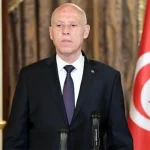
Tunisia’s descent into authoritarian governance accelerated dramatically in July 2021, when Saied suspended parliament and assumed sweeping executive powers, ruling by decree in what critics have characterised as a constitutional coup. What followed was not the stability and anti-corruption crusade Saied promised, but a systematic campaign to eliminate political pluralism through strategic use of the criminal justice system.
The pattern has become grimly predictable: opposition figures are arrested, charged with vague but serious offences like conspiracy or undermining state security, subjected to trials that lack basic due process protections, and sentenced to prison terms designed to destroy their political careers and intimidate others from challenging presidential authority.
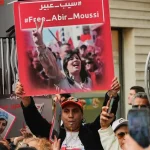
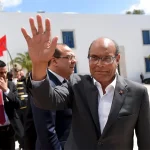
The roster of imprisoned opposition leaders reads like a who’s who of Tunisian politics. Former President Moncef Marzouki has been sentenced to 22 years in absentia. Rached Ghannouchi, leader of the Ennahda movement, remains incarcerated. Abir Moussi, head of the Free Constitutional Party, serves a two-year sentence for criticising electoral authorities. Sahbi Atig, a senior Ennahda official, was handed 15 years. Now Issa joins this expanding prison population, her 20-year term ensuring she will spend her most politically productive years behind bars.
The Judiciary as Political Weapon
The transformation of Tunisia’s judiciary into a political weapon required deliberate institutional capture. In 2022, Saied dissolved the Supreme Judicial Council and dismissed dozens of judges, ostensibly to purge corruption but effectively removing judicial independence. The president has consistently claimed he does not interfere in judicial proceedings, yet the pattern of verdicts against his critics tells a different story.
The courts now function as extensions of executive power, processing opposition figures with industrial efficiency. The April sentencing of opposition leaders to up to 66 years in prison demonstrated the system’s capacity for spectacular punishment. Friday’s 45-year maximum sentence maintains this trajectory of escalating severity, signalling that dissent carries ever-higher costs.
This judicial crackdown serves multiple strategic purposes for Saied. It eliminates current opposition leadership, intimidates potential future challengers, provides a veneer of legal legitimacy to political persecution, and allows the president to claim he is merely enforcing the law rather than crushing democracy.
The Defiance and the Fracture
Issa’s final public act before arrest—calling on Tunisia’s divided opposition to unite and escalate demonstrations against Saied—highlights both the courage of remaining dissidents and the fundamental challenge they face. The opposition remains fractured along ideological and partisan lines, struggling to present a unified front against Saied’s consolidation of power.
Her arrest, along with the warning that more detentions will follow, aims to decapitate whatever fragile unity might emerge from the opposition’s desperation. By systematically imprisoning or exiling every significant opposition figure, Saied is not merely suppressing current challenges but attempting to ensure no credible alternative to his rule can emerge.
International Silence, Domestic Consequences
The international community’s response to Tunisia’s democratic collapse has been notably restrained. European nations, preoccupied with migration flows and economic cooperation, have largely avoided confronting Saied’s authoritarian turn. American criticism has remained tepid and consequence-free. This silence has granted Saied the space to pursue his judicial campaign against opposition figures without meaningful external pressure.
The domestic consequences, meanwhile, compound with each new arrest and crushing sentence. Tunisia now faces a genuine constitutional crisis: a president ruling by decree, a disbanded parliament, a captured judiciary, and an opposition leadership either imprisoned, exiled, or awaiting trial. The institutional mechanisms for peaceful political change have been systematically dismantled.
The Spiral Continues
Issa’s arrest ensures the cycle of crisis will continue. Her imprisonment will likely trigger protests, which may lead to further arrests, generating additional trials and sentences, perpetuating Tunisia’s lurch from one constitutional confrontation to the next. The criminal justice system, rather than providing stability or accountability, has become the engine of political instability.
Saied’s claim that his actions aim to end “years of chaos and rampant corruption” rings increasingly hollow as the country descends deeper into authoritarian governance. The chaos has not ended—it has merely been redirected into the systematic persecution of political opposition. The corruption has not been eliminated—it has been rebranded as a judicial process.
The Reckoning Ahead
As more arrests loom and opposition leaders face decades in prison, Tunisia confronts fundamental questions about its political future. Can democracy be restored when its defenders are imprisoned? Can constitutional governance be rebuilt when courts serve executive power? Can political pluralism survive when dissent itself has been criminalised?
The answers remain uncertain, but the trajectory is clear: every new arrest, every harsh sentence, every politically motivated trial pushes Tunisia further from the democratic ideals that once made it a beacon of hope in the region and closer to becoming another cautionary tale of democracy’s fragility.
Chaima Issa’s arrest, following her 20-year sentence, represents not merely the persecution of one opposition figure but the latest chapter in Tunisia’s tragic transformation from democratic promise to authoritarian reality—a transformation enabled, enforced, and legitimised by a criminal justice system that has abandoned its role as protector of rights to become the president’s most reliable weapon against democracy itself.