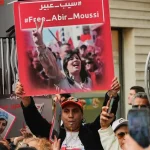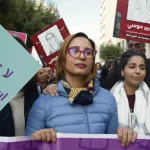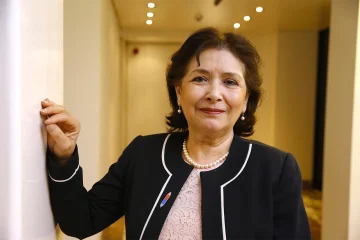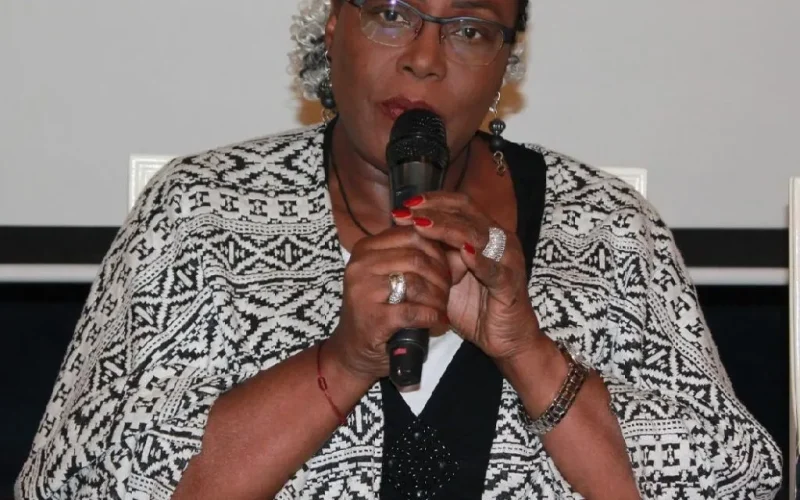
A Tunisian court has handed down an eight-year prison sentence to Saadia Mosbah, one of the country’s most visible migrant rights and anti-racism campaigners, in a ruling that legal analysts and rights defenders say marks a dangerous new chapter in President Kais Saied’s campaign to silence dissent. Mosbah, convicted on charges of money laundering and illicit enrichment that her legal team categorically rejects, becomes the latest and most prominent figure to be ensnared in what critics increasingly describe as a judicialised war against civil society.
The verdict comes nearly a year after Mosbah was first detained in May 2024, part of a coordinated sweep of organisations and individuals providing support to migrants traversing Tunisia on their way to Europe. Her lawyer, Hela Ben Salem, did not mince words after the sentence was read. The ruling, Ben Salem told reporters, was not about financial impropriety — it was about power.
“The verdict is a major shock, and it is part of a broader effort to dismantle civil society groups and shift responsibility for the state’s failure to address the migrant issue onto these groups.”
Hela Ben Salem, defence lawyer for Saadia Mosbah
The conviction must be read against the broader architecture of repression that Saied has constructed since his 2021 power grab, when he suspended parliament, dismissed the prime minister, and assumed near-absolute executive authority. Since then, the judiciary – once nominally independent – has been systematically reshaped into a tool of political management. In 2022, Saied dismissed dozens of judges by decree, installing loyalists in their place. International bodies, including the Venice Commission, warned at the time that the move fundamentally compromised the rule of law in Tunisia, the country once celebrated as the Arab Spring’s lone democratic success story.
THE PATTERN: FINANCIAL CHARGES AS POLITICAL WEAPONS
The charges laid against Mosbah – money laundering and illicit enrichment – follow a now-recognisable template. When the Tunisian government moved last year to suspend the Tunisian Forum for Economic and Social Rights (FTDES) and the Association of Democratic Women (ATFD), two of the country’s most consequential civil society institutions, it similarly invoked financial audits tied to foreign funding. The pattern is deliberate: by framing political persecution as financial crime, authorities seek to delegitimise targets before international audiences while insulating themselves from accusations of censorship.
The FTDES, founded in 2011, has spent over a decade monitoring economic inequality, labour rights violations, and migration dynamics in Tunisia. The ATFD, established in 1989, has been a cornerstone of Tunisian feminism and civil liberties advocacy. The targeting of both organisations in the same legislative sweep as Mosbah’s arrest was not coincidental – it represents the comprehensive elimination of the institutional infrastructure through which Tunisian citizens have historically been able to hold their government accountable.
Rights organisations, including Amnesty International and Human Rights Watch, have repeatedly documented how the Saied government has deployed Decree 54 – ostensibly an anti-disinformation law – to prosecute journalists, bloggers, and activists for social media posts critical of the administration. Mosbah’s case adds a new dimension: the weaponisation of anti-corruption statutes against humanitarian workers. It extends the government’s reach from speech into organised civil action.
MIGRATION POLITICS AND THE SCAPEGOATING OF ADVOCATES
At the core of the government’s prosecution of Mosbah and other detained activists is Tunisia’s deepening entanglement in the European Union’s externalisation of border control. Over the past three years, Tunisia has emerged as one of the most significant transit points for sub-Saharan African migrants attempting the Mediterranean crossing to Europe. Tens of thousands of people – many fleeing conflict in Sudan, Mali, Eritrea, and the Sahel region — have passed through the country, often stranded in informal camps along the coastline.
Rather than developing humane and sustainable policy responses, Saied’s government has adopted a nativist posture that has at times descended into open xenophobia. In 2023, the president made remarks alleging an organised conspiracy to change Tunisia’s demographic character through sub-Saharan migration – comments that were swiftly condemned by African governments and regional bodies. Thousands of migrants were subsequently rounded up and deported, with reports of some being abandoned in the desert along the Libyan and Algerian borders without food or water.
Mosbah, through her organisation Mnemty – which means ‘my dream’ in Arabic – spent years fighting both discrimination against Black Tunisians and the hostile reception afforded to migrant communities. Her detention and now her sentencing signal to every humanitarian worker in Tunisia that proximity to the migrant question carries criminal exposure. Ben Salem’s framing is therefore analytically precise: the state has not solved the migration crisis; it has prosecuted those who tried to manage its human consequences.
INTERNATIONAL SCRUTINY AND THE LIMITS OF EXTERNAL PRESSURE
The international response to Tunisia’s democratic backsliding has been characterised by an uncomfortable tension between stated human rights commitments and geopolitical interests. The European Union, which in 2023 signed a memorandum of understanding with Tunis that included substantial economic incentives in exchange for tighter border management, has repeatedly found itself caught between its values-based foreign policy rhetoric and its practical interest in reducing Mediterranean crossings ahead of successive European election cycles.
That arrangement, critics argue, has effectively granted the Saied government a degree of impunity. European institutions have issued statements condemning specific arrests and the restrictions on civil society, yet the broader financial and diplomatic relationship has remained largely intact. The United States Department of State has similarly issued periodic expressions of concern about press freedom and the rule of law in Tunisia, but without triggering the kind of sustained diplomatic consequence that might alter Tunis’s calculus.
African regional bodies have been even slower to respond. The African Union’s reticence on Tunisia – a member state whose president has, ironically, presented himself as a pan-African voice – reflects the institutional reluctance to engage in peer accountability that has long blunted the continental body’s effectiveness as a human rights instrument.
WHAT COMES NEXT: THE NARROWING SPACE FOR DISSENT
Mosbah’s legal team has confirmed it will appeal the sentence. That process, within a judiciary whose independence has been comprehensively compromised, will be closely watched. For Tunisian civil society, however, the verdict has already served its intended function regardless of its eventual outcome: it has communicated the terms of engagement under the current government with brutal clarity.
Lawyers, journalists, trade unionists, opposition politicians, and now humanitarian workers have all been prosecuted within this system. What connects them is not criminality but visibility – their willingness to speak, organise, and document in a political environment that has decided accountability is a threat rather than a function of governance. The Tunisian Forum for Economic and Social Rights noted in a recent statement that the country’s civil society sector, once among the most vibrant in the Arab world, has been gutted not through a single dramatic act of suppression but through the accumulated weight of suspensions, audits, travel bans, asset freezes, and now long prison sentences.
Saadia Mosbah has spent years working to expand the definition of who belongs in Tunisia and who deserves protection within its borders. The state has responded by placing her behind its bars. That inversion – of the humanitarian made criminal, the advocate made defendant – is not incidental to Tunisia’s current political trajectory. It is its defining feature. And until the international community is prepared to treat it as such, the sentences will keep coming.