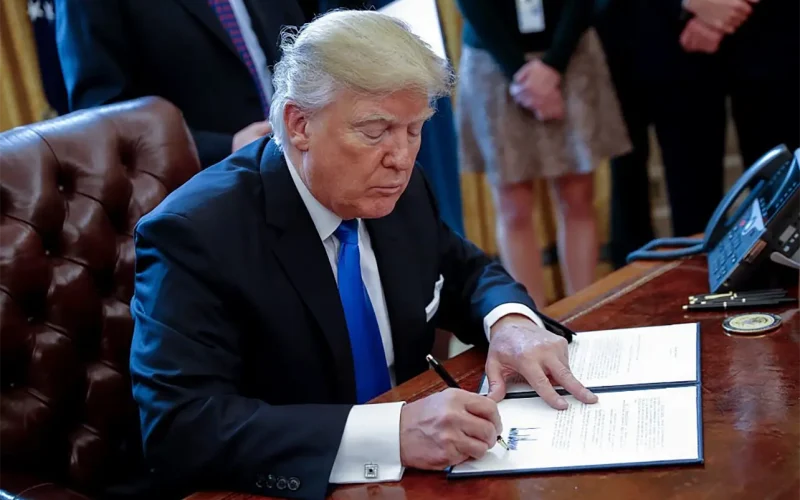
US President Donald Trump has signed a sweeping proclamation barring entry to the United States for citizens from 12 countries – six of them in Africa – citing national security and terrorism concerns. The ban, announced this week, takes effect June 9 and revives a controversial policy from Trump’s first term.
The new restrictions impose a complete ban on travellers from Chad, the Republic of the Congo, Equatorial Guinea, Eritrea, Libya, Somalia, and Sudan. These nations join Afghanistan, Myanmar, Haiti, Iran, and Yemen on the list of countries whose citizens are now fully barred from entering the U.S. The ban applies to individuals outside the United States who do not already hold a valid U.S. visa issued before June 9.
In addition to the full bans, three other African countries – Burundi, Sierra Leone, and Togo – face partial restrictions. Citizens from these nations will be denied certain types of visas, including most visitor, student, and exchange visas, though not all travel is prohibited.
The White House said the new restrictions are necessary to “shield Americans from perilous foreign individuals” and to prevent terrorist threats from reaching U.S. soil. In a video posted to social media, President Trump referenced a recent terrorist attack in Colorado, allegedly perpetrated by a foreign national, as evidence of the risks posed by inadequate vetting. The administration said the list was compiled after consultations with the Department of Homeland Security and intelligence agencies, focusing on countries with a “significant terrorist presence” or poor screening and cooperation on deportations.
The proclamation includes exemptions for certain groups, such as diplomats, immediate family members holding immigrant visas, adopted children, and athletes participating in major international sporting events hosted in the U.S. in the coming years. Afghan nationals with special immigrant visas – typically those who worked closely with the U.S. government – are also exempt, as are individuals facing persecution in Iran who hold immigrant visas.
The move has drawn swift condemnation from international aid organisations and refugee advocates, who argue the policy targets vulnerable populations and sows division. Critics point to the inclusion of Afghanistan, a nation whose citizens have assisted U.S. forces, as particularly controversial. Oxfam America called the policy “not about national security” but about “vilifying communities seeking safety and opportunity”.
President Trump defended the action as a “key part of preventing major foreign terror attacks on American soil,” emphasising the need for vigilance in the visa issuance process and the importance of preemptively identifying potential threats.
This is the second major travel ban instituted by President Trump. His 2017 order, which targeted several Muslim-majority nations, was upheld by the Supreme Court in 2018 but rescinded by President Joe Biden in 2021. The new ban expands the list of affected countries and comes amid heightened rhetoric on immigration and national security as the U.S. approaches another election cycle.
The White House indicated the list may be updated if “material improvements” occur in the affected countries or if new threats arise globally.
Countries with Full Travel Ban:
Afghanistan, Myanmar, Chad, Republic of the Congo, Equatorial Guinea, Eritrea, Haiti, Iran, Libya, Somalia, Sudan, Yemen
African Countries with Partial Ban:
Burundi, Sierra Leone, Togo
Effective Date:
June 9, 2025