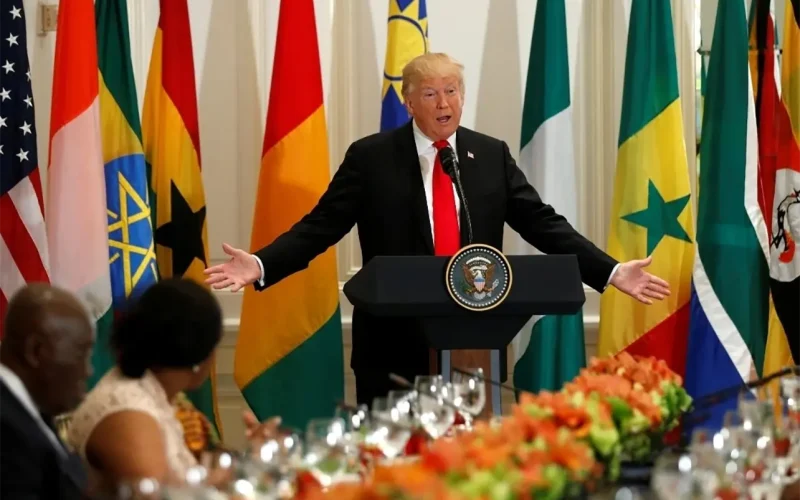
US President Donald Trump will host five African heads of state in a joint meeting at the White House on July 9-11, reviving a controversial diplomatic practice that critics argue undermines the dignity of African nations and their leaders.
Trump will host leaders from Gabon, Guinea-Bissau, Liberia, Mauritania and Senegal to discuss “commercial opportunities,” a White House official has announced. The meeting represents a significant departure from traditional diplomatic protocol, where heads of state typically receive individual state visits complete with ceremonial honours.
The decision to invite multiple African presidents for a collective meeting has drawn sharp criticism from diplomatic circles. Critics argue that such group formats diminish the stature of African leaders and their nations, contrasting sharply with the established global practice of honouring visiting heads of state with formal bilateral ceremonies.
Traditional state visits are typically marked by elaborate protocols including red carpet arrivals, state banquets, and cultural events that symbolise respect and the importance of bilateral relationships. The upcoming meeting, however, will be structured as a working session focused on business opportunities, lacking the ceremonial recognition usually accorded to visiting leaders.
This practice has precedent in previous U.S. administrations, with African diplomats and commentators describing such group meetings as belittling to the continent’s leadership. The format stands in stark contrast to the treatment afforded to other African nations — South Africa and Kenya have previously received the courtesy of individual state visits with full diplomatic honours, highlighting perceived disparities in diplomatic treatment.
“America First” Approach to Africa
The meeting reflects the Trump administration’s broader shift in U.S.-Africa policy, moving away from traditional models toward commercial partnerships. The administration has significantly reduced foreign aid to Africa, arguing that previous assistance was wasteful and inconsistent with the “America First” agenda.
“President Trump believes that African countries offer incredible commercial opportunities which benefit both the American people and our African partners,” a White House official stated, emphasising the administration’s pivot toward trade and investment.
U.S. Secretary of State Marco Rubio has announced plans to abandon what he termed a “charity-based” foreign aid model, instead favouring nations that demonstrate “both the ability and willingness to help themselves.” Under this new approach, U.S. envoys in Africa will be evaluated based on the commercial deals they secure rather than traditional diplomatic metrics.
The absence of Nigeria — Africa’s most populous country and largest economy — from the guest list has raised eyebrows among diplomatic observers, particularly given Nigeria’s significant trade ties with the United States. The exclusion of such a key economic player has fueled debate about the administration’s strategic approach to African diplomacy.
Diplomatic Concerns Over Group Format
The practice of hosting multiple African leaders in a single meeting raises several diplomatic concerns. Critics argue that such arrangements:
- Suggest these nations are less worthy of individual attention and ceremonial respect
- Undermine the sovereignty and legitimacy of African leadership
- Reinforce negative power dynamics that position Africa as subordinate in global affairs
- Weaken the perceived importance of African continental institutions like the African Union
- Evoke historical sensitivities given Africa’s colonial past and ongoing efforts to assert dignity in international relations
The meeting comes amid a period of strained U.S.-Africa relations under the Trump administration. In May, Trump confronted South African President Cyril Ramaphosa with false claims of white genocide during a tense White House meeting, highlighting the administration’s controversial approach to African diplomacy.
While the White House maintains that the July meeting represents an opportunity to deepen commercial ties, some African officials and analysts view the group invitation format as reinforcing perceptions of unequal treatment and a lack of respect for African sovereignty.
The meeting will test whether the Trump administration’s transactional approach to Africa can overcome diplomatic tensions and establish more robust economic partnerships with the continent’s emerging markets.