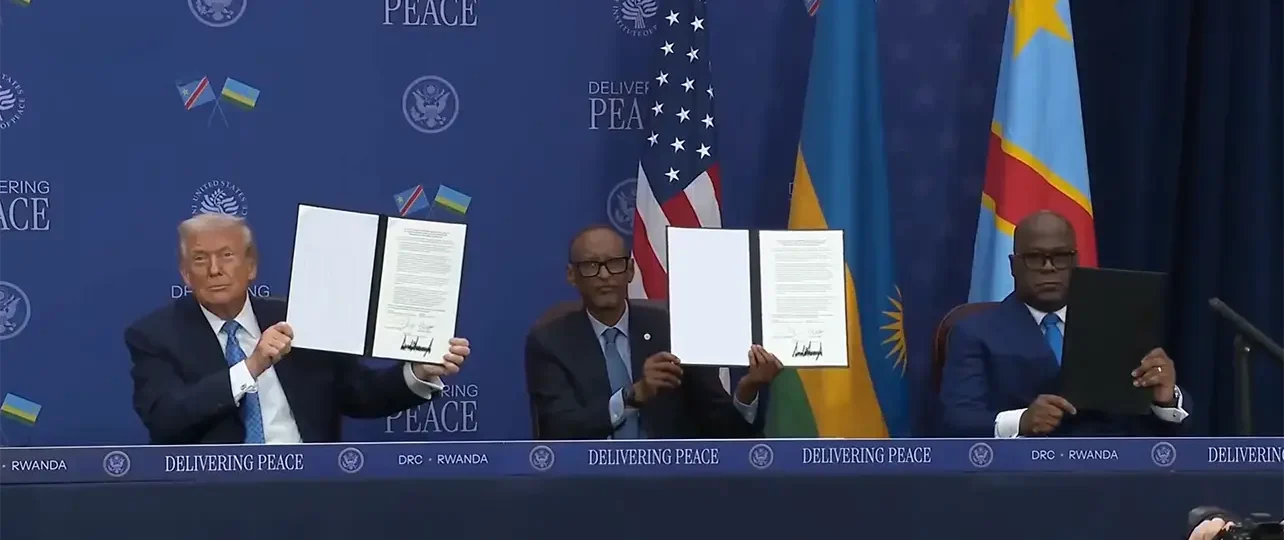

THE images were designed to reassure the world. Two heads of state — Rwanda’s Paul Kagame and the DRC’s Félix Tshisekedi — seated before cameras in Washington, pens in hand, signing what the Trump administration brokered as a historic peace framework for eastern Democratic Republic of Congo. Diplomats nodded. Aides smiled. The world, exhausted by years of war in the Kivus, was invited to believe that something had changed.
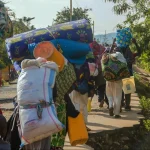
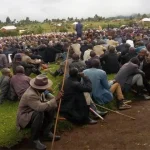
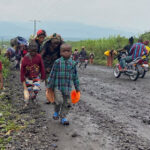
It had not. Within days of the signing, M23 fighters – the Rwanda-backed armed group responsible for one of Africa’s worst displacement crises — seized Uvira, a strategic city on Lake Tanganyika. Civilians fled. People died. And in Washington, the applause had not yet faded before the contradiction became impossible to ignore.
Now the United States has responded with one of the most significant punitive actions in the DRC conflict’s long, blood-soaked history: the Rwanda Defence Force (RDF) has been placed on the Treasury Department’s OFAC Specially Designated Nationals list — a designation that freezes all RDF assets under US jurisdiction, bars American individuals and companies from any transaction with the Rwandan military, and blocks its dollar-based financial operations. Four of its most senior generals have been sanctioned by name.
| “We expect the immediate withdrawal of Rwanda Defence Force troops, weapons, and equipment.” |
— United States Department of State
THE ANATOMY OF A DECEPTION
The State Department’s case against the RDF is forensic in its detail and devastating in its implications. According to the official designation, the RDF has not merely tolerated M23’s advance through eastern Congo — it has engineered it.
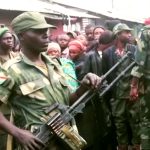
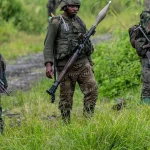
Thousands of Rwandan troops are currently deployed across eastern DRC, where they actively engage in combat operations. The RDF has introduced advanced military equipment to the battlefield including GPS jamming systems, air defence equipment, and drones. It has trained M23 fighters at RDF military centres inside Rwanda itself. It has supported M23’s recruitment efforts — including, the statement notes, the recruitment of refugees from camps on Rwandan soil.
In January 2025, the RDF carried out direct attacks against Congolese armed forces, against the Southern African Development Community Mission in the DRC, and against defensive positions of the UN Organisation Stabilization Mission. These were not the actions of a neutral neighbour. They were acts of war, conducted by the armed forces of a state that simultaneously maintained its innocence before every international forum it attended.
| “M23’s offensives would not have been possible without the active support and complicity of the RDF and key senior officials.” |
— U.S. Department of State Designation Statement
THE PRICE OF EASTERN CONGO
Underlying the military operation is an economic logic that the United States has now placed on the record: in exchange for sustaining M23’s rebellion, Rwanda has gained access to mineral-rich areas of eastern DRC. The designation states plainly that this mineral access contributes to the financing of M23’s armed rebellion — a feedback loop in which war pays for itself.
The territories seized include the provincial capitals of Goma and Bukavu, and strategic mining sites whose coltan, cassiterite, and gold flow through supply chains that ultimately reach global electronics markets. Researchers and journalists have tracked these mineral routes for years. What is new is that the United States government has formally endorsed those findings in a legal document carrying severe financial consequences.
For Congolese civilians — and particularly for Congolese women, who, as DRC Foreign Minister Thérèse Kayikwamba Wagner noted at the announcement stand at the heart of this cycle of violence, the economic dimension of this war is not an abstraction. It is the reason armed men come to their villages, why hospitals are looted, and why displacement has become a permanent condition for millions across the Kivus.
THE FOUR GENERALS
The Treasury designation named four senior RDF commanders whose careers trace the arc of Rwanda’s military involvement in the DRC:
| SANCTIONED | 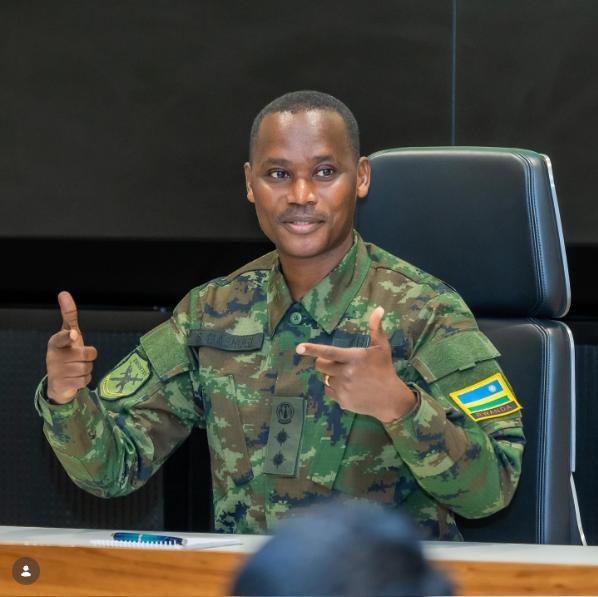 Gen. Mubarakh Muganga — Chief of Defence Staff. Before his current appointment in June 2023, Muganga served as Army Chief of Staff. During that tenure, he played a key role in planning operations and commanding RDF forces in eastern DRC. |
| SANCTIONED | 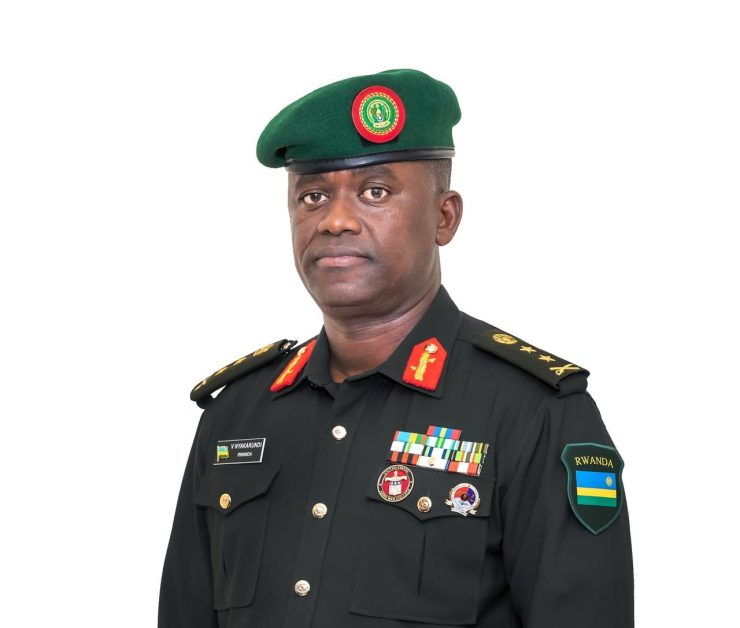 Maj. Gen. Vincent Nyakarundi — Army Chief of Staff Senior commander of the Rwandan Army’s land forces, which have conducted military operations in support of M23. |
| SANCTIONED | 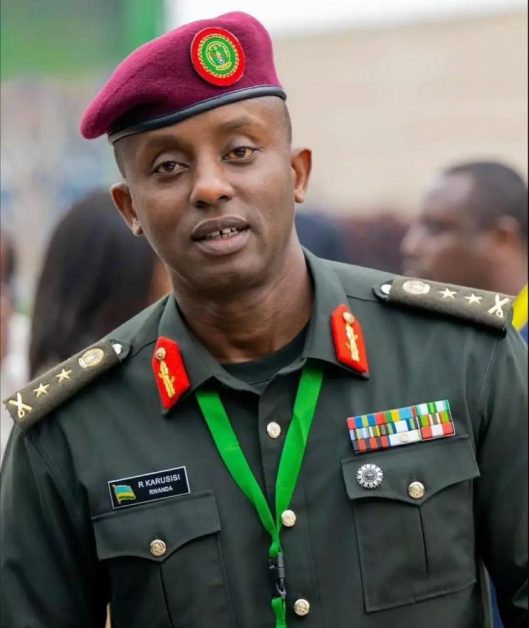 Maj. Gen. Ruki Karusisi — Commander, 5th Infantry Division Previously Special Operations Force Commander. Oversaw military operations in support of M23 before his lateral reassignment. |
| SANCTIONED | 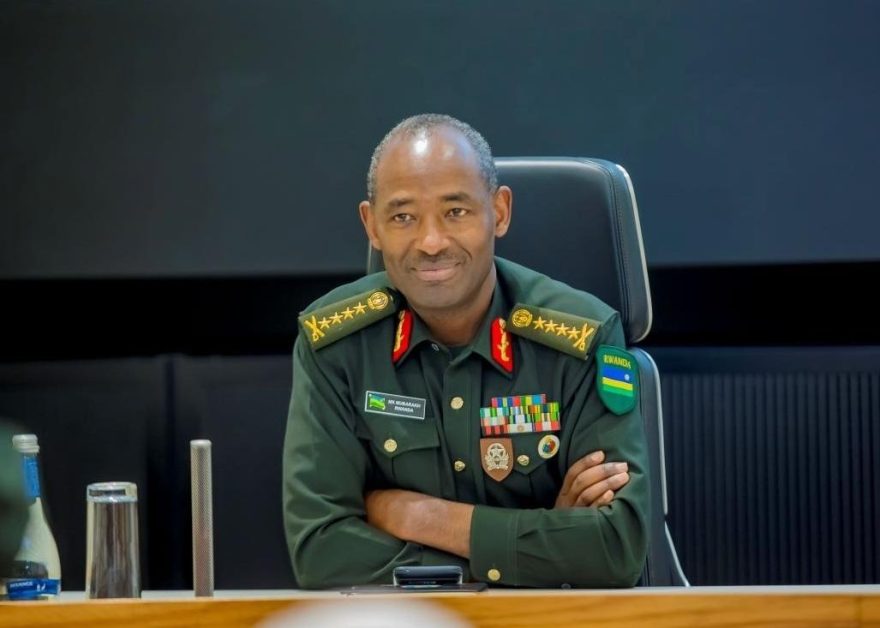 Brig. Gen. Stanislas Gashugi — Special Operations Force Commander Brig. Gen. Stanislas Gashugi — Special Operations Force CommanderAppointed March 15, 2025 — just days before the sanctions — replacing Karusisi in the Special Operations role. |
These are not peripheral figures. They are the men who commanded the apparatus of Rwanda’s parallel war in the DRC while their government told the world, repeatedly, that Rwanda had no troops there.
‘THEY WERE THERE’
Few people have followed Rwanda’s military presence in eastern Congo with more rigour than journalist Samuel Baker Byansi, who has reported on the conflict for years. His reaction to the sanctions was not triumphant — it was exhausted and exact.
“I want you to sit with that for a moment,” Byansi wrote on the day of the announcement. “These are the men at the top of a military that has spent years sending troops into a neighbouring country while their government looked the world in the eye and said ‘we are not there’. They were there. They are there as I have reported for many past years.”
Goma. Bukavu. Uvira. City after city, taken. Millions displaced, killed, and raped. And behind every M23 advance — Rwandan troops, Rwandan drones, Rwandan logistics. This was not invisible to those who looked. It was invisible only to those who chose not to.
| “Just days ago, Kagame and Tshisekedi sat down in Washington and signed a peace deal. The world clapped. And then M23 took Uvira.” |
— Samuel Baker Byansi, journalist
WHAT THE SANCTIONS CAN AND CANNOT DO
The addition of the RDF to the SDN list carries real economic weight. Dollar-clearing for Rwandan military transactions becomes legally toxic for any US-linked financial institution. Arms suppliers, logistics companies, and mineral traders with US exposure face immediate legal exposure for continuing to deal with the Rwandan military. The named generals cannot access the international financial system through any US-regulated channel.
But sanctions are instruments of pressure, not resolution. The RDF’s troops in eastern DRC are not frozen — only its assets. Whether Kigali concludes that the economic cost of continued intervention outweighs the mineral revenues it has extracted from M23-controlled territory depends on calculations that Washington cannot fully control. Rwanda has significant leverage: it hosts one of the region’s largest refugee populations, it is a key partner in international peacekeeping operations, and it has carefully cultivated its image as an African success story.
The peace deal signed in Washington — whatever its provisions — has demonstrably not constrained M23’s advances. The question now is whether the SDN designation and the demand for immediate withdrawal of all RDF troops and equipment will do what diplomatic theatre could not.
A TURNING POINT — OR ANOTHER CHAPTER?
Foreign Minister Wagner called the Trump administration’s decision “a turning point,” saying that “a word given cannot be perpetually broken, and the brazen contempt for human lives cannot endure.” Speaking at the beginning of Women’s Rights Month, she directed her words first toward the women of Congo — those who have borne the most concentrated suffering of a war that has lasted, in various forms, for three decades.
Her government, under President Tshisekedi and Prime Minister Judith Suminwa Tuluka, has spent years pressing the international community to acknowledge what the evidence long showed. The US designation represents that acknowledgement in its most consequential form.
But acknowledgement is not a resolution. M23 controls vast stretches of North and South Kivu. Its command structures are intertwined with the RDF at every operational level. Even a full Rwandan military withdrawal — which has not yet occurred and which Kigali has not confirmed — would leave behind an armed force with consolidated territorial control and no clear political pathway to disarmament.
What has changed is the international framework. Rwanda can no longer claim the ambiguity it previously enjoyed. The United States has formally and publicly designated its military as a sanctioned entity complicit in human rights abuses and a mass displacement crisis. That finding does not expire when the news cycle moves on.
The peace deal signed before cameras in Washington was always, at best, a statement of intent. At worst, it was performance — a diplomatic surface beneath which the war continued exactly as before. The sanctions that followed are a different kind of statement: not aspirational, but legal; not photographed, but enforceable.
Whether they bring peace to eastern Congo is another question entirely. The people who live there — who have fled Goma, Bukavu, and now Uvira, who have buried their dead in soil contested by forces accountable to no one — have heard many statements from Washington over the years.
They are still waiting for the war to end.
BACKGROUND: KEY FACTS
• M23 (March 23 Movement) is designated as a sanctioned armed group by both the United States and the United Nations.
• M23, with RDF support, has seized Goma, Bukavu, Uvira, and strategic mining sites in North and South Kivu.
• The conflict has created one of the world’s largest displacement crises, with millions of Congolese internally displaced.
• The RDF is now listed on the OFAC SDN list under Congo-related sanctions, making all financial transactions with it illegal for US-linked entities.
• The four sanctioned generals are: Muganga (Chief of Defence Staff), Nyakarundi (Army Chief of Staff), Karusisi (5th Infantry Division Commander), and Gashugi (Special Operations Force Commander, appointed March 15, 2025).