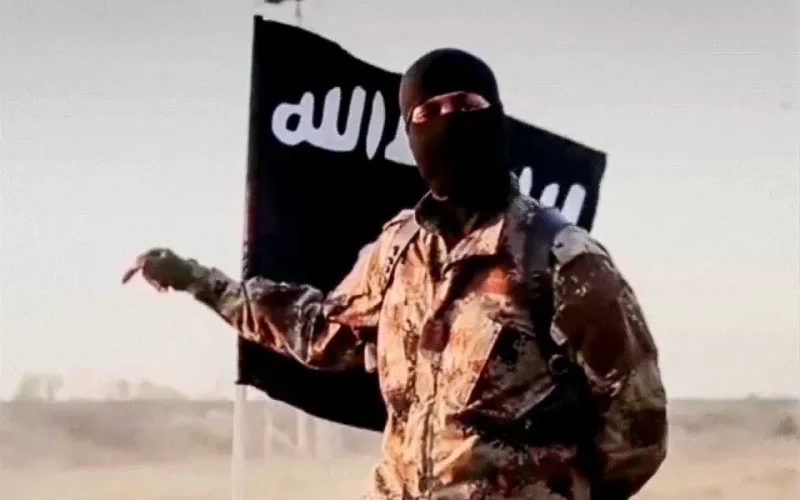
IN a pre-dawn joint operation conducted Friday night, American and Nigerian military forces eliminated Abu-Bilal al-Minuki — the global second-in-command of the Islamic State (ISIS) and the most wanted militant in West Africa — striking his compound in the Lake Chad Basin in a mission that both governments have described as one of the most consequential counterterrorism strikes in the region’s modern history.
United States President Donald Trump announced the operation late Friday in a post on Truth Social, confirming that the strike was executed at his direction alongside the Armed Forces of Nigeria. “Tonight, at my direction, brave American forces and the Armed Forces of Nigeria flawlessly executed a meticulously planned and very complex mission to eliminate the most active terrorist in the world from the battlefield,” Trump declared. “He will no longer terrorize the people of Africa, or help plan operations to target Americans.”
U.S. Africa Command (AFRICOM) confirmed in a statement that its forces, operating in coordination with the Nigerian government, conducted the operation against ISIS in north-eastern Nigeria on 16 May 2026. “The command’s initial assessment is that multiple terrorists, to include Abu-Bilal al-Minuki, the director of global operations for ISIS, as well as other senior ISIS leaders, were killed during this operation,” AFRICOM commander General Dagvin Anderson said. “No U.S. service members were harmed.”
Nigeria’s State House confirmed the operation in a separate statement, announcing that Nigerian and U.S. forces had “conducted a daring joint operation that dealt a heavy blow to the ranks of the Islamic State.” Presidential spokesperson Bayo Onanuga confirmed that al-Minuki had been under surveillance for some time before the strike was deemed viable. President Bola Ahmed Tinubu, in a statement Saturday morning, thanked Trump and said: “Nigeria appreciates this partnership with the United States in advancing our shared security objectives.”
WHO WAS AL-MINUKI?
Born in 1982 in Mainok, near Benisheikh in Borno State, Abu-Bilal al-Minuki rose through the ranks of Boko Haram before pledging allegiance to the Islamic State in 2015. His full name in U.S. sanctions documents is recorded as Abu Bakr ibn Muhammad ibn ‘Ali al-Mainuki, with Abu-Bilal al-Minuki listed as an operational alias. Borno State — which borders Cameroon, Chad, and Niger — has been the epicentre of Nigeria’s insurgency for more than a decade and the crucible that forged his jihadist career.
At the time of his death, al-Minuki held the position of ISIS’s Senior General Directorate of Provinces Emir — effectively the organisation’s global number two — responsible for overseeing attack planning, directing hostage-taking and managing financial operations across the Islamic State’s global network. He led ISIS’s al-Furqan coordination office, which oversees affiliates in Nigeria and the Islamic State in the Greater Sahara (ISGS) operating across the western Sahel.
He is directly linked to some of the most traumatic mass atrocities in northern Nigeria. In 2018, al-Minuki was tied to the abduction of more than 110 schoolgirls from Dapchi in Yobe State — a mass kidnapping that horrified the nation and drew global condemnation. He also oversaw ISWAP operations against ethnic and religious minority communities across the Lake Chad Basin, and was instrumental in introducing armed drone technology, coordinating night assaults on military bases, and sophisticated weapons manufacturing to ISWAP’s arsenal.
His rise accelerated after the disappearance of veteran ISWAP commander Mamman Nur in 2018, and intelligence assessments indicate he arrived in the Lake Chad Basin alongside nearly 60 foreign fighters dispatched by ISIS central to strengthen the regional affiliate. By 2020, internal ISWAP communications formally identified him as the organisation’s second deputy emir.
“His death removes a critical node through which ISIS coordinated and directed operations across different regions of the world,” the Nigerian army said. “He managed global funding streams and external operations; the group’s ability to move funds across borders, acquire high-end drone technology, and coordinate with administrative cells outside West Africa will face immediate friction.”
THE OPERATION
The strike followed months of intelligence-gathering that began in November 2025, when Trump directed the Pentagon to prepare action against militant groups targeting Christians in Nigeria. Defence Secretary Pete Hegseth confirmed the operation involved approximately 200 U.S. troops already deployed to Nigeria, working alongside drones, with the mission lasting approximately three hours. The exact location was withheld for operational security reasons, though both governments confirmed the strike targeted al-Minuki’s compound in the Lake Chad Basin area of north-eastern Nigeria.
“For months, we hunted this top ISIS leader in Nigeria who was killing Christians, and we killed him — and his entire posse,” Hegseth wrote on the social platform X. Presidential adviser Daniel Bwala told CNN that “the leader of this terrorist organisation ISWAP had been under surveillance for some time” before both governments judged the moment to strike.
AFRICOM posted video footage of the strike on X on Saturday. Anderson praised what he called an exceptional partnership: “This operation underscores the exceptional value of the U.S.-Nigeria partnership. Our two nations will relentlessly pursue and neutralise terrorist threats and are committed to protecting our people and interests.”
The operation is the most significant in a series of escalating U.S.-Nigerian counterterrorism engagements. AFRICOM had previously conducted strikes against ISIS targets in Sokoto State on Christmas Day 2025. The killing of al-Minuki represents a marked deepening of America’s military footprint in West Africa.
THE QUESTION OF IMPACT
Analysts are divided over whether the strike will produce a lasting degradation of ISWAP’s capabilities. Dennis Amachree, former director of Nigeria’s Department of State Services, told Al Jazeera the killing would “create a huge vacuum in the leadership and financing of ISWAP, as many top officers were decimated with him,” and predicted internal friction over succession given al-Minuki’s control of global funding streams.
But Cheta Nwanze, chief executive of Lagos-based advisory group SBM Intelligence, urged caution. Al-Minuki had previously been declared dead in 2024 following a military operation in Kaduna State — a report later attributed to mistaken identity. “That earlier announcement did not produce a lasting degradation of ISWAP’s capabilities,” Nwanze noted. His organisation’s research shows a growing Nigerian ransom economy that raised an estimated $1.66 million between July 2024 and June 2025. “Until the economic logic that feeds these groups is disrupted, the cycle will continue,” he said.
The concern about continuity was underlined within hours of the announcement, when gunmen abducted dozens of students from a school in Borno State in an attack bearing the hallmarks of Boko Haram — a reminder that the militant ecosystem in north-eastern Nigeria extends beyond any single commander.
Security experts nevertheless describe al-Minuki’s elimination as among the most consequential strikes against the Islamic State in Africa since the death of its founder, Abu Bakr al-Baghdadi, in Syria in 2019. Unlike al-Baghdadi, whose organisation had already lost most of its territorial caliphate, al-Minuki was an active operational architect — simultaneously managing financing, recruitment, weapons development, and cross-continental coordination for a network that spans the Lake Chad Basin, the Sahel, and beyond.
ISWAP remains one of the deadliest extremist organisations operating in the Lake Chad region, with a presence in Nigeria, Niger, Chad, and Cameroon. Its resilience has repeatedly confounded predictions of its imminent collapse.
CONTEXT: A PARTNERSHIP UNDER PRESSURE
The operation comes against a backdrop of often tense U.S.-Nigeria relations. The Nigerian government had previously pushed back against Trump’s suggestion of potential unilateral military intervention and rejected accusations that Abuja was failing to protect Christians from violence. Officials in Abuja maintain that the country’s security crisis is driven by a complex web of factors — including communal tensions and farmer-herder conflicts — that cannot be reduced to a simple religious war narrative.
That context makes the public display of coordination all the more striking. Both governments chose to announce the operation jointly and in real time, signalling a political decision to claim this partnership as a shared achievement. For Tinubu, the optics of standing alongside Washington in eliminating a figure synonymous with Nigeria’s worst terrorism — the Dapchi abductions, mass civilian killings, and the systematic targeting of soldiers — carries immediate domestic value.
For Washington, the operation fits a broader pattern of AFRICOM engagement across the continent: al-Shabaab strikes in Somalia, ISIS-Somalia airstrikes in January 2026, and now the Lake Chad Basin. The message is deliberate — the U.S. military footprint in Africa is expanding.
What remains to be seen is whether the death of the man who built ISWAP’s global architecture will unravel that architecture — or simply reorganise it under a new commander schooled in the same tradecraft.