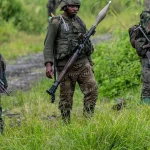
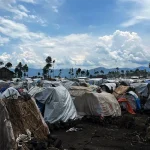
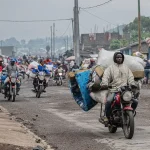
INa significant escalation of international pressure, Britain has announced plans to impose sanctions on Rwanda due to its alleged support for the M23 rebels in the Democratic Republic of Congo (DRC). This move follows a series of aggressive advances by the M23 group, which has captured key cities in eastern DRC, including Goma and Bukavu, and has been linked to significant human rights abuses and displacement of thousands of civilians.
On Tuesday, Britain announced it would pause some bilateral aid to Rwanda and impose other diplomatic sanctions on Kigali over its role in the conflict. The British government stated that until there is significant progress in ending hostilities and the withdrawal of all Rwanda Defence Forces from Congolese territory, it would take several actions.
These measures include ending high-level attendance at events hosted by the Rwandan government, limiting trade promotion activity with Rwanda, and pausing direct bilateral financial aid to the government of Rwanda, excluding support to the poorest and most vulnerable. Britain will also coordinate with partners on potential new sanctions, suspend future defence training assistance to Rwanda, and review export licences for the Rwanda Defence Force.
“Rwanda may have security concerns but it is unacceptable to resolve these militarily. There can only be a political solution to this conflict,” a UK government spokesperson said. “We encourage the DRC to engage with M23 as part of an inclusive dialogue. We will continue to keep our policy under review.”
Ray Collins, a junior minister in the UK Foreign Office, had earlier confirmed the decision to Reuters, stating, “Yes,” when asked if Britain would impose sanctions on Rwanda, and added, “Soon,” when questioned about the timing. This announcement was made on the sidelines of a U.N. Human Rights Council meeting in Geneva.
Rwanda has consistently denied backing the M23 rebels, instead claiming that its troops are acting in self-defence against hostile groups based in the DRC. However, these assertions have been met with scepticism by the international community, with both the U.S. and EU expressing deep concern over Rwanda’s role in the conflict.
The U.S. recently imposed sanctions on James Kabarebe, a high-profile ally of Rwandan President Paul Kagame, accusing him of serving as a liaison between the Rwandan government and the M23 rebels. Rwanda has termed these sanctions as “unjustified and unfounded,” arguing that they will not resolve the conflict in the DRC.
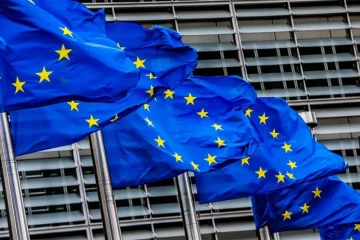
Meanwhile, the European Union has also taken steps to address the situation, announcing a review of its critical raw materials agreement with Rwanda due to the ongoing conflict. EU foreign ministers have decided against immediate sanctions but have left the door open for future action depending on developments on the ground.
As the conflict continues to escalate, Congolese religious leaders are pushing for peace talks between the government and the M23 rebels, hoping to find a peaceful resolution to the crisis. However, with international pressure mounting and the humanitarian situation deteriorating, the path to peace remains fraught with challenges.
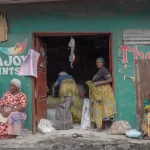
The conflict has resulted in significant humanitarian distress, with reports indicating over 3,000 people killed and hundreds of thousands displaced since the beginning of 2025. The capture of mineral-rich areas by the M23 has further complicated the situation, with accusations that Rwanda is leveraging the DRC’s mineral wealth through its support for the rebels.
In this context, the UK’s decision to impose concrete sanctions on Rwanda marks a significant step in the international community’s efforts to pressure Kigali into withdrawing its alleged support for the M23 and engaging in meaningful dialogue to resolve the conflict.