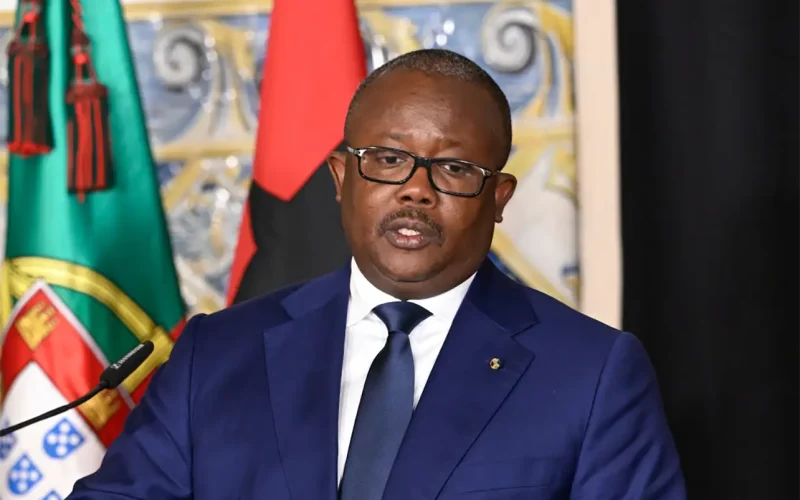
WEDNESDAY’S military seizure of power in Guinea-Bissau, which saw army officers arrest President Umaro Sissoco Embaló and suspend the electoral process just hours before election results were due, represents far more than another coup in one of Africa’s most unstable nations. It is a stark reminder that five years after Mali’s 2020 coup triggered a domino effect across West Africa, regional institutions remain largely powerless to stem the tide of military takeovers – or address the conditions that spawn them.
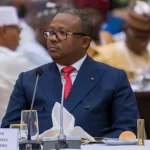
The observer missions from the Economic Community of West African States (ECOWAS) and the African Union, which included former presidents Filipe Jacinto Nyusi of Mozambique and Goodluck Jonathan of Nigeria, expressed regret that the coup announcement came just after a meeting with presidential candidates who had pledged to accept election results. Their statement calling for restoration of constitutional order carries an air of ritual futility – a script repeated across Mali, Burkina Faso, Niger, Guinea, and now Guinea-Bissau, with diminishing returns each time.
The statistics are sobering. Since August 2020, when Malian soldiers ousted President Ibrahim Boubacar Keïta, West Africa has witnessed nine successful military coups across the continent, with six concentrated in the region. Mali experienced two coups – in August 2020 and May 2021 – followed by Guinea in September 2021, Burkina Faso twice in 2022, Niger in July 2023, and Gabon in August 2023.
Guinea-Bissau, positioned between Senegal and Guinea, has endured at least nine coup attempts since gaining independence from Portugal in 1974. Since independence, no president has ever completed a full term in office – three presidents have been overthrown and one assassinated. Yet even by Guinea-Bissau’s chaotic standards, Wednesday’s events carry ominous implications for the region.
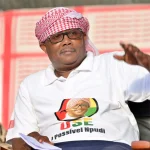
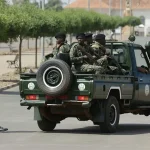
The coup occurred amid disputed election results, with both incumbent President Embaló and independent candidate Fernando Dias claiming victory. Brigadier General Denis N’Canha announced that military forces had suspended the electoral process, closed borders, and imposed a curfew. The military justified its action by citing a plot to manipulate electoral results involving politicians and a drug baron, highlighting how drug trafficking finances have become intractably intertwined with politics in Guinea-Bissau.
The Regional Bodies’ Impotence
The response from ECOWAS and the AU reveals institutions grappling with an authority crisis. Between June 2019 and August 2023, the AU suspended seven member states following coups, while ECOWAS has imposed economic sanctions in 67% of recent coup cases. Yet these measures have proven counterproductive.
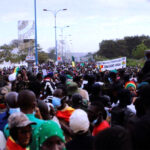
The sanctions imposed on Niger following its July 2023 coup, the strictest ECOWAS has ever imposed, closed borders, suspended financial transactions, and froze assets. The result was severe hardship among civilians, with rice prices surging 21% in August and over 50% by mid-October, while 3.3 million people faced severe food insecurity. Rather than pressuring military leaders, the sanctions consolidated popular support for juntas, as thousands rallied in capitals across Niger, Mali, and Burkina Faso to back their military governments.
The creation of the Alliance of Sahel States and the announcement that Burkina Faso, Mali, and Niger would withdraw from ECOWAS fragmented the regional body and severely limited its deterrent capability. On January 29, 2025, the three countries formally withdrew after providing the required one-year notice, having been founding members since May 1975.
Common Threads in the Coup Wave
Five common factors emerge across recent coups: weak governance by civilian leaders, popular support for military takeovers, inconsistent international responses, learning between coup leaders, and the use of elections to legitimise military rule.
A crisis of democratic norms began with attempts by leaders in Niger, Senegal, Mali, Burkina Faso, and Guinea to extend their tenures beyond constitutional limits. Some coups were driven by security concerns, such as Burkina Faso’s September 2022 coup over failure to combat Islamic insurgency, while others were framed as protecting democracy, like Guinea’s 2021 coup responding to President Alpha Condé’s abolition of presidential term limits.
Burkina Faso saw a doubling in fatalities from extremist violence in the year after its coups, demonstrating that military governments’ promises of enhanced security rarely materialise. The Sahel region has become the epicentre of global terrorism, with nearly half of worldwide terrorism deaths occurring there.
The Geopolitical Realignment
Coup governments across Mali, Burkina Faso, and Niger have shifted away from Western alliances toward Russia, deepening military and economic ties. All three have expelled French ambassadors, stalled development cooperation with Western countries, and strengthened ties with Russia, Turkey, and Iran, with Moscow deploying about 1,000 fighters to Mali through Wagner Group/Africa Corps and sending security advisers to Burkina Faso and Niger.
The withdrawal of the Alliance of Sahel States from ECOWAS on January 29, 2025, marked the most significant crisis in West African regional integration since ECOWAS’s founding in 1975. The rifts exposed ECOWAS’s fundamental flaws: over-reliance on sanctions without adequate diplomatic engagement, ineffective handling of political transitions, and limited recognition of changing geopolitical dynamics in the Sahel.
Guinea-Bissau’s Unique Pathology
While sharing characteristics with other coup-prone states, Guinea-Bissau adds a particularly toxic ingredient: narcotics. Since the turn of the millennium, drug trafficking finances have been injected into a political structure desperate for resources, further distorting the country’s already fragile politics. State officials receive funds from criminal organisations to protect illicit drug, timber, and wildlife trafficking, creating a network benefiting politicians, judiciary members, law enforcement, and military leaders.
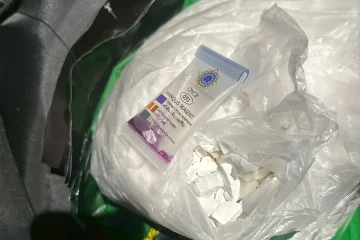
Guinea-Bissau is among the world’s poorest countries and serves as a hub for drug trafficking between Latin America and Europe, facilitated by the country’s long history of political instability. The country was ranked 158th out of 180 countries by Transparency International in 2024 for perceived corruption levels. In September 2024, five Latin Americans were arrested in Bissau with 2.6 tonnes of cocaine on an aircraft from Venezuela.
The Path Forward: Rethinking Regional Responses
From 1960 to 2019, the AU consistently implemented sanctions against coups with evident success, as coups dropped from an average of 2.2 per year between 1960-1989 to 0.8 between 2000-2019, but since 2019, the average has reached 1.8 in 2023. This reversal demands fundamental rethinking.
A sentiment of double standards has emerged in public opinion, as ECOWAS responded to unconstitutional actions by militaries but failed to sanction civilian leaders who manipulated constitutions to extend their mandates. ECOWAS needs to refine its tools based on experiences in Mali, Burkina Faso, Guinea, and Niger, making its sanctions procedures clearer and more predictable while developing strategies for military action that maintain strategic and financial autonomy.
A 2023 UN Development Programme report highlighted widespread buyer’s remorse among those who initially supported coups in Burkina Faso, Chad, Guinea, Mali, and Sudan, as people became disillusioned with leaders unable to keep promises of improved livelihoods. This presents an opportunity for constructive engagement.
The Continental Stakes
The implications extend far beyond West Africa. The emergence of alternative groupings like the Alliance of Sahel States signals a shift toward fluid, issue-based regional cooperation rather than strictly geographical arrangements, suggesting security concerns now take precedence over economic considerations in shaping regional alignments. This development threatens the implementation of the African Continental Free Trade Area and questions the viability of regional economic communities as building blocks for continental unity.
As ECOWAS and the AU scramble to respond to Guinea-Bissau’s latest coup, the fundamental question remains unanswered: Can regional bodies designed for a different era adapt to address the root causes – poor governance, economic stagnation, external manipulation, and the disconnect between formal democratic processes and genuine accountability – that make military intervention appear attractive to both soldiers and civilians?
Wednesday’s events in Bissau suggest that until these institutions move beyond reactive sanctions and hollow statements to proactive governance support and genuine accountability for all leaders – military and civilian alike – the coup contagion will continue spreading, one capital at a time.