THE rain began as it always does in southern Mozambique – a gentle drumming on corrugated iron roofs, a welcome relief from the January heat. But this time, the drumming did not stop. It grew louder, more insistent, transforming from blessing to curse as the heavens opened with a fury that would reshape lives, erase homes, and carve sorrow into the red earth of Gaza Province.
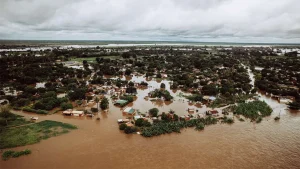
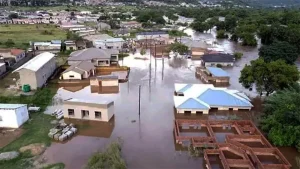
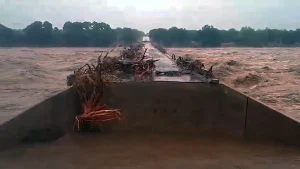
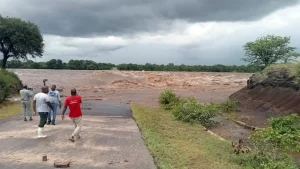
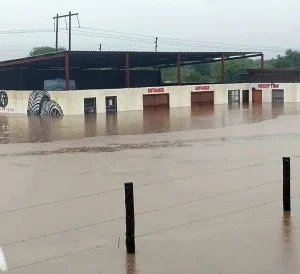
In the town of Chókwè, 200 kilometres north of Maputo, Maria José watched the muddy waters of the Limpopo River swallow her world. First came the streets – familiar pathways where her children once played, now transformed into violent brown torrents. Then the bridge connecting Chókwè to neighbouring Guija vanished beneath the surge, severing one community from another as surely as a knife cuts flesh.
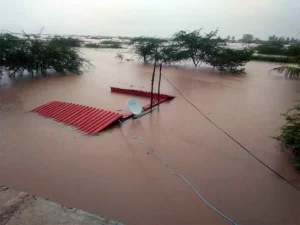
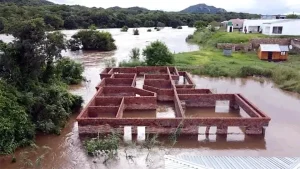
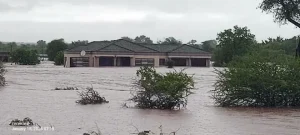
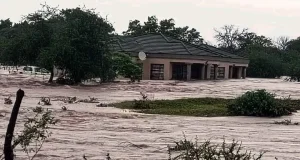
By Thursday, the waters reached her doorstep. By Friday morning, they were inside her home, rising inexorably past her ankles, her knees, claiming furniture, photographs, memories. The neighbours’ houses disappeared entirely, swept away like paper boats in a child’s game—except this was no game, and the screams were real.
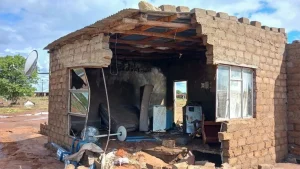
“Everything is gone,” she would later tell relief workers, her voice hollow with the weight of absolute loss. “My house, my husband’s tools, my daughter’s school uniform, she was so proud of. The water took everything.”
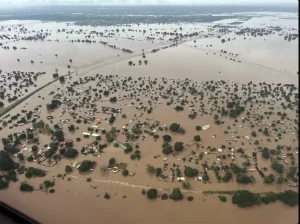
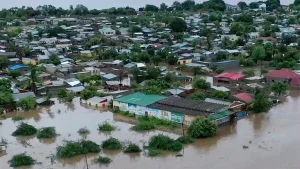
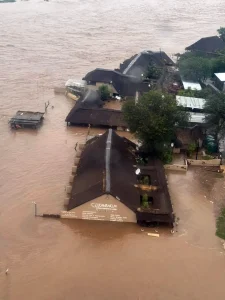
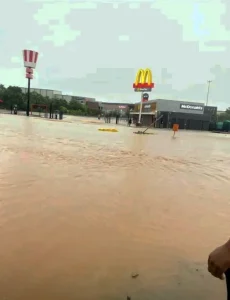
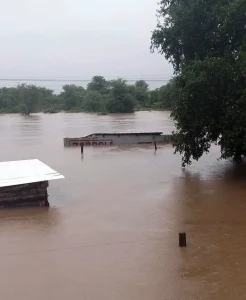
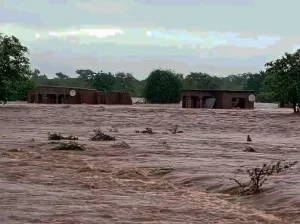
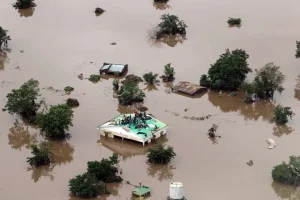
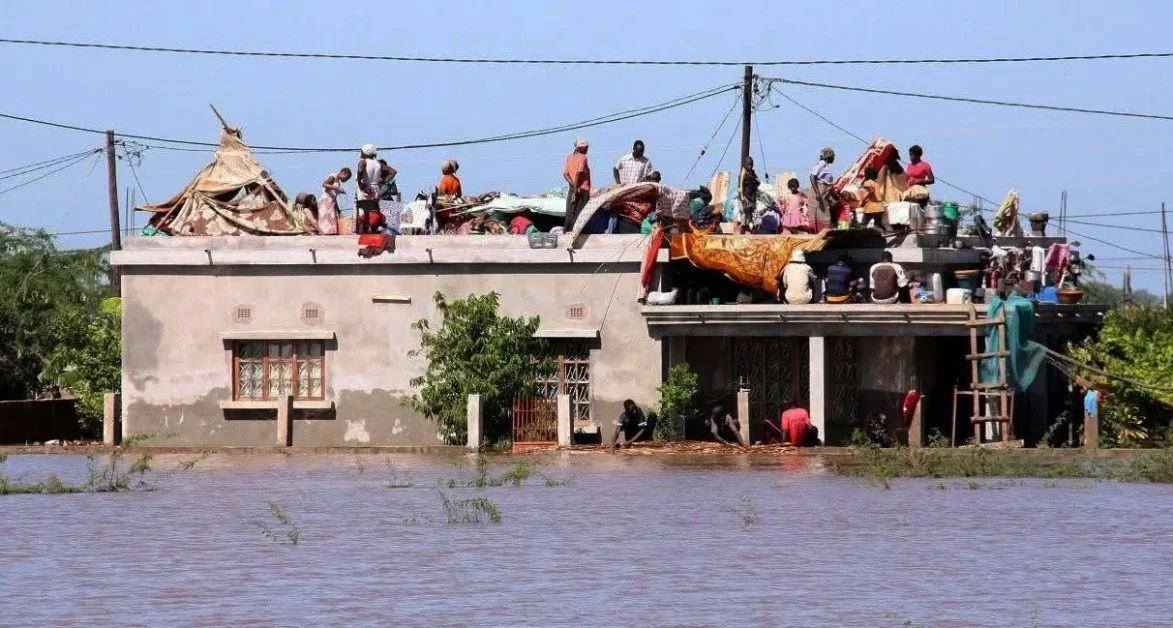
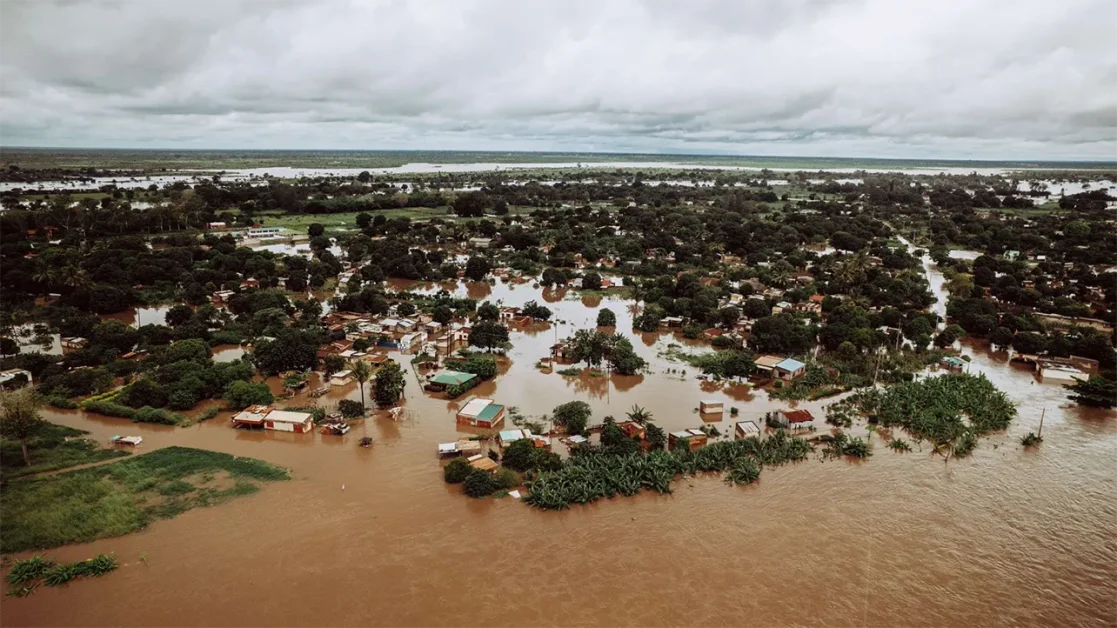
Across Chókwè and Guija, entire neighbourhoods ceased to exist. Streets suddenly became rivers, and what had been home to thousands became a vast, murky lake dotted with rooftops and the occasional desperate figure clinging to whatever remained above the waterline.
A Birth on the Rooftop of the World
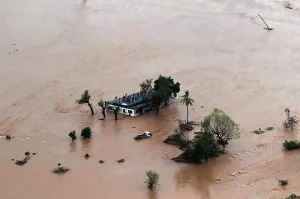
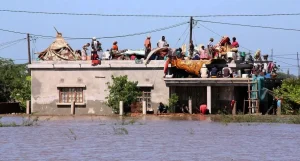
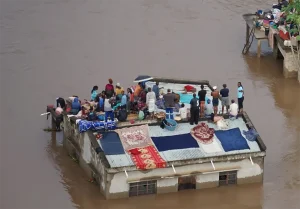
Four days. That is how long Chauna Macuacua’s family waited on a rooftop in Gaza Province, surrounded by water that stretched to the horizon like a malevolent sea. No rescue came. No boats appeared. Just the relentless rain and the rising water and the terror that they might slip, might fall, might drown.
On the fourth night, life asserted itself against the backdrop of devastation. Macuacua’s sister-in-law gave birth on that rooftop, bringing a child into a world that seemed determined to wash humanity away. The baby’s first cries mingled with the sound of rushing water, a fragile protest against the chaos.
“We’ve been here for four days,” Macuacua told reporters, her voice breaking. “My nephew was born yesterday around 11 PM, and we still haven’t had any rescue or assistance for the baby and mother.”
The baby boy—unnamed in those first desperate hours—became a symbol of both resilience and abandonment. Here was new life, clinging to existence on a rooftop island, while below, the floodwaters continued their patient work of destruction.
The Numbers That Cannot Capture Grief
Statistics are cold comfort when translated into human suffering, yet they tell a story that individual tragedies cannot fully convey. Since the rainy season began in October 2025, at least 104 people have died nationwide due to floods and related incidents. In just the days since Friday, nine more lives were lost, including one person who died today in Manhiça.
But these numbers—nine, 104, 173,000 affected—fail to capture the texture of loss. They do not account for the grandmother who drowned trying to save her grandchildren’s schoolbooks, or the father electrocuted by downed power lines while fetching water for his family, or the 85 people who died and 70 who were injured during this rainy season alone.
More than 173,000 people have been affected by the floods across the country—a number that encompasses shattered communities from the central provinces to the southern tip of Mozambique. More than 200,000 people have been affected, thousands of homes have been damaged, and tens of thousands face evacuation.
When the Dam Gates Opened
The crisis in Chókwè intensified when authorities made an impossible choice. The Massingir Dam on the Elephants River, swollen beyond capacity, threatened to burst. For the first time since 1977, all 14 of the dam’s floodgates were opened, releasing a torrent of water that transformed from 10,000 to 17,000 cubic meters per second in mere hours.
The level of the reservoir reached 127 meters above sea level, while the top of the dam stood at only 131 meters—a terrifying margin of mere meters between controlled release and catastrophic failure. Authorities warned that if the rain and discharges continued, Chókwè could be completely submerged, a modern-day Atlantis sinking beneath the waters of the Limpopo.
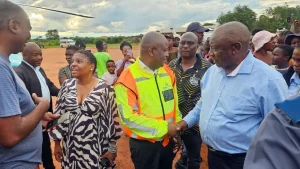
Public Works Minister Fernando Rafael visited the dam, his face grim with the knowledge of what those open floodgates meant for the communities downstream. “It is important that people should leave the low-lying areas at once,” he declared—a plea that many could not or would not heed, unwilling to abandon homes they had spent lifetimes building.
The Severing of a Nation
The floods did not merely destroy individual lives and communities; they severed the very arteries of Mozambique itself. The main north-south highway (EN1) was cut between Incoluane and the 3rd February locality in Maputo Province, where the Incomati River surged over the road, making it impossible for traffic to travel from Maputo to the centre and north of the country.
Mozambique found itself partitioned by water—the capital isolated from its own hinterland, communities cut off from hospitals, markets, and each other. Access disruptions along the N280 and N281 roads significantly constrained humanitarian access and isolated communities. The nation’s circulatory system—its roads, bridges, and pathways—was haemorrhaging functionality.
In Sofala Province, approximately 870 square kilometres of land were inundated, with an estimated 7,300 people potentially exposed in flood-affected riverine areas. The flooding expanded by roughly 100 square kilometres in just days, a creeping disaster that swallowed farmland, homes, and hope with equal appetite.
Lives Interrupted, Futures Uncertain
Wilker Dias, director of the civil society group Plataforma Decide, spoke with the grim certainty of someone who has witnessed disaster before. “I think the number of dead will increase in the next hours,” he told reporters, and in that simple statement lay the terrible mathematics of catastrophe—the understanding that every flooded home, every isolated community, every hour without rescue meant more lives slipping away.
About 173,000 acres of crops, including staples such as rice and corn, have been waterlogged, threatening food security for thousands of small-scale farmers who rely on their harvests not just for income but for survival. The World Food Program warned that this agricultural devastation would worsen food insecurity, transforming the immediate crisis of flooding into a prolonged hunger that could last months.
Schools stood empty, their classrooms flooded or collapsed. Health facilities struggled to function, cut off from supplies and reinforcements. Lightning strikes killed at least 10 people and injured 18 others, adding nature’s electric fury to the watery devastation.
The Memory of 2000
For those old enough to remember, the 2025-2026 floods carried echoes of Mozambique’s worst disaster: the catastrophic floods of 2000 that killed hundreds and displaced hundreds of thousands. Provincial authorities spoke of those floods with a tremor in their voices, promising to “do everything to avoid a repetition of what happened in 2000″—when all the major rivers in the southern provinces burst their banks, and the world watched as Mozambicans clung to trees and rooftops waiting for helicopters that came too slowly for too many.
But history has a cruel way of repeating itself, particularly in a country that is considered one of the most severely affected by climate change. During the last rainy season, Mozambique was hit by cyclones Chido, Dikeledi, and Jude, which caused at least 313 deaths, 1,255 injuries, and affected more than 1.8 million people. Between 2019 and 2023, extreme weather events caused at least 1,016 deaths and affected around 4.9 million people.
Mozambique has become a nation defined by resilience in the face of relentless disaster—a people who rebuild only to watch the waters rise again, who plant crops knowing the floods may come, who raise children in the shadow of storms that grow stronger with each passing year.
A Nation Holding Its Breath
As January 2026 continues, Mozambique remains trapped between memory and anticipation—remembering the homes already lost, anticipating the rains forecast to continue. The La Niña weather phenomenon has intensified the region’s rainy season, and meteorologists warn that more severe weather stretches across the horizon like a dark promise.
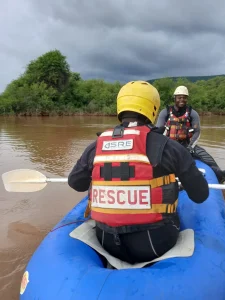
President Filipe Nyusi cancelled his trip to the World Economic Forum in Davos to remain in Mozambique, a symbolic gesture acknowledging that leadership demands presence in crisis. South African rescue teams crossed the border to assist, their helicopters joining the desperate search for survivors clinging to rooftops, trees, and hope.
In accommodation centres across Gaza, Zambézia, and Sofala provinces, thousands of displaced people try to build temporary lives from the wreckage of permanent ones. They share crowded spaces, meagre meals, and stories of what they lost—the photographs never saved, the documents washed away, the small treasures that made a house a home now dissolved in muddy water.
When the Waters Recede
Eventually, the waters will recede. They always do. Rivers will return to their banks, roads will emerge from beneath the flood, and the work of rebuilding will begin again—as it has begun again and again in Mozambique’s recent history.
But what will remain long after the waters subside is the memory of loss. The empty spaces where homes once stood. The unmarked graves of those who could not be saved. The children who lost their parents, the parents who lost their children, the communities fractured by currents too strong to resist.
And there will be the baby born on that rooftop in Gaza Province, who entered the world amid catastrophe and whose first sight was a horizon of water stretching endlessly in all directions. What story will he tell his own children about the day he was born? What will it mean to have arrived at precisely the moment when everything was washing away?
For now, Mozambique waits. The rain continues to fall. The rivers continue to rise. And across the southern provinces, families huddle on rooftops and in evacuation centres, holding onto each other and whatever fragments of their former lives they managed to save, hoping that help will come before the waters rise again.
This is not just a natural disaster. This is a climate catastrophe unfolding in slow motion, written in the language of lost homes and broken infrastructure, translated into the universal tongue of human suffering. It is 104 deaths and 173,000 affected lives. It is a baby born on a rooftop and a grandmother who drowned protecting her grandchildren.
It is Mozambique in January 2026—a nation fighting for survival against waters that show no mercy, sustained by resilience that refuses to break, waiting for the moment when the rains finally stop, and the long work of healing can begin.