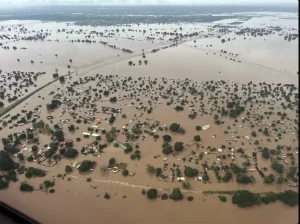
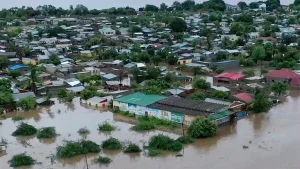
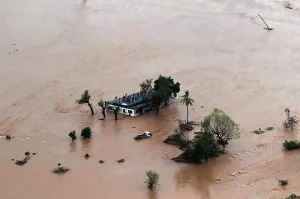
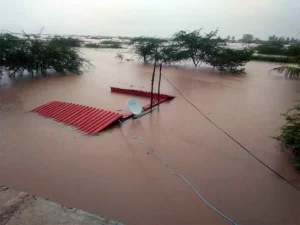
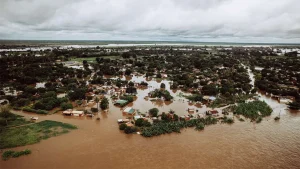
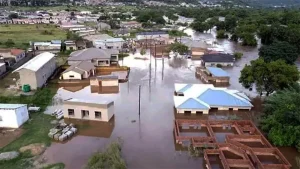
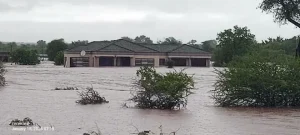
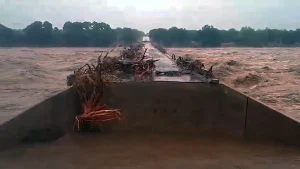
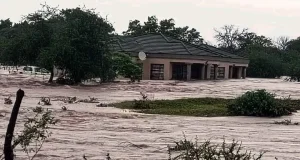
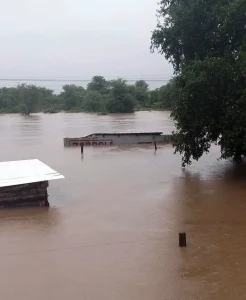
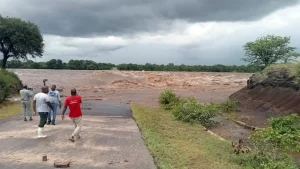
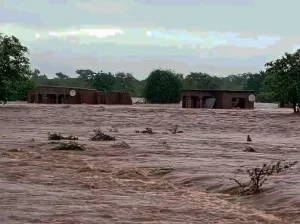
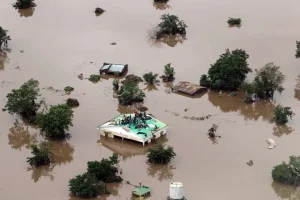
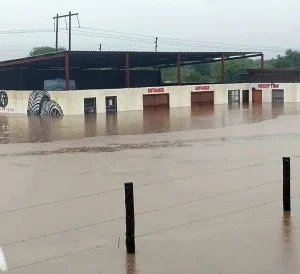
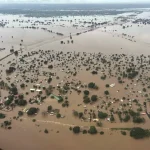
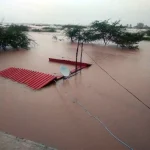
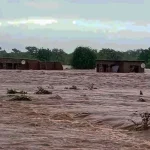
THE waters came with a vengeance that southern Africa had not witnessed in decades. Since late December 2025, relentless rainfall driven by La Niña weather patterns has transformed the provinces of Limpopo and Mpumalanga into disaster zones, leaving death, destruction, and desperation in its wake. The floodwaters, swollen with fury, have surged across international boundaries into neighbouring Mozambique, where they have replicated their devastation with equal ferocity – claiming lives, obliterating infrastructure, and leaving communities stranded in a fight for survival.
This is not merely a story of meteorological extremes. It is a chronicle of human tragedy, governmental crisis response, and the stark reminder that when rivers refuse to be contained, no border can stop their rage.
The numbers tell only part of the story, but they are staggering nonetheless. More than 200 people have perished across southern Africa since the rains began in late December, with Mozambique bearing the heaviest burden – at least 103 confirmed deaths. In South Africa’s Limpopo and Mpumalanga provinces alone, at least 30 fatalities have been recorded by mid-January, though the true toll may be higher as search and rescue operations continue in remote areas.
Each statistic represents a life cut short – drowning victims swept away in flash floods, families crushed under collapsed buildings, children lost to swollen streams, and individuals struck down by lightning or electrocuted by damaged power infrastructure. Among the most heart-wrenching cases was a five-year-old boy in Mbaula, Limpopo, who was swept away while trapped in a tree with his mother. The mother was rescued by a South African National Defence Force helicopter, but her son was lost to the raging waters.
The human tragedy extends beyond mortality. More than 200,000 people in Mozambique have been affected by the floods, with tens of thousands relocated to temporary shelters in schools and public buildings. In South Africa, over 1,000 people have been displaced from their homes, seeking refuge in community halls where they receive basic necessities—food, blankets, and medical care.
A Landscape Transformed: Infrastructure in Ruins
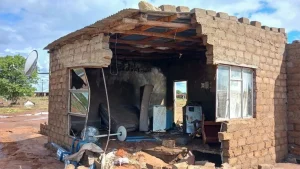
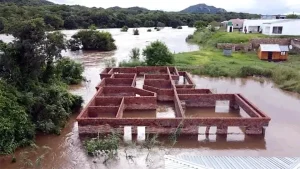
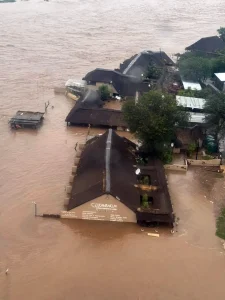
The physical destruction wrought by these floods represents billions in damages and will take years to repair. Mpumalanga alone has suffered infrastructure damage estimated at over R2.1 billion, with roads, bridges, schools, and homes swept away or rendered unusable. In Limpopo, entire villages have been submerged. President Cyril Ramaphosa, upon visiting the hardest-hit areas, described the scene as “catastrophic,” noting that in Mbaula village, more than 38 houses had been completely swept away—not just destroyed, but erased, with even their foundations vanishing beneath the torrent.
The South African Weather Service issued a rare Red Level 10 warning—the highest possible alert—for parts of Limpopo and Mpumalanga. This marked the first time such a warning had been issued since the devastating KwaZulu-Natal floods of 2022, which claimed nearly 600 lives. The warning signalled imminent danger to life from fast-flowing rivers and streams, widespread flooding of roads and settlements, displacement of communities, and catastrophic damage to infrastructure.
Critical services have collapsed across affected regions. Schools in the Vhembe and Mopani districts of Limpopo were forced to delay their opening, with students unable to safely reach their institutions. Eskom, South Africa’s power utility, reported that flooding had disrupted electricity supply across Limpopo, with repair teams unable to access damaged infrastructure due to impassable roads and dangerous conditions. Even the iconic Kruger National Park was not spared—flooding forced the evacuation of guests and staff from camps like Letaba and Shingwedzi, and day visits were suspended indefinitely as low-level bridges submerged and roads became rivers.
Chokwé: A City Drowning
Across the border in Mozambique’s Gaza Province, the town of Chokwé has become the epicentre of a humanitarian catastrophe. This low-lying city, which has historical vulnerability to Limpopo River flooding, found itself under siege as torrential rains combined with massive water discharges from the Massingir Dam on the Elephants River. For the first time since 1977, all 14 floodgates of the dam were opened, releasing flows that surged from 10,000 to 17,000 cubic meters per second in mere hours.
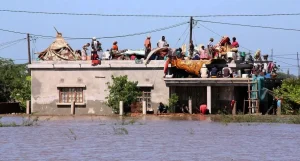
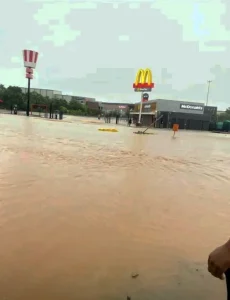
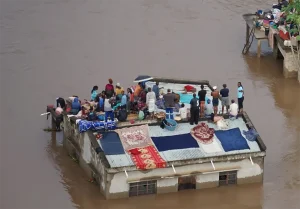
By Thursday, January 16, Chokwé’s streets had transformed into rivers. The bridge linking Chokwé and Guija districts was submerged, severing transportation and isolating communities. Overloaded trucks carried desperate residents—along with their livestock and possessions—to higher ground, particularly to accommodation centres established at Chiquelane. Yet many families refused to evacuate, choosing instead to risk their lives by sheltering on rooftops, echoing the survival strategies employed during Mozambique’s catastrophic 2000 floods.
Economic activity in Chokwé ground to a complete halt. All shops, markets, and essential services closed. The National Disaster Management Institute warned that the town faced a real danger of complete submersion if rainfall and dam discharges continued. There were fears that the Massingir Dam itself could be overwhelmed, with floodwaters potentially breaching its top and threatening its structural integrity—a scenario with catastrophic implications for communities downstream.
The Missing MMC: A Personal Tragedy Within the Crisis

Amidst this unfolding disaster, one incident has captured particular attention and underscores the indiscriminate nature of these floods. Andile Mngwevu, the Member of the Mayoral Committee for Roads and Transport Management from the City of Ekurhuleni in South Africa, travelled to the Chokwé area of Mozambique. There, the vehicle in which he and four others were travelling was swept away by floodwaters.
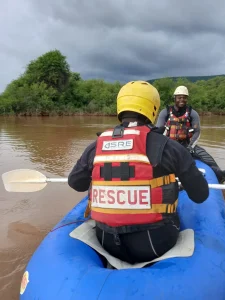
As of the latest reports, MMC Mngwevu remains missing. A South African rescue mission deployed to Mozambique has established contact with one of the five vehicle occupants, but the status and whereabouts of Mngwevu and the others remain unconfirmed. His spouse arrived in Mozambique to assist with the search, supported by the Office of the Executive Mayor and national government authorities. The South African Mission is actively engaging local Mozambican authorities and emergency services, while national authorities explore additional support mechanisms, including security and evacuation assistance.
The incident serves as a stark reminder that even those travelling with awareness of the dangers can fall victim to the unpredictable fury of floodwaters. It also highlights the cross-border nature of this disaster and the collaborative response required from both nations.
The Climate Context: La Niña’s Long Shadow
These floods are not random acts of nature but rather the result of a well-understood climate phenomenon. The La Niña weather pattern, characterised by cooling of the central Pacific Ocean, has altered wind and weather patterns across southern Africa. This has resulted in above-normal rainfall during what is typically the summer rainy season, but with an intensity that has overwhelmed natural drainage systems and human infrastructure alike.
Weather stations across Limpopo and Mpumalanga recorded rainfall totals of 100 to 200 millimetres over several days in many locations, with isolated areas receiving up to 400 millimetres—several times the January average. This relentless precipitation fell on already saturated ground, leading to rapid surface runoff and severe river overflow. Hydrological gauges along the Limpopo and Save rivers showed persistently high flows as upstream rainfall from Zimbabwe and South Africa moved downstream into Mozambique, creating a cascade of flooding that moved progressively through the river basins.
The South African Weather Service warned that weather conditions would only begin to gradually improve from January 19, with more stable conditions forecast from January 20 onward. Until then, residents were urged to remain on high alert, avoid crossing flooded roads and rivers, move to higher ground when water levels rise, and stay clear of damaged infrastructure.
Government Response: Racing Against the Waters
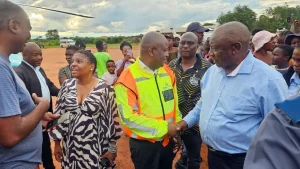
The scale of the disaster has prompted high-level government intervention in both countries. President Cyril Ramaphosa personally visited flood-stricken areas in Limpopo, inspecting communities like Tshakhuma in the Vhembe district and Mbaula in the Mopani district. His presence, while symbolic, also carried practical implications—announcements of additional emergency funding and assurances that the government would assist affected residents in rebuilding their lives.
The national government has allocated R100 million for immediate aid, though additional resources will likely be required. Limpopo Premier Phophi Ramathuba declared a provincial state of disaster in key districts, a move that allows for faster deployment of resources, including military helicopters for evacuations and army engineers to construct temporary bridges. The Limpopo government openly acknowledged that it cannot handle the disaster alone and has activated emergency protocols while seeking national assistance.
In Mozambique, the National Disaster Management Institute ordered urgent evacuations of flood-prone areas, with chairperson Luisa Meque warning that those who refused to leave voluntarily would be moved coercively. “The time for raising awareness is over,” Meque declared during a meeting of Gaza Province’s Emergency Operational Committee in Chokwé. “We have to advance to the compulsory evacuation of the communities that are still in danger areas.”
Yet the response has been hampered by the very conditions it seeks to address. Access to many affected areas remains severely limited due to flooded roads, collapsed bridges, and ongoing rescue operations. Emergency services have struggled to reach stranded residents, and the logistical challenges of coordinating relief efforts across such widespread devastation have tested governmental capacity to its limits.
Looking Forward: The Long Road to Recovery
As river levels slowly begin to recede and the immediate danger passes, the true scope of the recovery challenge will become apparent. Thousands of homes need to be rebuilt. Critical infrastructure—roads, bridges, schools, clinics, power lines—requires extensive repair or complete reconstruction. Agricultural lands have been inundated, with more than 10,000 hectares of crops submerged in Mozambique’s Manhiça district alone, threatening food security for the months ahead.
The psychological toll on survivors cannot be underestimated. Communities that watched their homes vanish, families that lost loved ones to the floods, children who witnessed the terror of rising waters—all will require long-term support and assistance. The economic impact extends beyond immediate infrastructure costs; livelihoods have been destroyed, businesses shuttered, and the cascading effects of such disruption will ripple through local economies for years.
This disaster also raises urgent questions about climate resilience and preparedness. Southern Africa has long been vulnerable to extreme weather events, but the intensity and frequency of such occurrences appear to be increasing. The 2000 Mozambique floods, which devastated the same Limpopo River basin, were once considered a once-in-a-generation catastrophe. Yet here, twenty-six years later, communities face similar devastation. The question becomes not if such floods will return, but when—and whether the region will be better prepared when they do.
Conclusion: A Region United in Crisis
The floods that have ravaged Limpopo, Mpumalanga, and Mozambique represent far more than a weather event. They are a humanitarian crisis that has transcended borders, a test of governmental capacity, and a sobering reminder of nature’s power to reshape landscapes and lives alike. As search and rescue operations continue, as missing persons like MMC Andile Mngwevu remain unaccounted for, and as communities begin the long process of rebuilding, the trail of ruin left by these floods will serve as a testament to both human vulnerability and resilience.
The waters will recede. The sun will return. But the scars—physical, psychological, and economic—will endure long after the last floodwater drains away. What remains to be seen is whether this tragedy will catalyse the investment in climate adaptation and disaster preparedness that could mitigate the next inevitable deluge, or whether southern Africa will simply await the next rains with the same vulnerability that has proven so costly this terrible season.