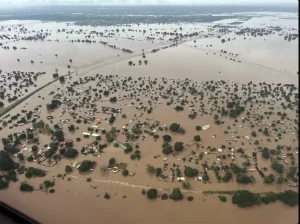
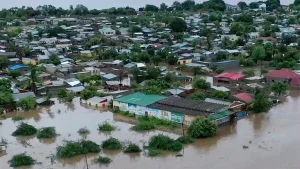
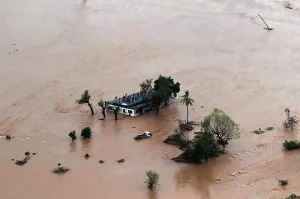
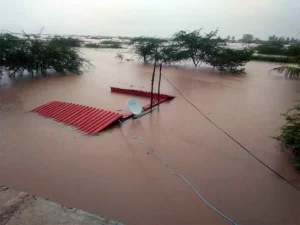
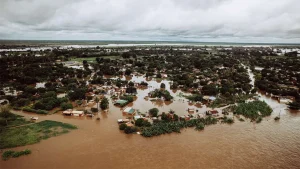
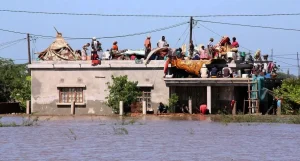
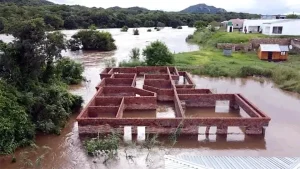
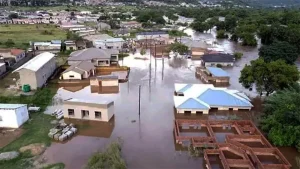
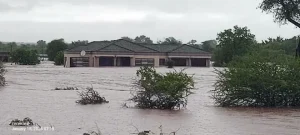
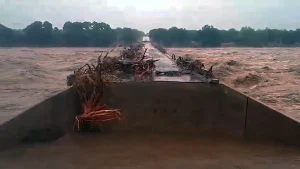
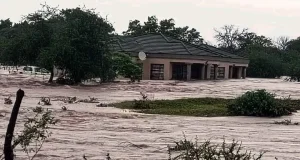
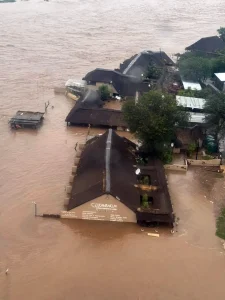
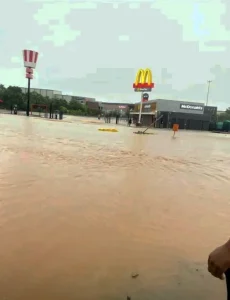
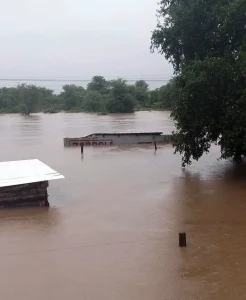
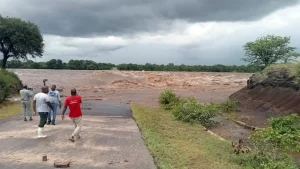
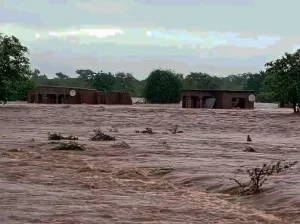
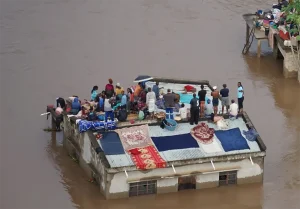
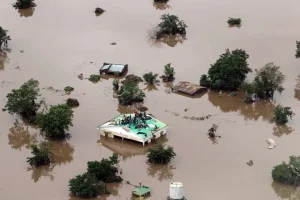
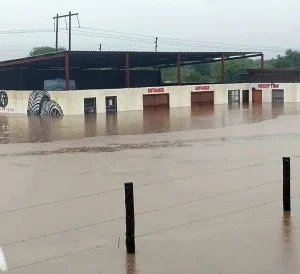
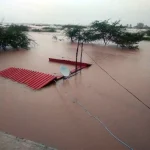
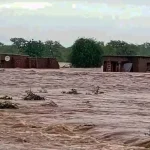
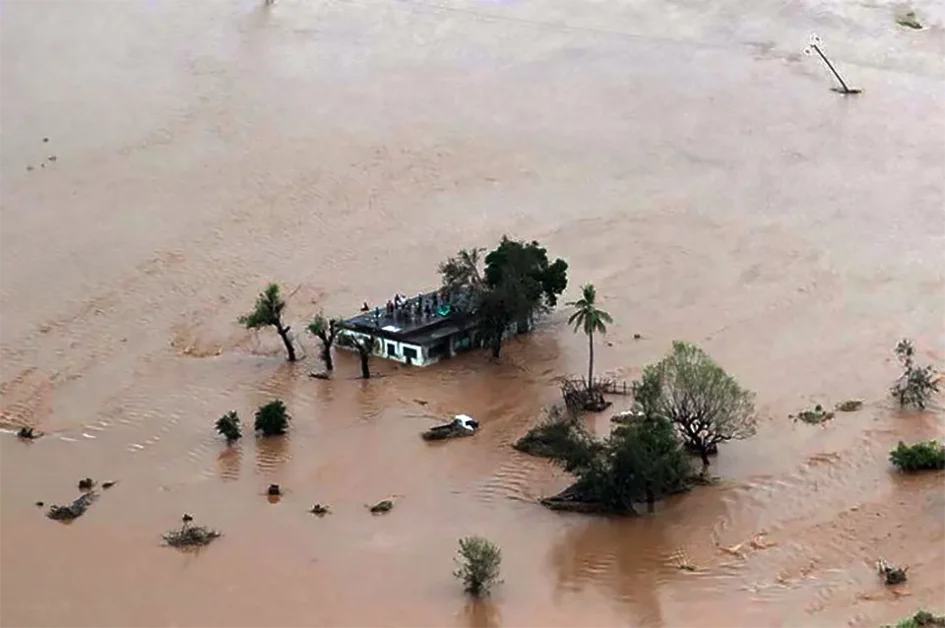
THEbrown waters of the Limpopo River have transformed entire neighbourhoods into inland seas. Families cling to rooftops as rescue helicopters circle overhead. Roads that once connected communities now lie submerged beneath meters of floodwater. Welcome to Mozambique in January 2026, where nature’s fury has unleashed one of the most severe humanitarian crises in recent memory.
The Scale of Devastation
An estimated 600,000 people have been affected by flooding across southern and central Mozambique, particularly in Gaza, Maputo, and Sofala provinces. The crisis has escalated with terrifying speed since mid-December, when persistent rainfall began battering the region. More than 513,000 people have been affected, over half of whom are children, with more than 50,000 people forced to flee their homes.
The human cost extends beyond Mozambique’s borders. The number of deaths across the region exceeds one hundred, including approximately 30 recorded in South Africa and Zimbabwe. Inside Mozambique itself, more than 110 people had been killed since early October, the start of the rainy season.
These aren’t just statistics – they represent families destroyed, children orphaned, communities shattered. In Xai-Xai, the provincial capital near the Limpopo River, residents watched helplessly as their city was swallowed by rising waters. Authorities have issued warnings about crocodile risks in flooded areas, adding a predatory dimension to an already nightmarish scenario.
Infrastructure in Ruins
The floods have dealt a crushing blow to Mozambique’s infrastructure. Nearly 5,000 kilometres of roads were damaged across nine provinces, including critical sections of the main highway linking the capital Maputo to the rest of the country. This arterial road, National Road No. 1, is now impassable in several stretches, effectively severing the nation’s lifeline.
The consequences ripple outward like the floodwaters themselves. Supply chains have collapsed. Access to food, fuel, and humanitarian assistance has been severely disrupted. Communities that were already vulnerable now find themselves completely isolated, cut off from the outside world by waters that authorities warn may remain high for at least two weeks.
Beyond roads and bridges, the floods have ravaged essential public infrastructure. Schools lie flooded, denying children access to education at a critical time. Hospitals and health centres have sustained damage, compromising their ability to deliver services precisely when they’re most needed. In a cruel twist, the very institutions meant to provide refuge and recovery have themselves become victims.
Livelihoods Washed Away
For a nation where agriculture forms the backbone of survival for millions, the flooding represents an existential threat. Authorities report the loss of more than 34,000 livestock, damage to over 104,600 hectares of agricultural land, with nearly 47,300 farmers directly impacted. Fishing assets and boats have been damaged or destroyed, eliminating crucial sources of protein and income.
The timing could hardly be worse. The floods struck during the main planting season, destroying not just current crops but future harvests. Farmers have watched helplessly as their fields – representing months of labour and their families’ food security – disappeared beneath muddy torrents.
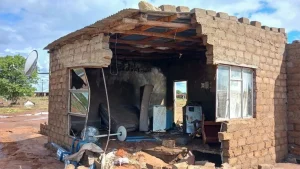
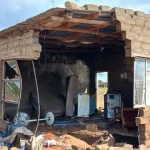
Belita Pereira Rodrigues, whose story echoes that of thousands, lost everything. Her home collapsed. Seeds washed away. Work tools vanished with the water. More than 30 chickens and two goats – her livestock, her insurance against hunger – swept away in the deluge. “We lost everything inside – clothes, food, even our stocks,” she recounted, her voice carrying the weight of devastation shared by an entire region.
The destruction extends beyond individual farms. Aquaculture operations have suffered losses of fingerlings, with fish ponds and cages damaged. Pastureland lies submerged, leaving surviving livestock without grazing areas. The cumulative impact threatens to push food insecurity to crisis levels in communities already living on the edge.
A Humanitarian Emergency Escalates
Accommodation centres are hosting 60,800 people, with efforts ongoing to manage overcrowding and ensure access to basic services. But these centres, rapidly overwhelmed by the influx of displaced families, struggle to provide adequate shelter, clean water, sanitation, and protection – especially for the most vulnerable.
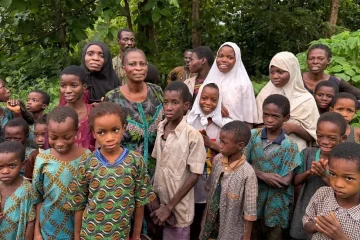
Children bear a disproportionate burden. In a country where more than 17 million people are under 18, and the average age is just 17, the youngest are hit hardest. UNICEF’s Chief of Communication in Mozambique warned that flooding is transforming unsafe water, disease outbreaks, and malnutrition into deadly threats for children. Even before these floods, almost four out of every ten children in Mozambique experienced chronic malnutrition.
The health implications are staggering. Waterborne diseases, cholera, diarrhoea, and skin infections spread rapidly in flood conditions. Save the Children has already begun detecting cholera cases. Medical infrastructure damaged by the floods struggles to respond, creating a vicious cycle where disease spreads unchecked among displaced populations living in crowded, unsanitary conditions.
Protection concerns loom large. Women, children, the elderly, and persons with disabilities face heightened risks of abuse and exploitation in displacement settings. The breakdown of normal social structures, combined with the desperation of survival, creates conditions ripe for gender-based violence and child exploitation.
The Perfect Storm: Climate and Compounding Crises
The situation’s trajectory points toward deterioration, not improvement. The situation continues to evolve and is likely to worsen, due to continued rainfall, flooding and discharges, as well as the country’s entry into its annual cyclone season. The spectre of cyclones adds another layer of danger to communities already reeling from floods.
High-volume dam releases compound the crisis. Upstream dams in Mozambique and neighbouring countries, filled beyond capacity by relentless rainfall, discharge massive volumes of water. From a single dam, up to 10,000 cubic meters of water per second have been released, illustrating the scale of ongoing risk even after heavy rains subside.
This flooding emergency doesn’t exist in isolation. This flooding emergency comes on top of large-scale conflict-driven displacement in northern Mozambique, which has already depleted humanitarian stocks and response capacity. The nation’s humanitarian infrastructure, already stretched thin by conflict in Cabo Delgado province, now faces dual emergencies that threaten to overwhelm response capacity entirely.
Scientists increasingly link such extreme weather events to climate change. Mozambique has experienced repeated weather-related disasters – cyclones Idai, Kenneth, Gombe, and now these floods – that demonstrate a disturbing pattern of escalating climate impacts on vulnerable populations.

The Response: Mobilisation and Gaps
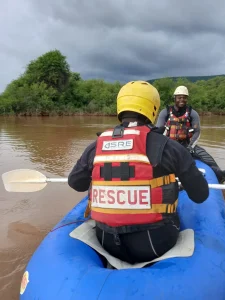
The Government of Mozambique has established a Mobile Emergency Operations Centre in Gaza Province, coordinating efforts across affected areas. Search and rescue operations continue, though access challenges persist due to flooded roads, flash flooding risks, and continued water releases.
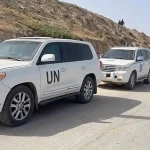
On January 16, the government declared a nationwide Red Alert. The following day, it formally requested United Nations support, including air assets for rescue operations and humanitarian transport, logistics support, civil engineering expertise, and assistance to restore critical access routes.
International humanitarian organisations have mobilised. The International Organisation for Migration is scaling up displacement tracking and improving conditions in accommodation centres. UNICEF is working to restore access to safe water, sanitation, health services, education, and child protection. The International Federation of Red Cross and Red Crescent Societies is providing emergency aid. Save the Children, despite suspending operations in three cities due to flooding, continues to assist where possible.
Yet the gaps remain vast. Humanitarian access and funding represent the most critical constraints. Air and maritime assets are urgently needed to reach isolated communities and deliver supplies. The scale of need far outstrips available resources. Additional funding is urgently required to sustain and scale up the response.
The African Commission on Human and Peoples’ Rights has called on the regional and international community to mobilise support. The Commission emphasised that impacts transcend national borders and affect the continent as a whole, invoking resolution 417 on human rights impacts of extreme weather in Eastern and Southern Africa due to climate change.
The Long Shadow Ahead
As rescue operations continue and floodwaters slowly recede, Mozambique faces the daunting challenge of recovery and reconstruction. Tens of thousands of homes have been destroyed. Critical infrastructure lies in ruins. Agricultural land will require time to drain and recover. Seeds and tools must be replaced. Livestock must be restocked.
The psychological toll – trauma from loss, displacement, and witnessing death—will require sustained attention. Children who have lost schooling will need educational catch-up support. Families who have lost everything will need comprehensive assistance to rebuild their lives.
The floods have exposed fundamental vulnerabilities: inadequate drainage infrastructure, communities living in flood-prone areas, limited early warning systems, and insufficient disaster preparedness. Addressing these systemic issues will require massive investment and political will.
President Daniel Chapo cancelled his trip to the World Economic Forum in Davos to focus on flood response, a symbolic gesture acknowledging the crisis’s severity. But symbolism alone cannot rebuild roads, restore livelihoods, or protect future generations from intensifying climate impacts.
Conclusion: A Test of Resilience and Solidarity
The catastrophic floods ravaging Mozambique represent more than a natural disaster. They are a stark reminder of climate change’s disproportionate impact on vulnerable nations, a test of international humanitarian solidarity, and a clarion call for urgent action on both disaster response and climate adaptation.
As families shelter on rooftops awaiting rescue, as communities struggle to survive in overcrowded accommodation centres, as farmers survey fields turned to lakes, Mozambique faces a moment of reckoning. The immediate priority is clear: save lives, provide emergency assistance, prevent disease outbreaks, and protect the vulnerable.
But beyond the emergency response lies a more fundamental challenge: building resilience in a nation repeatedly battered by nature’s wrath. This requires not just humanitarian aid but sustained development investment, climate adaptation measures, and global commitment to addressing the root causes of climate change.
The waters will eventually recede. The question is what kind of Mozambique will emerge – and whether the international community will stand in solidarity with a nation struggling to survive in an era of escalating climate catastrophe.