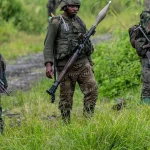
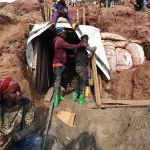
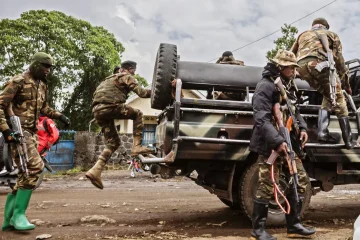
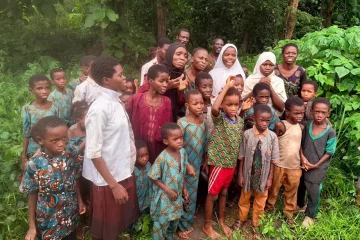
ON Thursday morning, villagers in eastern Democratic Republic of Congo dug graves for the latest victims of fighting between government forces and Rwanda-backed M23 rebels. That same afternoon, Presidents Donald Trump, Paul Kagame, and Felix Tshisekedi sat before world television cameras in Washington, their body language telling the real story.
Rwanda’s Kagame and Congo’s Tshisekedi never looked at each other. They exchanged no words in front of the cameras. There was no handshake. They signed documents and passed pens with Trump beaming between them beneath a “Delivering Peace” banner, celebrating what the White House called a historic breakthrough. The optics of animosity couldn’t have been clearer.
The dissonance reveals a brutal truth: this isn’t a peace agreement. It’s a mineral access deal disguised as diplomacy.
The most damning evidence? M23—the rebel force that controls the ground, commands thousands of fighters, and seized Congo’s two largest eastern cities earlier this year—wasn’t even in the room. The biggest protagonist in this war, the group doing the actual killing and dying, had no seat at the table. They aren’t bound by Thursday’s agreement and are conducting separate, stalled negotiations in Qatar.
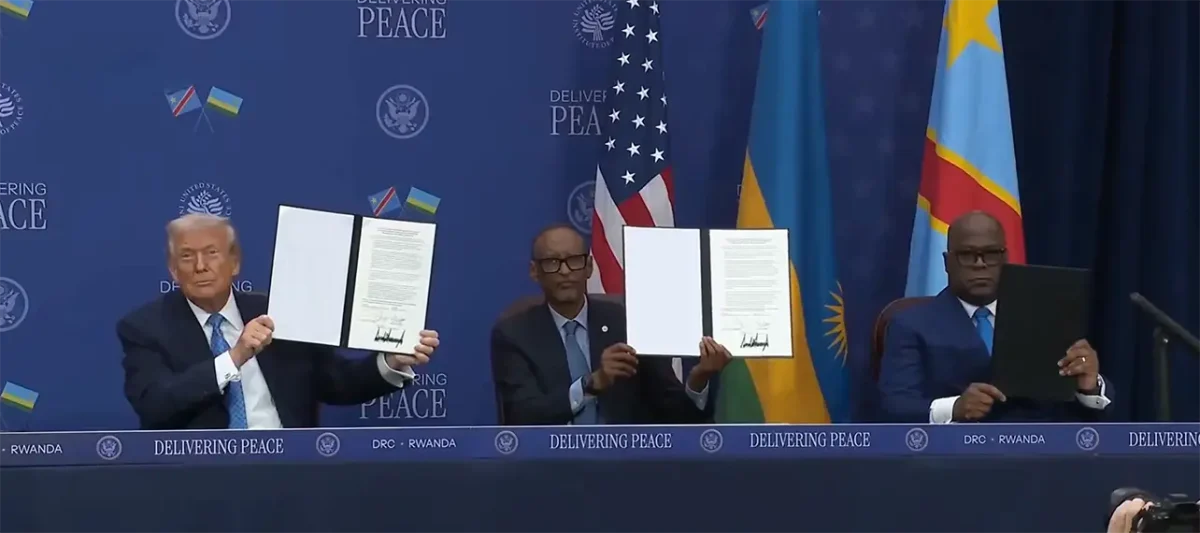
It’s the diplomatic equivalent of staging a World War II peace conference without inviting Germany or Japan. United Nations experts confirmed in July that Rwanda commands and controls M23, deploying thousands of troops alongside the rebels. Yet Kagame’s government continues to deny involvement, even as the two leaders sat meters apart in Washington, unable to make eye contact.
“For me, it is clear this is not a peace agreement,” said Denis Mukwege, the Congolese Nobel Peace Prize laureate who treats conflict rape victims. Speaking from Paris as the ceremony unfolded, he added: “The proof: this morning, in my native village, people were burying the dead while a peace agreement was being signed.”
The real agenda became clear when the U.S. Chamber of Commerce immediately convened an investment forum, bringing American business leaders together with Congolese and Rwandan delegations to discuss mineral opportunities. The stakes are staggering: Congo holds 60 percent of global coltan reserves and produces 70 percent of the world’s cobalt—metals essential for electric vehicles and advanced weapons systems. Congo’s total resource endowment is valued at $24 trillion.
For years, China has dominated this wealth, now owning or holding stakes in 15 of Congo’s largest copper and cobalt mines. Trump’s strategy is transparent: offer peace in exchange for mineral access to counter Beijing’s dominance. Trump aides are looking to facilitate billions in Western investment in a region rich in tantalum, tin, tungsten, gold, cobalt, copper, and lithium.
But this framework incentivises continued conflict. Rwanda has allegedly profited enormously from eastern Congo’s chaos, emerging as a major exporter of minerals like gold despite having limited reserves. Why would Kigali genuinely end such a lucrative arrangement?
The June agreement that Thursday’s ceremony supposedly finalised included clear commitments: Congo would neutralise anti-Rwandan Hutu militias. Rwanda would withdraw forces and stop backing M23. Six months later, little progress has been made on either front. Each side refuses to move until the other does first—a perfect stalemate.
Meanwhile, clashes erupted throughout South Kivu province even as the leaders signed documents. A resident in rebel-held Goma put it simply: “We are still at war. There can be no peace as long as the front lines remain active.”
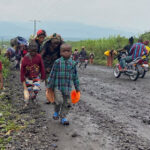
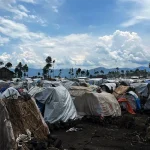
This isn’t Congo’s first failed peace process—it’s merely the latest. Over 100 armed groups operate in the east, where two regional wars between 1996 and 2003 cost millions of lives. The current cycle has killed thousands and displaced hundreds of thousands more, with 21.2 million people now in humanitarian need.
As Trump told the African leaders with accidental honesty, they would “spend a lot of time hugging, holding hands, and taking advantage of the United States of America economically.” Except there was no hugging. No hand-holding. Just two leaders who couldn’t bear to look at each other, signing papers for cameras while their proxies fired on each other 7,000 miles away. And the fighters who could actually end the war? They weren’t invited.
The bodies being buried Thursday morning, while the agreement was signed Thursday afternoon, tell you everything about whose interests this deal actually serves. Congo’s minerals, it seems, are worth more to the international community than Congolese lives.