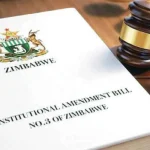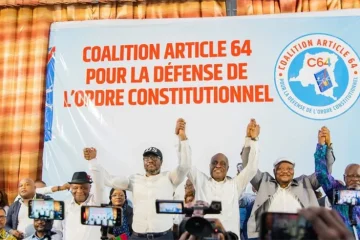

THE City Sports Centre in Harare is an unlikely theatre for a constitutional drama. It was there, on Tuesday afternoon, that citizens were summoned to participate in public hearings on Constitutional Amendment Bill No. 3 – legislation critics say is engineered to allow Mnangagwa, who came to power through a 2017 military coup against Robert Mugabe, to circumvent the two-term limit that would otherwise force him from office after 2028.
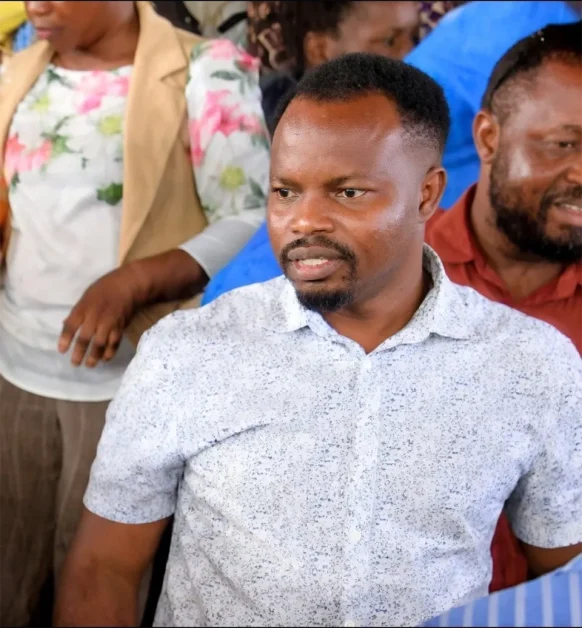
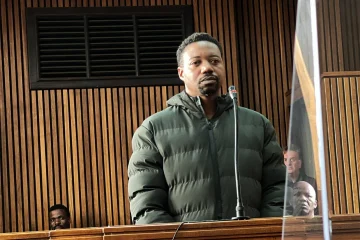
Coltart, a prominent human rights attorney who has long stood at the intersection of law and liberation, was among those who showed up to oppose the bill. He left with bruises across his face, his phone snatched, his eyeglasses smashed – and his convictions apparently intact.
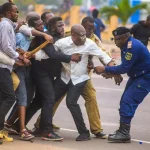
Video footage, which circulated rapidly on X (formerly Twitter), tells a damning story: a mob of men, outnumbering Coltart, pursuing him as he attempted to leave the venue, punching and kicking him as onlookers watch. The images have the quality of impunity, not panic — these are men who know no consequence will follow.
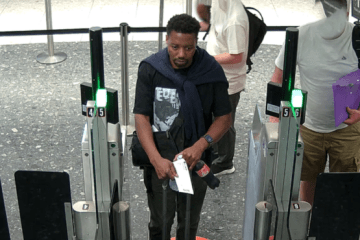
Investigative outlet ZimLive has done what Zimbabwe’s police have conspicuously declined to do: it identified one of the assailants. Luckmore Tinashe Gapa, described as a ZANU-PF central committee member, is seen in the footage grabbing Coltart’s phone. Gapa was photographed meeting First Lady Auxillia Mnangagwa as recently as 2023 – a detail that demolishes any fiction that this was spontaneous or unconnected to the ruling establishment.
As of Wednesday evening, the Zimbabwe Republic Police had made no arrests and issued no statement. The silence speaks with precision.
“You cannot take parliamentary hearings to the people and then assault them for airing their views.”
Journalist Hopewell Chin’ono
THE BILL AT THE CENTRE
Constitutional Amendment Bill No. 3 is the legal architecture of a political project. Mnangagwa has made no secret of his ambition to remain in power beyond the constitutionally prescribed limit, and the bill has been widely read – by civic society, opposition parties and constitutional scholars alike – as the mechanism to achieve that extension.
The public hearings were, in theory, democracy’s pressure valve: a space for citizens to register dissent through legitimate channels. The violence at City Sports Centre has now rendered those channels suspect. If the price of opposition is a beating in front of cameras, attended by a named ZANU-PF official, the hearing process is not consultation – it is theatre designed to manufacture the appearance of consent.
This is not an abstract concern. Zimbabwe has been through this before. The Mugabe era produced generation after generation of young ZANU-PF operatives schooled in political violence as a tool of governance. What happened to Coltart is the latest evidence that Mnangagwa, despite his post-coup promise of a ‘new Zimbabwe,’ has not dismantled that architecture. He may, in fact, be rebuilding it for his own use.
RACE, DEFIANCE AND DEMOCRATIC STAKES
Journalist Hopewell Chin’ono, writing on X, drew attention to a particularly toxic strand of the assault: the racial abuse directed at Coltart, who is white. Chin’ono argued that such invective does not merely offend – it delegitimises the entire hearing process by weaponising race to silence dissent. The implication is clear: only certain Zimbabweans are welcome to participate in the future ZANU-PF is building.
Coltart himself refused that framing with a rare public dignity. ‘And to all those who say that I am not Zimbabwean because of the colour of my skin, may you find healing for the hate in your hearts. I don’t hate you back. And I challenge you to a dance off!!!’ he wrote – posting from behind his ‘stylish new glasses accessory,’ his bloodied face evidence enough that the challenge was not frivolous.
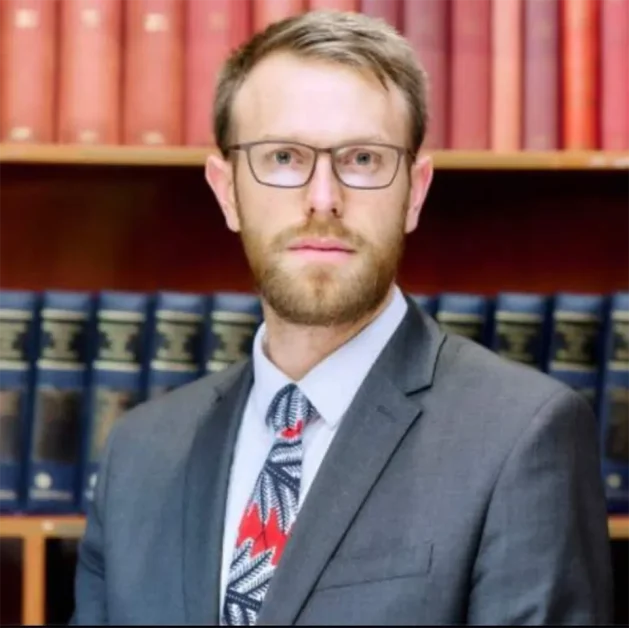
His father, David Coltart – a former senator and prominent opposition figure who has spent decades navigating the tensions of Zimbabwean politics – was blunt in his condemnation. ‘Some of the leadership of Zanu PF have completely lost their way,’ he wrote on X.
Both men are right, and the fact that they are is the story’s real indictment.
WHAT SILENCE FROM ZANU-PF CONFIRMS
Neither ZANU-PF nor parliament had issued any statement by Wednesday evening. The hashtag #JusticeForDougColtart trended throughout the day; the ruling party remained unmoved.
This is not oversight. It is a calculation. If ZANU-PF condemned the assault, it would implicitly acknowledge that its operatives were responsible. If it launched an investigation and arrested Gapa, it would signal that the constitutional hearings are meant to be genuinely open – which would complicate the very outcome the amendment is designed to achieve. Silence, therefore, is policy.
For African observers who have watched similar scripts play out – from Kampala’s treatment of opposition figures to Bamako’s closing of civic space – the Harare footage carries the familiar grammar of democratic backsliding. Violence is deployed not to win an argument, but to remove the person making it.
“A little sore from the bruises and abrasions but more fired up to fearlessly serve the God who stands with the oppressed than before.”
Doug Coltart, Wednesday morning
THE AFRICAN MIRROR VIEW
The attack on Doug Coltart is not a sidebar to Zimbabwe’s constitutional debate. It is the debate — conducted with fists rather than arguments, precisely because arguments are losing ground.
Amendment Bill No. 3 cannot survive sustained scrutiny in an open civic space. The violence in Harare tells us that its architects know this. When a named ZANU-PF official is caught on camera robbing a lawyer at a public hearing, and no arrest follows, the rule of law has not merely been bent – it has been replaced.
Zimbabwe’s democratic partners – in the SADC region and across the African Union – cannot afford to treat this as an internal matter. The constitutional amendment is a regional precedent. If Mnangagwa succeeds in rewriting the rules to entrench himself in power, buoyed by the quiet of a citizenry intimidated into silence, the lesson will not be lost on every other leader watching the clock.
Coltart said he emerged from the beating ‘more fired up.’ Africa needs more of that. It also needs the institutions – regional bodies, courts, press freedom organisations, civil society networks – to ensure that fire is not extinguished the next time someone brings larger fists.