Our website use cookies to improve and personalize your experience and to display advertisements (if any). Our website may also include cookies from third parties like Google Adsense, Google Analytics, and Youtube. By using the website, you consent to the use of cookies.

African Union welcomes DRC-M23 ceasefire agreement signed in Doha

African Union welcomes DRC-M23 ceasefire agreement signed in Doha

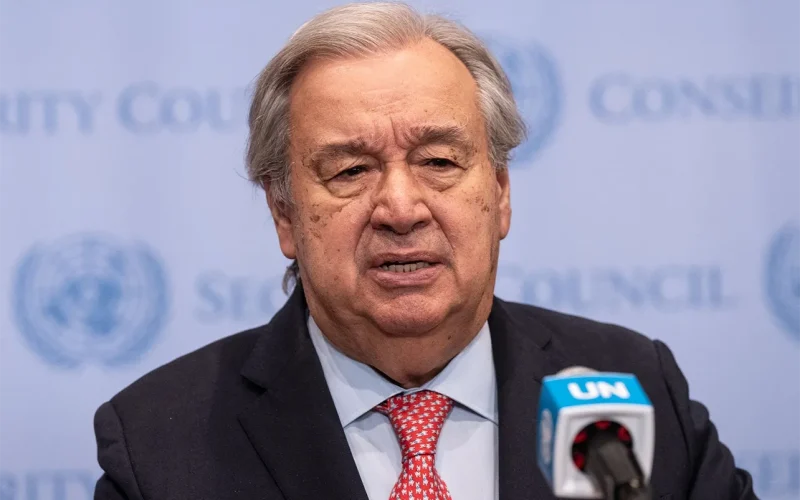
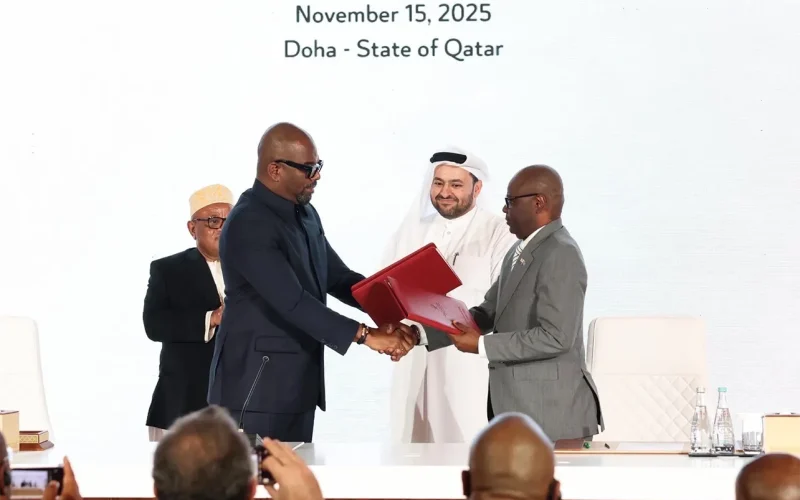
THE African Union has welcomed the signing of a ceasefire mechanism between the Democratic Republic of the Congo and the M23 rebel group, calling it a significant step toward de-escalating violence in the country's volatile eastern region. AU Commission Chairperson Mahmoud Ali Youssouf praised the February 3 agreement signed in Doha, Qatar, describing it as "a significant confidence-building measure" and a positive development toward restoring peace and security in eastern DRC. The terms of reference establish a framework for monitoring and implementing a ceasefire between the DRC government and the Alliance Fleuve Congo/M23 (AFC/M23), addressing a conflict that has displaced…
Read More
Israel’s recognition of Somaliland is about political alliances, not legal principles

Israel’s recognition of Somaliland is about political alliances, not legal principles

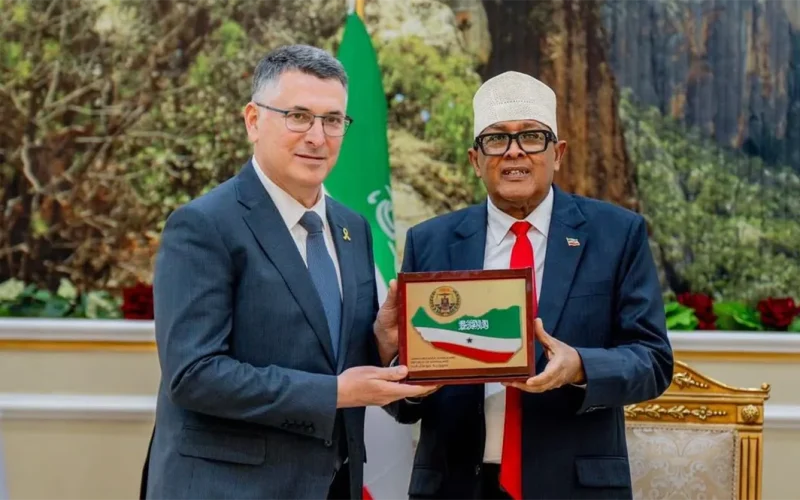
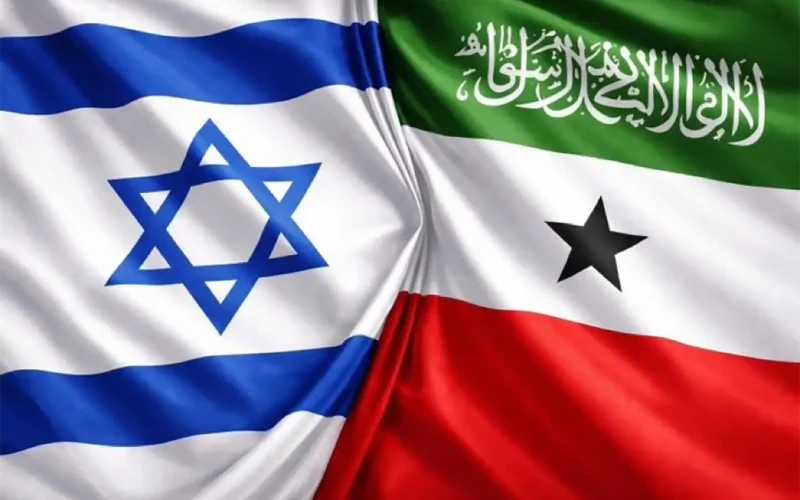
ISRAEL’S decision to recognise Somaliland as an independent nation has been described as historic by Somaliland’s president, Abdirahman Mohamed Abdullahi. He framed the December 2025 declaration as the first decisive breach in the wall of diplomatic isolation that has surrounded Somaliland for more than three decades. Somaliland has operated as a fully functional de facto state with defined territory, population and government since declaring independence from Somalia in 1991. But it lacks international recognition. This would allow it full participation in the global community, such as membership in the United Nations, as well as boosting its economic opportunities. I am…
Read More
Africa’s human rights institutions are electing leaders. Why this matters

Africa’s human rights institutions are electing leaders. Why this matters

MEMBER states of the African Union (AU) will hold their most consequential election of the year in February 2026, to fill ten vacancies in continental human rights institutions. They will elect three experts to the African Commission on Human and Peoples’ Rights and seven to the African Committee of Experts on the Rights and Welfare of the Child. These individuals will serve on the committee for five years and on the commission for six, alongside 23 peers with unexpired terms. The elections are important because these institutions exist primarily to ensure that the continent’s governments take African lives seriously. They…
Read More
Uganda’s autocratic political system is failing its people – and threatens the region

Uganda’s autocratic political system is failing its people – and threatens the region

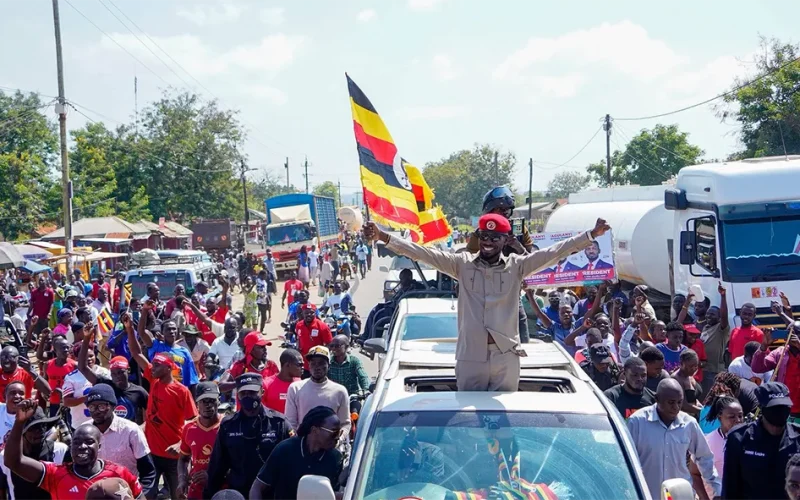
WHEN he was first sworn in as Uganda’s president in 1986, Yoweri Museveni declared that his victory represented a “fundamental change”. He promised that Ugandans would no longer die at the hands of fellow citizens. He also criticised African leaders who sought international prestige while their people lacked food, healthcare and dignity. In his books Sowing the Mustard Seed (published in 1997) and What Is Africa’s Problem? (2000), Museveni condemned leaders who overstayed in power. Now nearly four decades into his rule, Uganda’s promised democratic renewal has been replaced by increasingly autocratic governance. Once the liberator, Museveni has become the…
Read More
Why only the AU and only two countries condemn Trump’s Venezuela strike, abduction

Why only the AU and only two countries condemn Trump’s Venezuela strike, abduction

THE African Union's condemnation of US military strikes on Venezuela and the capture of President Nicolás Maduro arrived swiftly on January 3, calling the action a violation of state sovereignty. South Africa's government followed with even stronger language, demanding an emergency UN Security Council session. But across a continent of 54 nations, the silence from individual African leaders has been deafening. No presidents have issued personal statements. Foreign ministers from Nigeria, Egypt, Ethiopia, and Kenya have stayed silent. Even countries like Algeria and Namibia - traditionally vocal supporters of anti-imperialist causes - have remained conspicuously quiet as one of the…
Read More
Israel’s Somaliland gambit: a nation stands alone against global condemnation

Israel’s Somaliland gambit: a nation stands alone against global condemnation

ISRAEL’S recognition of Somaliland as an independent state has triggered what may be the most unified international rebuke the country has faced in recent memory. Not a single nation has endorsed the move. Even Israel's closest ally, the United States, has explicitly distanced itself from the decision. The scale of opposition is remarkable. Twenty-one countries spanning the Islamic world - from Algeria to Yemen, from Iran to Saudi Arabia - issued a joint condemnation through the Organisation of Islamic Cooperation. The African Union, Arab League, Gulf Cooperation Council, and the Intergovernmental Authority on Development (IGAD) all rejected the recognition. At…
Read More
A new way forward is needed for Somalia

A new way forward is needed for Somalia

SOMALIA is at a defining moment. Decades of investment in state-building are threatened by a fragmented political landscape, underfunding of the African Union’s military shield, and a humanitarian system running on fumes. The future of the AU’s peace enforcement mission is a particular worry. The almost two-decade deployment was supposed to transition to Somali ownership of its security future. But recent gains by the insurgent group al-Shabab have exposed a troubling lack of readiness. On 1 January 2025, the AU troops were rehatted as the AU Support and Stabilisation Mission in Somalia (AUSSOM). But the new designation carries the same…
Read More
Africa’s power grabs are rising – the AU’s mixed response is making things worse

Africa’s power grabs are rising – the AU’s mixed response is making things worse

HARDLY a month goes by without news of another unconstitutional change of government on the African continent. These can take one of three forms. The first is a military coup d’état or violent change of (democratically) elected government. The second is the refusal of an incumbent government to relinquish power after losing an election. And finally, manipulating constitutions to win or extend the term limits of an incumbent government. We study peace and conflict in Africa, as well as African Union law. We set out these three categories in a paper we published in 2023. In it, we analysed unconstitutional…
Read More
South Africa’s G20 presidency is over – what did it achieve for climate and clean energy in Africa?

South Africa’s G20 presidency is over – what did it achieve for climate and clean energy in Africa?

SOUTH Africa opened its G20 presidency with an ambitious message for a world divided by conflict and economic strain: solidarity, equality and sustainability. The Johannesburg G20 leaders’ summit tried to mend deep geopolitical rifts. Even those who chose to boycott the summit remained included, with their chairs left symbolically empty. A G20 presidency is more than a summit of political leaders. It is a series of dialogues between countries that represent 78.9% of the world’s population. The South Africa G20 presidency hosted 177 official meetings and was guided by 15 thematic working groups and groups representing youth, business, women’s rights,…
Read More
EU Parliament blocks Tanzania funding, considers sanctions over election violence, mass graves

EU Parliament blocks Tanzania funding, considers sanctions over election violence, mass graves

THE European Parliament has voted to halt direct financial support to Tanzania and consider targeted sanctions against government officials responsible for what lawmakers described as a brutal post-election crackdown that left thousands dead and resulted in reports of mass graves. The resolution, adopted by an overwhelming 539 votes in favour with no opposition and 27 abstentions, condemns the Tanzanian government's violent response to protests following disputed October 29, 2025, elections that regional observers, including the African Union and Southern African Development Community, sharply criticised as neither free nor fair. The violence by security forces resulted in thousands of deaths and…
Read More