AFRICAN leaders on Sunday brokered a landmark agreement aimed at ending years of political deadlock in South Sudan, securing commitments from President Salva Kiir to hold long-delayed elections while releasing political detainees, including detained Vice President Riek Machar.
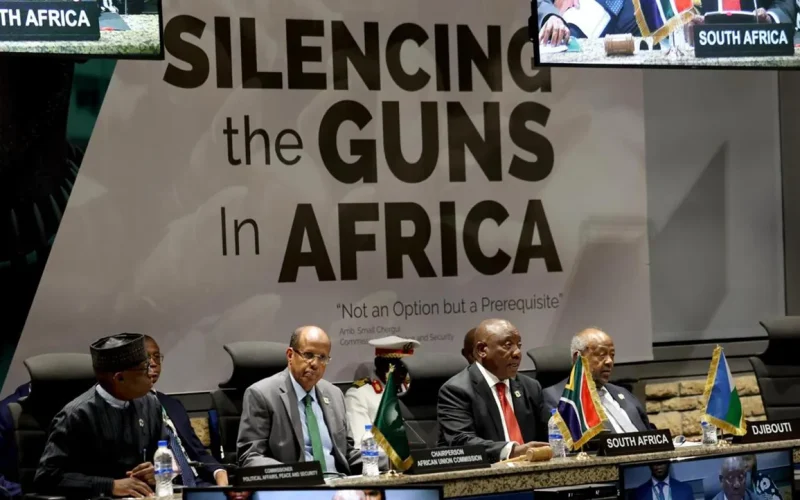
The deal, hammered out during a high-stakes meeting of the Committee of Five (C5) on the sidelines of the 39th African Union Summit, marks the most significant diplomatic breakthrough in South Sudan’s troubled transition since the 2018 Revitalised Peace Agreement.
Under the six-point framework announced by South African President Cyril Ramaphosa, who chaired the session, Juba has agreed to implement an immediate ceasefire, release all political prisoners, and proceed with elections without further postponement – ending a cycle of delays that has stretched South Sudan’s transitional period for years.
“The Revitalised Agreement remains the paramount legal instrument which all parties must comply with and by which progress in South Sudan will be measured,” Ramaphosa declared in closing remarks, outlining what he called a “clear direction on the way forward.”
Key Provisions of the Agreement
The watershed accord commits South Sudan’s government to:
- Immediate ceasefire: All hostilities and violence must end to allow electoral processes to proceed
- Release of political detainees, including Vice President Riek Machar, currently facing legal proceedings
- Inclusive dialogue: Comprehensive talks involving all stakeholders without exception
- Electoral commitment: Elections must proceed on a “free and fair basis” with no further postponements, ensuring all eligible citizens can participate
- Coordination mechanism: IGAD Secretariat and C5 to coordinate implementation efforts
- Oversight structure: Three IGAD heads of state, working with the AU Commission chair and C5, will monitor and support implementation
The agreement also mandates that South Sudan identify and implement “minimum standards” enabling citizens to exercise their democratic rights, with “credible and meaningful processes” for election preparation – addressing concerns raised by UN officials about the country’s electoral readiness.
Pressure on Kiir
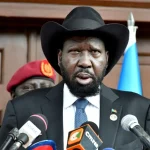
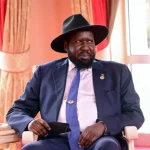
The deal represents a significant diplomatic victory for regional powers who have grown increasingly frustrated with Juba’s repeated postponements of elections originally scheduled for 2023. President Kiir, who participated in the closed-door session, pledged adherence to the agreed roadmap while requesting support “without undue interference.”
“We have heard very clearly from President Salva Kiir that they are committed to ensuring that the roadmap is adhered to,” Ramaphosa confirmed, though he emphasised that success depends on South Sudan’s leaders acting “in good faith” to foster “national cohesion, solidarity and reconciliation.”
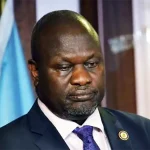
The inclusion of Vice President Machar’s release in the agreement is particularly significant. Machar, a former rebel leader whose forces fought Kiir’s government in a devastating civil war, has been central to the implementation of the 2018 peace deal. His detention has been seen as a major obstacle to the transitional process.
Broader Regional Context
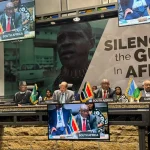
The South Sudan breakthrough came as the AU confronts what Commission Chairperson Mahmoud Ali Youssouf described as “mounting geopolitical turbulence” and “persistent conflicts” across the continent, including in Sudan proper, the Sahel region, eastern Democratic Republic of Congo, and Somalia.
Burundi President Évariste Ndayishimiye, newly elected as AU chairperson for the coming year, inherits leadership of the continental body at a moment of acute crisis. Outgoing chair João Lourenço of Angola stressed that Africa’s progress hinges on “silencing the guns” and warned against legitimising military coups through subsequent elections.
Youssouf told assembled leaders that “institutional reform and financial self-reliance are now imperative as external funding declines,” calling for stronger domestic resource mobilisation — a message that resonates particularly in South Sudan, where international donors have grown weary of funding a seemingly endless transition.
Implementation Challenges
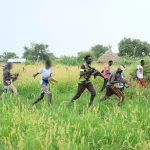
Despite the optimism surrounding Sunday’s agreement, formidable obstacles remain. South Sudan has missed multiple previous deadlines for elections and other transitional benchmarks. The country’s security forces remain divided along ethnic and political lines, and the government has struggled to unify armed groups as required under the peace agreement.
Ramaphosa acknowledged these challenges, noting that regional leaders “will do our utmost best to assist South Sudan to transition to a peaceful and stable country,” but insisted ultimate responsibility rests with South Sudanese leaders themselves.
The agreement calls for “unification of forces” and adequate funding for electoral bodies — both areas where previous commitments have faltered. UN Under-Secretary General officials have previously expressed concern about South Sudan’s capacity to organise credible elections, given the country’s weak institutions and ongoing security threats.
Regional Coordination
The enhanced oversight mechanism, pairing the AU Commission chair with three sitting IGAD heads of state, represents an attempt to maintain sustained pressure on Juba throughout the implementation period. Ramaphosa stressed that “consistent and continuous engagement and monitoring by the C5, IGAD and the AU is critical throughout this year.”
The agreement envisions South Sudan as a test case for African solutions to African problems, coming as UN Secretary-General António Guterres called for a stronger AU-UN partnership and reiterated support for expanding African representation on the UN Security Council.
“There is a lot of hope and goodwill towards our sister country,” Ramaphosa said, “and it is imperative that we act in concert with it.”