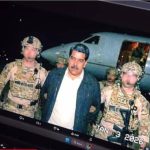
THE African Union’s condemnation of US military strikes on Venezuela and the capture of President Nicolás Maduro arrived swiftly on January 3, calling the action a violation of state sovereignty. South Africa’s government followed with even stronger language, demanding an emergency UN Security Council session.
But across a continent of 54 nations, the silence from individual African leaders has been deafening.
No presidents have issued personal statements. Foreign ministers from Nigeria, Egypt, Ethiopia, and Kenya have stayed silent. Even countries like Algeria and Namibia – traditionally vocal supporters of anti-imperialist causes – have remained conspicuously quiet as one of the Global South’s most prominent leaders sits detained in New York.
Ghana broke that pattern on January 4, becoming the third African nation to issue a formal condemnation. Foreign Minister Samuel Okudzeto Ablakwa released a forceful statement calling the US action a “unilateral and unauthorised military invasion” and demanding the immediate release of Maduro and his wife. The statement went further than most, explicitly criticising Trump’s comments about the US “running” Venezuela as echoing “colonial-era practices” that set a dangerous precedent.
The question is not whether the rest of the African governments noticed. The question is what they’re afraid of.
The Price of Speaking Out
Trade provides the most obvious answer. African nations have become increasingly dependent on US economic partnerships, creating a web of financial entanglements that constrain diplomatic independence.
Nigeria, Africa’s largest economy, has remained entirely silent despite robust civil society condemnations. The country has pursued multibillion-dollar trade agreements with Washington and recently signed major health sector deals with US partners. For President Bola Tinubu’s government, which faces domestic economic pressure and relies on Western investment to stabilise its faltering naira, alienating the Trump administration carries tangible costs.
Kenya, another conspicuous absence, has deepened security cooperation with the United States and depends on American support for its peacekeeping operations in Somalia and the Democratic Republic of Congo. Egypt receives $1.3 billion in annual US military aid – a lifeline its government cannot risk.
Even South Africa, which issued the continent’s strongest rebuke, has substantial economic exposure. It’s call for UN action, delivered through International Relations Minister Naledi Pandor, notably came from the foreign ministry rather than President Cyril Ramaphosa personally – a calibrated response that allows Pretoria to claim moral leadership while minimising direct confrontation.
The Diplomacy of Deference
The African Union’s statement allows individual governments to hide behind collective condemnation without taking personal political risks. By channelling opposition through the continental body, leaders can satisfy domestic constituencies calling for solidarity with Venezuela while avoiding direct bilateral tensions with Washington.
This approach reflects a pragmatic calculation: the AU statement satisfies the principle of non-intervention that African nations hold dear, rooted in post-colonial sensitivities to external overreach, without requiring any single president to stake their country’s relationship with the United States on the outcome.
Burkina Faso’s expression of support for Venezuela, mentioned briefly in social media posts, stands as the only other governmental response beyond South Africa. Notably, Burkina Faso’s military government has already positioned itself in opposition to Western influence in the Sahel, meaning it has less to lose.
What the Silence Reveals
The muted response exposes uncomfortable realities about African agency in international affairs. Despite decades of rhetoric about African solutions to African problems and South-South solidarity, most governments prove unwilling to challenge Washington when their economic interests are at stake, even when the principle of sovereignty they claim to cherish is violated in spectacular fashion.
The contrast with responses to other international crises is striking. African leaders were vocal about Palestine, about Libya, about Western Sahara. The difference with Venezuela appears to be that condemning the United States carries consequences that condemning Israel or former colonial powers does not.
Civil society groups in South Africa and Venezuela, and solidarity organisations in Nigeria, have issued fierce condemnations, highlighting the gap between popular sentiment and governmental caution. Trade unions like NUMSA have called for widespread denunciation of the US action. But their governments remain silent.
The Cost of Pragmatism
This silence raises questions about the substance of pan-African solidarity and Global South unity. If African governments cannot criticise an overt violation of sovereignty—complete with military strikes and the detention of a sitting head of state, what principle would they actually risk economic relationships to defend?
The African Union’s statement speaks of “grave concern” and calls for “inclusive dialogue among Venezuelans.” But without individual nations willing to apply diplomatic pressure, such statements amount to symbolic gestures that Washington can safely ignore.
As the UN Security Council prepares to address South Africa’s demand for an emergency session, the test will be whether African members of the council, currently including Algeria, Mozambique, and Sierra Leone, speak as forcefully as the continental body claims to. Their vote, or their silence, will reveal whether Africa’s commitment to sovereignty extends beyond press releases.
For now, the message is clear: African leaders will defend sovereignty in principle, but not at the expense of trade deals, aid packages, and diplomatic favor with the world’s most powerful nation. Whether that pragmatism serves their countries’ long-term interests, or simply postpones a reckoning over their place in the international order, remains an open question.