Our website use cookies to improve and personalize your experience and to display advertisements (if any). Our website may also include cookies from third parties like Google Adsense, Google Analytics, and Youtube. By using the website, you consent to the use of cookies.

Russia’s ‘civic death’ plan seeks to erase exiled critics, Human Rights Watch says

Russia’s ‘civic death’ plan seeks to erase exiled critics, Human Rights Watch says

RUSSIA is moving to punish dissent far beyond its borders, with a draft law that Human Rights Watch says would amount to a “civic death” sentence for exiled critics. The proposal would strip targeted Russians of basic legal, financial, and consular rights, deepening what HRW describes as a widening crackdown on dissent. Human Rights Watch says the measure is designed to punish Russians abroad who have already been convicted under repressive laws used to silence political speech. Those laws include charges such as “discrediting” the armed forces, cooperation with “undesirable” organizations, calls for sanctions, and alleged attacks on territorial integrity.…
Read More
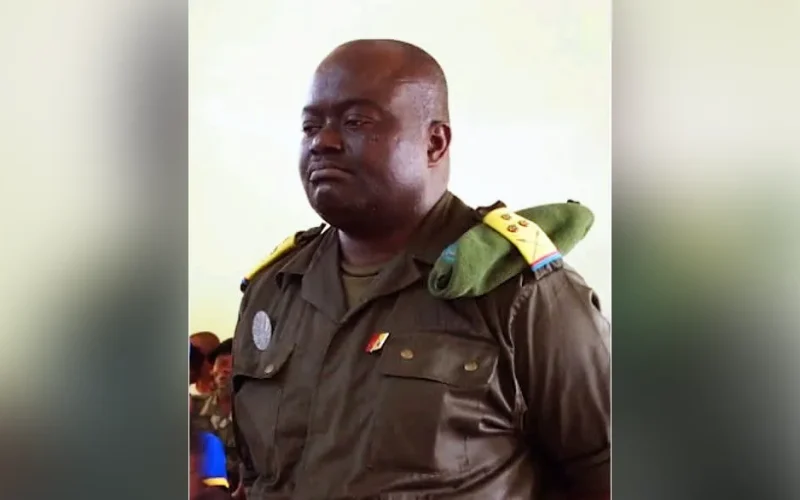
“WE ARE CIVILIANS”: M23’s reign of terror in Uvira and the long road to justice

“WE ARE CIVILIANS”: M23’s reign of terror in Uvira and the long road to justice

THEY came door to door. Armed, methodical, and merciless. When M23 rebels and Rwandan military forces swept into Uvira on 10 December 2025, they did not merely seize a city - they turned it into a killing field. One man fleeing with his family on that first terrible morning watched four relatives fall as soldiers opened fire on them. "It was chaos," he told investigators later. "We had small bags that we threw off, and we ran. I wasn't hit, so I just ran to the lake. I saw my brother, his wife, and two of his children fall." That…
Read More
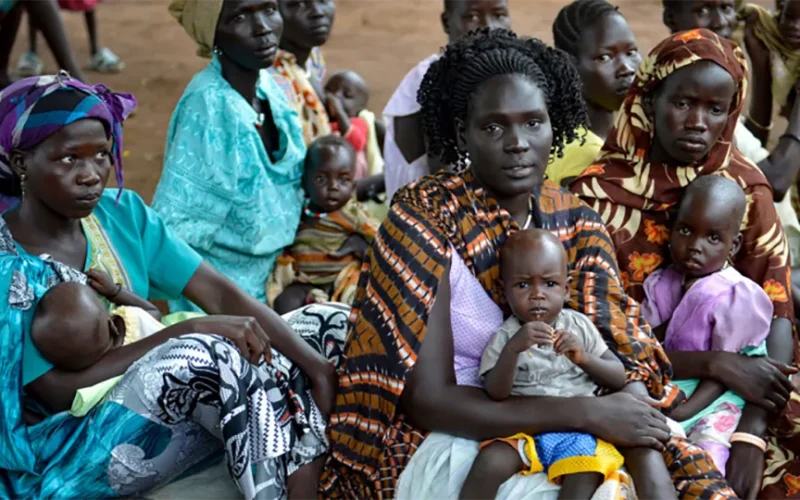
Arakan Army massacre leaves Rohingya survivors with no justice, no homes and no safe return

Arakan Army massacre leaves Rohingya survivors with no justice, no homes and no safe return

TWO years after Arakan Army fighters killed and wounded hundreds of Rohingya Muslims in Myanmar’s Rakhine State, survivors remain displaced, their village destroyed, and no one held accountable, Human Rights Watch said. The rights group said the May 2, 2024, attack in Hoyyar Siri, also known as Htan Shauk Khan, exposed the scale of abuse facing Rohingya civilians caught in Myanmar’s widening conflict. According to Human Rights Watch, the assault began as villagers fled fighting near two military bases in Buthidaung township, only to come under fire from Arakan Army fighters. The group said the attack targeted unarmed civilians and…
Read More
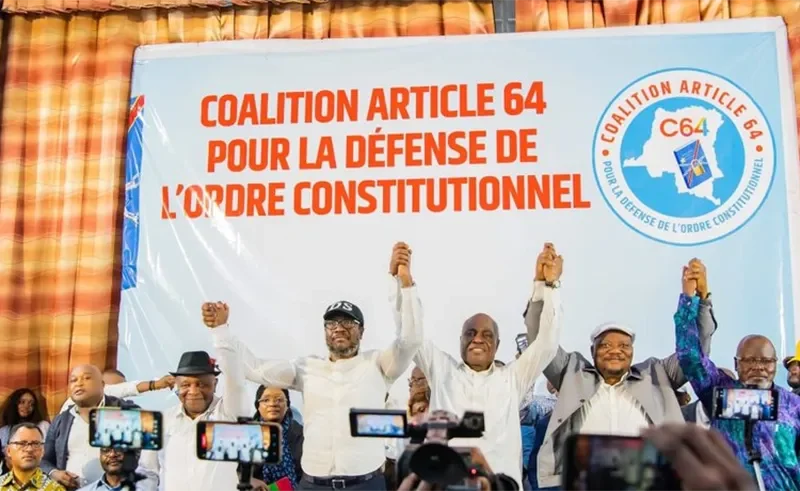
SILENCE BY DECREE: How Kinshasa is criminalising dissent as DRC burns

SILENCE BY DECREE: How Kinshasa is criminalising dissent as DRC burns

IN a country already bleeding from one of the continent's most devastating armed conflicts, the government of Félix Tshisekedi has chosen to open a second front - this one directed inward, against the men and women who report, protest, organise, and dissent. The Democratic Republic of Congo is silencing its own conscience. That is the damning conclusion that emerges from a comprehensive Human Rights Watch investigation covering the period between January and May 2026. Across Kinshasa, Kisangani, Bunia, Kalemie, and Matadi, the pattern is consistent and chilling: speak critically of the government, and the security apparatus will find you. The…
Read More
The social media pharaoh of Ouagadougou: how Traoré’s propaganda machine conceals a nation under siege

The social media pharaoh of Ouagadougou: how Traoré’s propaganda machine conceals a nation under siege

THERE is a version of Ibrahim Traoré that his communications apparatus works overtime to project onto the world: the young, Che Guevara-capped Pan-Africanist, unbowed by France, unbeholden to the West, leading a genuine popular revolution in one of the world's poorest countries. On social media, this version of Traoré is ubiquitous. Memes are minted, anthems are uploaded, and battalions of pro-junta digital activists - organised into what Human Rights Watch has documented as 'Rapid Communication Intervention Battalions' - flood platforms with coordinated messaging designed to make the captain look like Africa's liberator. Then there is the other version - the…
Read More
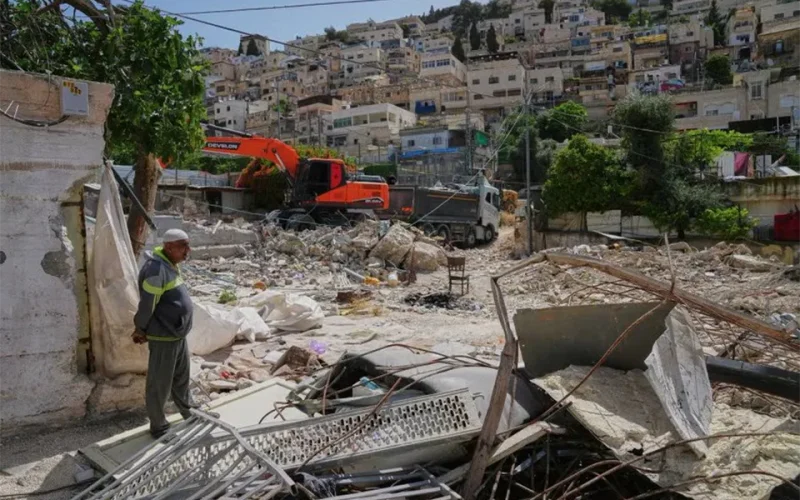
$334 million and a city built on conquest: Israel formalises its war crime in the Golan

$334 million and a city built on conquest: Israel formalises its war crime in the Golan

THE Israeli cabinet’s approval of a 334-million-dollar development plan for the occupied Syrian Golan Heights is not, by itself, the beginning of a new policy. It is the financial and institutional crystallisation of a dispossession that has been under construction since 1967. What is new - and what demands the world’s attention - is the scale of the ambition, the timing of the announcement, and the near-total silence of the powers best positioned to stop it. The plan, adopted by the Israeli government, earmarks funding to expand the settlement of Katzrin - founded in 1977 on Syrian land occupied in…
Read More
Against the Clock: The Desperate Race to Save 65 Ethiopian Lives from Saudi Arabia’s Death Row

Against the Clock: The Desperate Race to Save 65 Ethiopian Lives from Saudi Arabia’s Death Row

ON the morning of 21 April 2026, Saudi prison guards at the Khamis Mushait detention facility in the Asir region walked into a cell holding dozens of Ethiopian men and called out three names. They told those men they were going to a court hearing. They never came back. The guards later returned - not with the men, but with a message for those still waiting behind bars: the three had been executed. Saudi Arabia's Ministry of Interior confirmed it that same day, describing the dead as Ethiopian nationals convicted of "participating in smuggling hashish" into the kingdom. What the…
Read More
$334 Million and a city built on conquest: Israel formalises its war crime in the Golan

$334 Million and a city built on conquest: Israel formalises its war crime in the Golan

THE Israeli cabinet’s approval of a 334-million-dollar development plan for the occupied Syrian Golan Heights is not, by itself, the beginning of a new policy. It is the financial and institutional crystallisation of a dispossession that has been under construction since 1967. What is new - and what demands the world’s attention - is the scale of the ambition, the timing of the announcement, and the near-total silence of the powers best positioned to stop it. The plan, adopted by the Israeli government, earmarks funding to expand the settlement of Katzrin - founded in 1977 on Syrian land occupied in…
Read More
World Cup 2026: football’s biggest party is being hosted by a country gripped by fear

World Cup 2026: football’s biggest party is being hosted by a country gripped by fear

FORTY-five days before the world's biggest football tournament kicks off on American soil, a damning new report has cast a long shadow over what was meant to be football's most inclusive World Cup in history. Human Rights Watch released a 79-page guide on Monday, warning journalists, fans, players, and workers that the 2026 FIFA Men's World Cup is unfolding against a backdrop of abusive immigration enforcement in the United States, new threats to media freedom, discrimination, and unmet human rights commitments by FIFA and host cities. The tournament - the first to span three countries, opening on June 11 across…
Read More
Uganda’s sovereignty bill: dressed as patriotism, built for repression

Uganda’s sovereignty bill: dressed as patriotism, built for repression

WHEN governments reach for the language of sovereignty to justify restricting their own citizens, history counsels alarm. Uganda's Protection of Sovereignty Bill of 2026 is precisely such a moment - and Africa must be watching. Introduced before parliament on April 15 by Internal Affairs State Minister David Muhoozi, the bill proposes criminalising vaguely defined activities that promote the "interests of a foreigner against the interests of Uganda." The phrase sounds reasonable enough until you read the fine print. Clause 5 prohibits any act that promotes the interests of a foreigner against the interests of Uganda, yet nowhere defines what that…
Read More