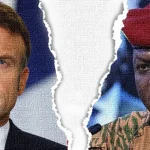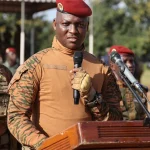
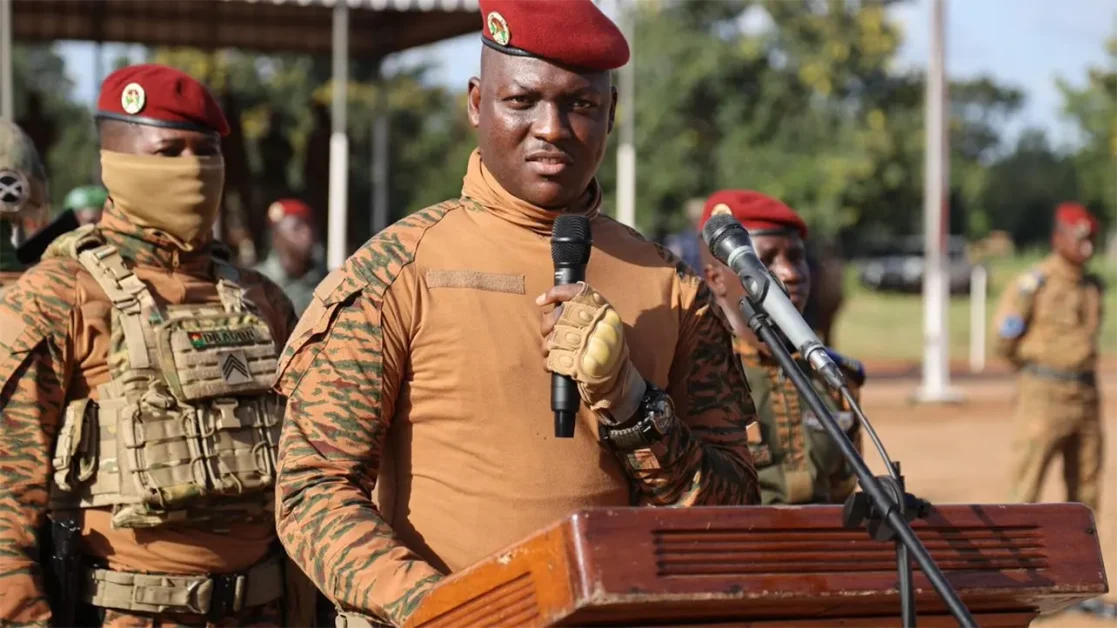
THERE is a version of Ibrahim Traoré that his communications apparatus works overtime to project onto the world: the young, Che Guevara-capped Pan-Africanist, unbowed by France, unbeholden to the West, leading a genuine popular revolution in one of the world’s poorest countries. On social media, this version of Traoré is ubiquitous. Memes are minted, anthems are uploaded, and battalions of pro-junta digital activists – organised into what Human Rights Watch has documented as ‘Rapid Communication Intervention Battalions’ – flood platforms with coordinated messaging designed to make the captain look like Africa’s liberator.
Then there is the other version – the one he does not want the Burkinabe people, or the world, to see. And it is in the determined effort to suppress that version that the true nature of his government is most nakedly revealed.
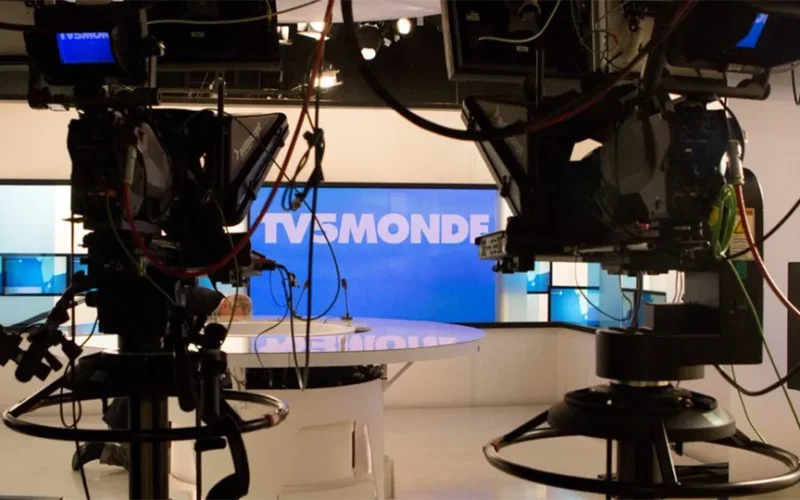
On 5 May 2026, Burkina Faso’s media regulator ordered the suspension of TV5Monde, the French-language international broadcaster watched across more than 200 countries. The stated charge was ‘disinformation’ and ‘apology of terrorism’ in the channel’s coverage of Islamist armed groups in the Sahel. It was the third time TV5Monde had been suspended in the space of roughly two years – the channel already remains off the air in neighbouring Mali, governed by a junta that employs strikingly identical rhetoric and repression.
A Blitz Built on Rubble
The ban is not an isolated regulatory action. It is the latest brick removed from what was, until the 2022 coup, a functioning if imperfect media ecology. Since seizing power, Traoré’s junta has suspended independent media outlets, dismantled civil society organisations, shuttered political pluralism, and deployed the law as a cudgel against critics – journalists, prosecutors, judges. The pattern is systematic: silence every voice capable of independent verification, then fill the vacuum with state-sponsored narrative.
The prominent investigative journalist Atiana Serge Oulon was forcibly disappeared in June 2024, allegedly tortured according to Reporters Without Borders, and remains missing to this day. Others were not disappeared – they were conscripted. In a tactic that has also been used against prosecutors and judges, critics of the junta have been forcibly drafted into military service as punishment for the exercise of their professional duties. Many journalists have simply fled into exile, joining civil society members and political opponents who concluded that remaining in Burkina Faso was incompatible with remaining alive or free.
The result, as Alioune Tine, the founder of the Afrikajom Center think tank and one of the continent’s most respected human rights voices, puts it bluntly: ‘Burkina Faso has become a propaganda machine.’
What the Algorithm Cannot Hide
The particular timing of the TV5Monde ban is instructive. In the days preceding the suspension, the channel had been reporting on two stories that the junta has every reason to suppress. The first was the coordinated April 25 assault on Mali – a country with which Burkina Faso has allied itself in the Alliance of Sahel States – by an Al Qaeda-linked armed group and separatist Tuareg rebels. The offensive brought the war to the gates of Bamako, exposing the junta-allied order across the Sahel as far more fragile than its social media presentation suggests.
The second, and perhaps more damaging, was Human Rights Watch’s release of a comprehensive report on 2 April 2026, titled None Can Run Away, documenting war crimes and crimes against humanity committed in Burkina Faso by all sides of the conflict – including, critically, by government security forces. The report detailed mass atrocities against civilians and drew on extensive field documentation. TV5Monde, one of the few international broadcasters with genuine reach on the continent, gave the findings prominent coverage. Within weeks, the channel was suspended.
The sequence is its own confession. When a government bans a broadcaster for reporting findings of war crimes, it does not refute those findings. It confirms them.
The Digital Mirage
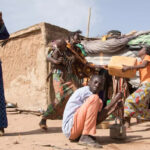
Traore’s social media strategy is, in one sense, sophisticated. It is also, on close examination, a measure of desperation. Pan-African sentiment – real, legitimate, and historically grounded – is being strip-mined to provide rhetorical cover for a government that is failing, by any independent measure, to deliver security or development to the people of Burkina Faso. The country’s jihadist insurgency, which the junta came to power promising to defeat, has deepened and expanded. Vast swathes of national territory remain outside government control. Internally displaced persons number in the millions. Humanitarian access is being denied.
But on the curated feeds that Traore’s battalions maintain, none of this is visible. What is visible instead is anti-Fulani rhetoric – HRW documents widespread online messaging that falsely equates the entire Fulani community with Islamist armed groups, inciting hostility against an ethnic minority that is then also being victimised in documented atrocities on the ground. The propaganda, in other words, is not merely image management: it is operational dehumanisation.
The Right to Know
Burkina Faso is a signatory to the African Charter on Human and Peoples’ Rights. Article 9 of the Charter guarantees every individual the right to receive information. The systematic dismantling of independent media – through bans, forced exile, enforced disappearance, and conscription – is not merely a press freedom issue. It is a human rights violation with direct consequences for accountability, for humanitarian response, and for the capacity of Burkinabe citizens to make informed judgments about their own country and its leadership.
The African Mirror calls on the military authorities in Ouagadougou to immediately reverse the suspension of TV5Monde, to account for the whereabouts of Atiana Serge Oulon and all other journalists and civil society members who have been forcibly disappeared, and to end the practice of weaponising conscription against critics of the government. The international community – including the African Union, ECOWAS, and the UN Special Rapporteur on Freedom of Expression — must press these demands publicly and consistently.
A government that bans every broadcaster capable of checking its claims, and then floods social media with its own version of events, is not a government pursuing sovereignty. It is a government pursuing impunity. Those are not the same thing, and the distinction matters enormously – for the Burkinabe people most of all.