IT was the kind of language that foreign ministries the world over spend entire careers avoiding. But on Saturday, in the convention halls of Spain’s second city, the presidents of Brazil and South Africa stripped away the diplomatic niceties and delivered, with striking directness, a verdict that billions across the Global South have long believed but rarely heard stated so plainly from the lips of world leaders: the five permanent members of the United Nations Security Council are not guardians of global peace — they are its chief destroyers.
“The United Nations has now become a toothless organisation because those who are members of the Security Council are the ones who continue to violate all the laws and the rights.”
President Cyril Ramaphosa
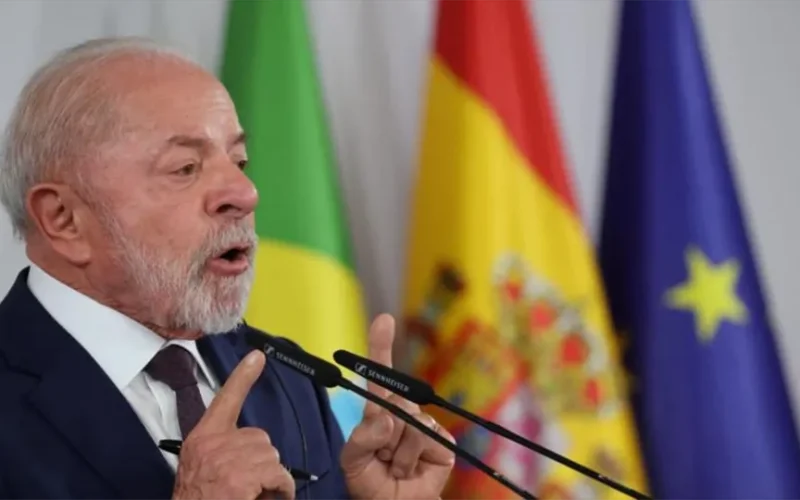
Brazilian President Luiz Inácio Lula da Silva led the charge, describing the P5 – the United States, the United Kingdom, France, Russia, and China – as nothing less than ‘Lords of War.’ He demanded they stop behaving like emperors, calling them to account for waging conflicts across the developing world without UN authorisation, without consultation, and without consequence.
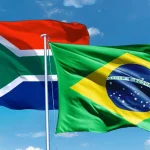
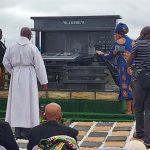
South African President Cyril Ramaphosa, standing alongside Lula at the IV Meeting in Defence of Democracy, was no less direct. The UN, he said, had become ‘a toothless organisation’ because those holding permanent seats on the Security Council – the very nations mandated to uphold international peace – are themselves the most prolific violators of international law and human rights.
A HISTORIC GATHERING
The Barcelona summit was no ordinary progressive confab. It brought together a Who’s Who of the democratic world’s left-leaning heads of state: Mexico’s Claudia Sheinbaum, Colombia’s Gustavo Petro, Uruguay’s Yamandú Orsi, and Spain’s Prime Minister Pedro Sánchez – himself one of the most outspoken critics of US President Donald Trump and of the ongoing US-Israeli military campaign against Iran. Cabinet ministers from Germany and the United Kingdom, senior officials from scores of countries across Africa, Latin America and Europe, and thousands of progressive elected officials, analysts and activists packed the Fira Gran Via convention centre for what organisers billed as the inaugural Global Progressive Mobilisation.
The summit’s double-header format – a formal heads-of-government meeting on democracy followed by the mass mobilisation event – reflected both the urgency of the moment and the deliberate ambition of its architects. Around 6,000 delegates attended the evening rally. Former US presidential candidate Hillary Clinton addressed it by video message. Minnesota Governor Tim Walz and Connecticut Senator Chris Murphy represented America’s beleaguered Democratic opposition from within the hall.
But the moral and political weight of the day belonged to Lula and Ramaphosa – two leaders from the Global South who have positioned their countries not merely as counterweights to Western power, but as articulators of a different world order altogether.
“We cannot wake up every morning and go to sleep every night with a president’s Twitter account threatening the world, making war — making decisions without consulting the UN.”
President Lula da Silva
THE CHARGE SHEET
Lula’s indictment was sweeping and surgically worded. ‘We cannot wake up every morning and go to sleep every night,’ he said, ‘with a president’s Twitter account threatening the world, making war — making decisions without consulting the UN, of which they are members and part of the council.’ The statement required no name to be attached. The target was unmistakable.
He then broadened the charge: every major war of recent decades, he argued, has been started by countries that sit on the very Security Council tasked with preventing such wars — without consultation, without multilateral authorisation, and without accountability. He called on Council members to ‘fulfil their obligation and guarantee peace,’ adding with barely contained fury: ‘Stop this madness of war because the world cannot bear any more wars.’
Ramaphosa’s critique struck a deeper structural nerve. His words — that the UN has become toothless because its Security Council members are themselves the primary violators of international law — distilled in one sentence what international law scholars, African diplomats, and Global South leaders have argued for decades in language far more hedged than his. It was, by any measure, a remarkable thing to say on a world stage, and it was greeted with the kind of silence that settles over a room when something irrefutable has been stated.
The condemnation drew on a long, painful history. The P5’s record is one of selective application of international law: Iraq invaded in 2003 without a Security Council mandate. Libya was devastated by a NATO campaign that exceeded its UN authorisation in 2011. Decades of US military interventions across Latin America, Africa, and the Middle East — many of them never brought to the Council at all. Russia’s invasion of Ukraine. Israel’s campaign in Gaza was enabled by the US veto. The common thread: power absolves itself, while the same rules are weaponised against the weak.
THE G20 CONFRONTATION — AND AN ACT OF SOLIDARITY
Lula did not restrict his fire to the abstract. He turned to Ramaphosa in the room and made a public pledge that carried both diplomatic and personal weight. Trump had excluded South Africa from the upcoming G20 summit in Miami — a move widely interpreted as punitive, rooted in the Trump administration’s ongoing aggression toward Pretoria over South Africa’s ICJ case against Israel and its independent foreign policy posture.
‘We’re going to fight, Ramaphosa, for you to go to the G20 in the United States,’ Lula said from the podium, ‘because the American president doesn’t have the right to remove you from the G20, because he doesn’t own the G20.’ The room responded as much to the directness as to the content. No hedging. No diplomatic softening. A declaration of solidarity — and a reminder that a rotating, multilateral summit cannot become the personal property of the US president, however much the current occupant of the White House behaves as though it is.
The exchange underscored a deeper pattern in the Lula-Ramaphosa relationship. The two presidents had held a full bilateral state visit in Brazil in March 2026, signing a raft of agreements and issuing a joint communiqué that called explicitly for ‘urgent reform of the Security Council’ and for ‘text-based negotiations on Security Council reform to commence in the UN General Assembly.’ That communiqué, measured and diplomatic in tone, now finds its rawer, more honest echo in what was said in Barcelona.
SOUTH AFRICA’S LONGER RECORD
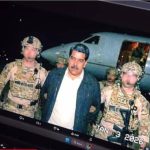
Ramaphosa’s Barcelona statement did not emerge from nowhere. South Africa has, across the Trump-era diplomatic storm, built a consistent and principled record of speaking truth to Security Council power. In January 2026, following Trump’s unilateral military strikes on Venezuela and the seizure of President Nicolás Maduro, South Africa delivered one of the sharpest statements before the Security Council of any country in the chamber. Pretoria said the strikes constituted a wanton violation of Venezuelan sovereignty, called the operations reminiscent of failed interventions in Libya and Iraq, and warned that failure to act against such violations is tantamount to inviting anarchy, and normalising the use of force and military might as the main form of discourse in international politics.’
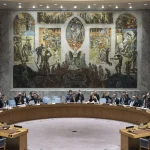
South Africa’s voice was joined at the Security Council that January by Pakistan, Uganda, Russia, China, Brazil, Mexico, Colombia, Chile and Panama — a coalition united not by ideology but by the shared conviction that a world in which P5 members can bomb sovereign nations with impunity, seize sitting heads of state, and suffer no institutional consequence is a world no longer governed by law. That coalition’s moral logic found fuller expression in Barcelona.
WHAT RAMAPHOSA PROPOSED
Beyond the critique, Ramaphosa came with an agenda. South Africa, he announced, will submit a draft resolution to the UN General Assembly in September to establish an International Panel on Inequality — a body modelled on the IPCC for climate change, designed to generate binding global research and policy action on the growing chasm between and within nations. It is a strategic move: by linking inequality to the architecture of global governance, Pretoria seeks to shift the terms of multilateral debate away from the P5’s preferred security agenda and toward the structural conditions that produce conflict in the first place.
Mexico’s Sheinbaum offered a complementary proposal: that governments commit to spending the equivalent of ten percent of their military budgets on reforestation. ‘Each year, instead of planting the seeds of war, we will plant the seeds of life,’ she said. Spain confirmed it is co-developing with Brazil a tax mechanism targeting ultra-high-net-worth individuals — a signal that the progressive summit is not merely about rhetoric, but about building economic architecture to match its political ambitions.
THE STRUCTURAL INDICTMENT
What makes the Barcelona declarations significant is not merely their language, but their timing and their source. These are not voices from the academic margins, nor from small states with nothing to lose. Brazil is the largest economy in Latin America, a BRICS member, and a country that has long campaigned for a permanent Security Council seat. South Africa is the continent’s most industrialised economy, a founding G20 member, a country whose Constitution and foreign policy have been shaped by the lived memory of what happens when powerful nations apply their laws selectively to the weak.
When leaders of this standing say, plainly, that the Security Council has failed — that it has become a tool of the very nations it was meant to constrain — they are not venting frustration. They are making a political and legal case that the post-war international order has entered a terminal legitimacy crisis, and that the Global South will no longer pretend otherwise.
The Barcelona summit also signals something organisationally new. It was the first meeting of what its conveners intend to be a permanent institution — the Global Progressive Mobilisation — with the next edition to be hosted in Mexico. The counter-architecture to the G7 and the US-dominated rules-based order is being built, slowly but deliberately, not through confrontation alone, but through the patient construction of alternative forums, new instruments, and coordinated political will.
THE VIEW FROM THE AFRICAN MIRROR
Africa sits at the heart of this story, even when African leaders are not at the centre of the frame. The Security Council’s failures — its paralysis over Gaza, its inability to stop the devastation of Sudan, its impotence in the face of Rwanda’s proxies in the DRC — are not abstract geopolitical failures. They are failures measured in African lives, African displacement, African hunger, and African silencing. The P5 have not merely failed to prevent wars; they have, in multiple instances, made them worse.
What Lula named in Barcelona as ‘Lords of War’ is not a polemical exaggeration. It is a precise political description of a system in which the nations with the most weapons, the most military expenditure, and the most wars to their names are also the nations with the permanent power to block accountability for those wars. That system was always a product of 1945’s political settlements. What has changed is the willingness of the Global South’s leaders to say so, out loud, in front of the world, without apology.
For Africa, the Barcelona declaration matters because it begins to create — slowly, imperfectly, but unmistakably — the international political language for a different kind of world. A world in which South Africa can go to the G20 not at the pleasure of a US president, but by right. A world in which the Security Council is reformed to include voices from the continents it has so long governed without representing. A world in which ‘Lords of War’ is not a label that clings forever — because the lords, finally, have been named.