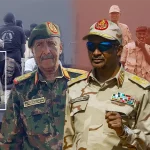
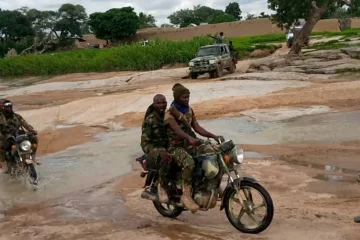
THE United Nations Secretary-General has issued a stark warning, stating that while Sudan’s people urgently need protection, current conditions are unsuitable for deploying a UN peacekeeping force. Eighteen months into an unrelenting conflict between the Sudanese Armed Forces and the Rapid Support Forces (RSF), Sudan is in the grip of a catastrophic humanitarian crisis. Nearly 25 million Sudanese now require urgent assistance, as violence, displacement, and disease continue to spread.
Addressing the Security Council, the Secretary-General underscored the dire state of Sudan’s humanitarian situation, likening it to a waking nightmare. “The people of Sudan are living through a nightmare of violence,” he declared, recounting how thousands of civilians have been killed and many more endure atrocities, including reports of mass sexual violence. Particularly horrifying reports have emerged from Aj Jazirah State, where recent mass killings and assaults have taken place.
Food insecurity is now critical in Sudan, with 750,000 people at risk of famine and many more struggling daily to find food. With cholera, malaria, and other infectious diseases spreading rapidly, Sudan’s already fragile healthcare infrastructure is collapsing. “Vital health systems, transportation networks, water and sanitation systems, supply routes, and agriculture are grinding to a halt,” the Secretary-General warned.
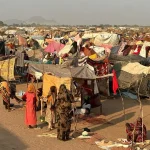
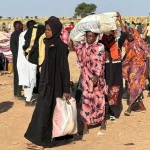
The crisis has spurred an unprecedented displacement crisis, with over 11 million people forced from their homes and nearly 3 million fleeing into neighboring countries since the conflict began in April last year. Compounding these human tragedies are extreme weather events, including recent heavy rains and floods that affected 600,000 people. Ethnic violence is also on the rise, with recent fighting in El Fasher bringing the country closer to ethnic-driven devastation.
In his speech, the Secretary-General implored the warring parties to agree on an immediate cessation of hostilities. He emphasised the need for both sides to establish localized ceasefires and humanitarian pauses, as well as to intensify diplomatic efforts. His personal envoy, Ramtane Lamamra, has been working tirelessly to facilitate these peace-building efforts in collaboration with regional partners, particularly the African Union and the Intergovernmental Authority on Development (IGAD).
The Secretary-General also emphasized the critical need to protect Sudan’s civilians in line with international humanitarian law, decrying the RSF’s violent targeting of civilians in El Fasher and surrounding displacement sites. Civilians, he insisted, must be shielded from indiscriminate violence by both the RSF and the Sudanese Armed Forces. Accountability for the atrocities, he stressed, is vital, with perpetrators of serious international humanitarian law violations facing consequences.
While acknowledging calls for a neutral force to ensure civilian protection, he noted that the conditions for deploying a UN force remain unfeasible. Instead, he urged the Council to explore alternative protective mechanisms that can alleviate the suffering on the ground.
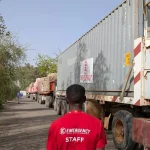
Humanitarian access, he stressed, is paramount. Although the UN and its partners have reached 12 million Sudanese with life-saving aid this year, significant funding gaps persist, with the $2.7 billion humanitarian appeal only 56% funded. He encouraged donor countries to contribute additional flexible funding and praised the “inspiring” work of Sudan’s 700 grassroots Emergency Response Rooms, which have been instrumental in providing aid despite dangerous conditions.
The Secretary-General concluded his address with a plea for urgent, unified action from the international community to achieve peace in Sudan. “It is time for decisive action for the people of Sudan,” he asserted, reinforcing the UN’s commitment to support Sudan as it faces what he described as “the worst of humanity, countered by the best of humanity.”