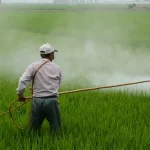
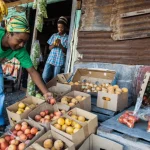
THE deaths of six young children in a South African township have been traced to a toxic pesticide chemical found in snacks purchased from a local spaza shop, Health Minister Aaron Motsoaledi announced Monday. The children, who died earlier this month in Soweto, ingested a substance identified as an organophosphate – a powerful compound primarily used in agricultural pesticides. The tragedy has ignited national outrage and intensified demands for stricter food safety regulations in informal shops, particularly those in South Africa’s township communities.
Motsoaledi revealed that a toxicology analysis confirmed the presence of organophosphate in the children’s systems, linking the fatal chemical exposure directly to snacks bought from an informal township shop. “The cause of death is unequivocally organophosphate,” Motsoaledi stated. “This group of substances is typically used in agriculture or as pesticides, not in settings accessible to the public.”
The six victims, aged five to ten, died within hours of consuming the contaminated snacks in Soweto, sparking fear and fury within local communities that had long embraced small, foreign-owned spaza shops for their daily needs. While investigations continue, the health department’s primary theory is that some informal shop owners may be using the pesticide to control rats—a dangerous practice given the chemical’s potency and strict guidelines against domestic use.
“This pesticide is not supposed to kill human beings,” Motsoaledi stressed. “It’s intended for agricultural use, not for community settings where children and families could come into contact with it.” The minister noted that health officials are still analyzing swabs from spaza shops across Soweto, working to pinpoint the exact source of the pesticide contamination.
The tragic incident has led to calls for action, with parents, residents, and community leaders demanding accountability and heightened safety regulations. Many community members point out that foreign shop owners, largely from Somalia, Ethiopia, and Pakistan, have historically been welcomed into South Africa’s townships, where they provide essential goods and services. The recent deaths, however, have strained these relationships, with some residents calling for foreign-owned shops to be shut down until safety measures are enforced.
Motsoaledi underscored that regulatory bodies will be working to introduce and enforce tighter controls on the types of chemicals that can be stored and used within local businesses. The government, with support from the National Institute for Communicable Diseases (NICD) and multiple other agencies, has launched an in-depth investigation to ensure that the pesticide is no longer in circulation in township communities.
The unfolding crisis underscores a broader issue within South Africa’s informal economy, where regulations are often difficult to monitor. Township spaza shops, a primary source of food and other essentials, operate with minimal oversight, raising concerns about food safety and consumer protection.
As the country mourns, parents and residents are united in a call for justice. They want the government to ensure that food sold in townships is subjected to rigorous safety checks, hoping that such a tragedy will never repeat. The South African government now faces a growing imperative to tighten food safety standards across all informal retailers, as the loss of young lives highlights the devastating cost of regulatory oversight gaps in township communities.