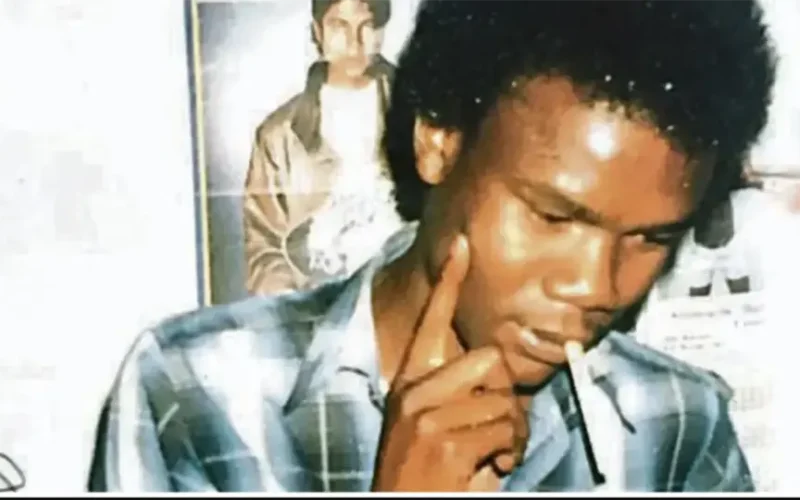
THE August night hung heavy over the East Rand township of Daveyton, its silence broken only by the violent pounding on a door at 999 Lemba Street. Inside a back room, four young men stirred from their sleep: Caiphus Nyoka, the student leader who had become a thorn in the regime’s side, and his three guests – Exodus Gugulethu Nyakane, Excellent Mthembu, and Elson Mnyakeni. The latter three had come for a funeral, finding temporary shelter in the Nyoka family’s generosity.
At 2:30 AM, the crash of splintering wood echoed through the night as security forces kicked in the door. White policemen burst in, their torch beams cutting through darkness, seeking their target. “Which one is Nyoka?” they demanded. In that moment of truth, Caiphus identified himself, sealing his fate.
In the main house, Caiphus’s father, Abednigo Moses Nyoka, aged 54, was startled awake by the commotion. Through his kitchen door, he found himself staring down the barrel of a white policeman’s rifle. “Kaptein, hier is hy!” (Here he is, Captain!) The shout pierced the night air.
The three young guests, stripped to their underwear, were forced face-down onto the cold ground outside the room. They lay there, hearts pounding, as their friend remained inside with the security branch officers. Then came the shots—”more than two,” they would later testify—that would forever haunt their memories.
The police threw the young men’s clothes out after them, ordering them to dress quickly. Two were handcuffed together, and all three were marched at gunpoint to a white Toyota “Zola Budd” van waiting outside. Their night of terror was far from over.
At the Daveyton police station, in an outbuilding behind the main structure, they watched in horror as a small-built white policeman, wearing jeans and a navy lumber jacket with a rolled-up balaclava, wrote chilling words on a green blackboard: “999 Lemba Street – Caiphus Nyoka executed – Hands of Death.” He forced them to read it aloud, a macabre signature to their friend’s murder.
Back at the Nyoka home, the nightmare continued to unfold. Abednigo Nyoka watched as his daughter Magdeline, just 20 years old, was called to identify the three detained youths. Then, at 4:30 AM, came the final indignity: a white mortuary vehicle arrived, and four council police emerged with a stretcher. Moments later, they returned carrying the naked body of his son, face up, lifeless.
In the room where Caiphus had spent his final moments, two bullet shells remained as silent witnesses. His clothes, the ones he wore in his final hours, lay untouched—physical testament to a night of state-sanctioned murder.
The security forces would later attempt to justify their actions, claiming the operation was part of “follow-up operations after the arrest of two suspects found carrying mini-limpet mines and hand grenades of foreign origin.” But the truth was simpler and more brutal: they had eliminated a powerful young voice of resistance.
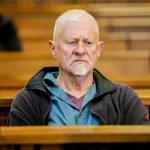
Thirty-seven years later, in a democratic South Africa, Johan Marais stood in the Pretoria High Court, finally admitting to his role in the killing. But the full weight of that night’s horror—the calculated cruelty, the casual brutality, the cold documentation of death—would never fade from the memories of those who survived to tell the tale.
The story of Caiphus Nyoka, student leader, activist, and martyr of the anti-apartheid struggle, stands as both an indictment of a brutal regime and a testament to the courage of those who dared to stand against it. In the room where he died, in the memories of his father and friends, and in the conscience of a nation, his spirit lives on—a reminder of the price paid for South Africa’s freedom.
For those like Marais and his colleagues who chose violence over justice, the ghosts of their actions would eventually demand their due. As the court proceedings continue, the truth emerges piece by piece, proving that while justice may be delayed, it refuses to be denied.